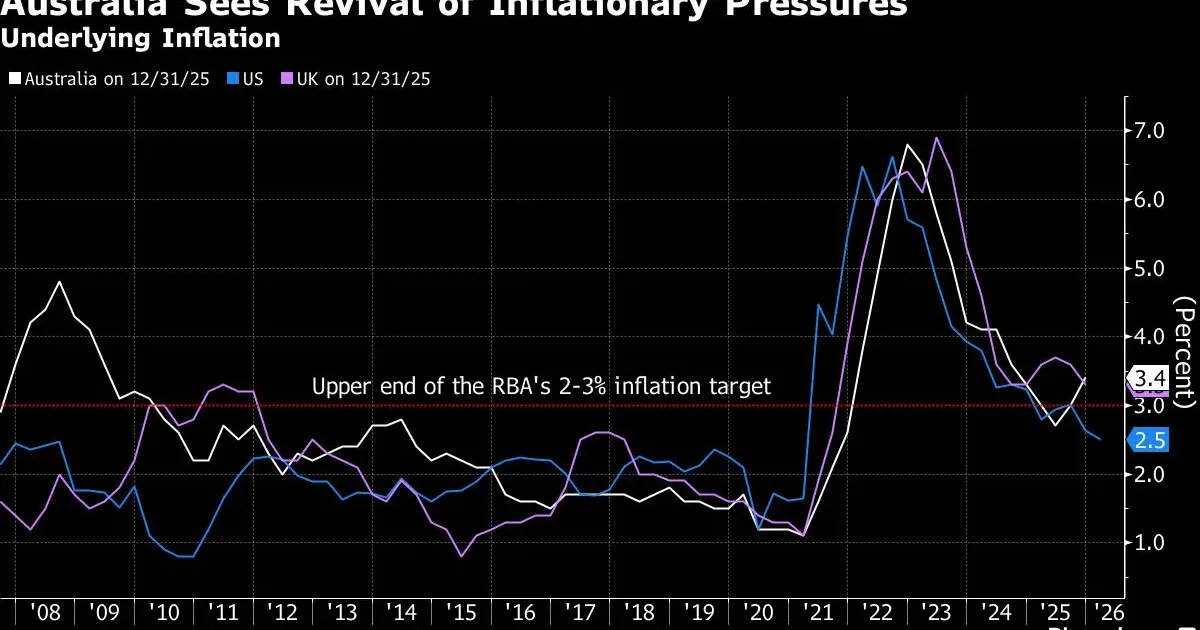
Australia’s central bank is preparing markets for another rate hike while households are still absorbing the last one.
Second Hike Risk Returns
Sydney's central business district feels the chill of an impending fiscal winter. Reserve Bank of Australia officials are preparing for a critical board meeting next Tuesday. Bloomberg Economics analyst James McIntyre indicates that the central bank will likely deliver back-to-back interest-rate increases to combat a worsening economic cocktail. Two primary forces drive this hawkish shift: an escalating military conflict in Iran and a mysterious evaporation of the domestic workforce. The rate signal mattered on March 12, 2026, because Australian households were already absorbing the cost of earlier tightening. Markets had hoped for a reprieve after the February tightening, but those expectations have vanished. Energy markets are reeling. War in the Middle East has disrupted shipping lanes and pushed crude prices toward levels not seen in years. These global pressures filter directly into the Australian pump, forcing the RBA to act before inflation expectations become unanchored. Every dollar added to a barrel of oil acts as a tax on the Australian consumer, yet it also forces the hand of policymakers who must maintain the currency's value. Labor supply has evaporated just when the economy needs it most. James McIntyre points to a significant deterioration in the supply of workers as a core reason for the projected March hike.
Households Carry the Policy Cost
Australia currently faces a slump in job hunters that defies traditional economic modeling. While unemployment remains low, the number of people actively seeking employment has plummeted. This reduction in available workers creates a massive bottleneck for businesses, driving up wage pressures without the accompanying productivity gains needed to offset them. Many companies now find themselves unable to expand or even maintain current service levels because the human capital simply is not there. Workforce participation has become a phantom. Bureau of Statistics data from earlier this month revealed a startling trend where thousands of Australians have exited the workforce entirely. Some analysts suggest that a combination of an aging population and a shift in post-pandemic work preferences has led to a permanent shrinkage in the labor pool. This trend suggests that the 'natural' rate of unemployment might be higher than previously thought, meaning the RBA must keep rates higher for longer to cool a labor market that is effectively running on empty.
If fewer people are willing to work, the remaining labor becomes more expensive, fueling a cycle of price increases that the central bank is desperate to break. Geopolitical instability in the Persian Gulf has added a layer of complexity to the RBA's decision-making process. Crude oil futures spiked 15 percent in the last fortnight as tensions in Iran escalated into open warfare.
Inflation Credibility Is the Tradeoff
Since Australia is a net importer of refined fuels, the domestic impact was immediate. Transportation costs for goods across the vast continent have surged, meaning even local produce is becoming more expensive at the checkout. Central bankers usually look through temporary energy spikes, but the prolonged nature of this conflict suggests the inflationary impact will be structural rather than transitory. McIntyre's analysis for Bloomberg Economics emphasizes that the RBA cannot afford to wait.
The central bank is weighing caution against inflation credibility as supply-side pressure intensifies. If the RBA stays pat while energy prices climb, they risk the Australian Dollar losing ground against the Greenback, which would only make imports more expensive and worsen the inflation problem. Mortgage holders are already feeling the squeeze of previous hikes. Most households have exhausted the savings buffers built during the lockdowns of the early 2020s.
While the Commonwealth Bank of Australia suggests a more cautious approach to avoid crushing household consumption, the Bloomberg view is that the supply-side shock requires an aggressive response.
Yet, the RBA appears focused on the medium-term goal of returning inflation to the 2 to 3 percent target range, regardless of the short-term pain in the suburbs.
The RBA Is Testing Borrowers Again
The Reserve Bank of Australia prepared markets for a possible second March rate hike. Inflation pressure and household debt make the decision politically and economically sensitive. Higher rates can defend credibility while squeezing mortgage holders and consumer demand. The RBA may act if inflation remains too sticky or if expectations risk drifting above target, and variable-rate mortgage holders, renters and debt-heavy households usually feel the pressure first.