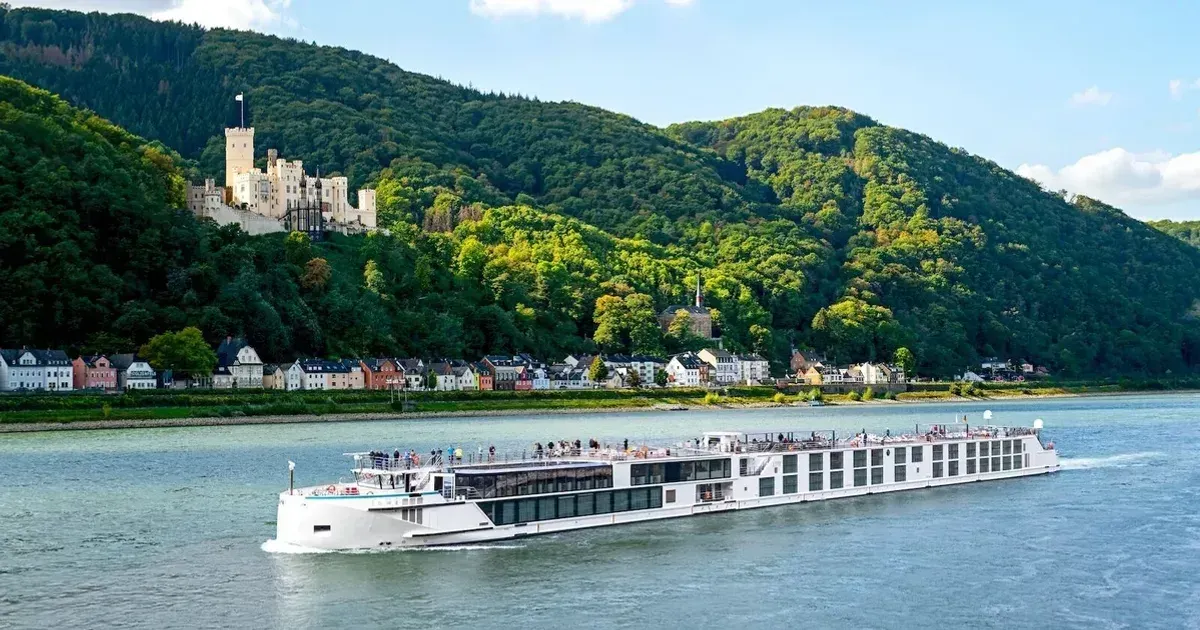
Basel's riverfront serves as the starting point for a shift in how luxury operators approach beverage-themed tourism. While mass-market ocean liners frequently rely on volume-based drink packages and neon-colored cocktails, the river cruise sector is moving toward detailed historical narratives. Riverside Luxury Cruises announced its Hops and Heritage journey, a program designed to replace standard bar service with a deep dive into the socio-economic history of Central European brewing. Riverside Luxury Cruises entered the market by acquiring vessels formerly operated by Crystal Cruises, positioning itself at the top tier of the European river market. This specific itinerary moves from Basel and Huningue to Amsterdam, navigating the very waters that functioned as the primary logistics network for medieval and Renaissance trade. James Kellow, a certified beer sommelier, will lead the onboard programming, which includes technical tastings and food pairing sessions. He intends to frame beer not as a simple refreshment, but as the foundational liquid of the Rhine's urban development. Large vessels often treat local culture as a backdrop for entertainment. By contrast, the Hops and Heritage program integrates the river's physical geography with the evolution of specific beer styles. Stops in Strasbourg, Speyer, Mannheim, Ruedesheim, Cologne, and Arnhem allow passengers to observe how water quality and trade access dictated the success of local breweries. The ship accommodates a limited number of guests, ensuring that the sommelier-led sessions remain academic rather than purely social.
Riverside Debussy Adds a Rhine Theme
Europe's waterways were the original highways for heavy commerce. Before the advent of reliable rail or road networks, transporting bulky barrels of ale and the raw ingredients required for their production relied entirely on the Rhine's current. James Kellow argues that the river's flow dictated which cities became brewing powerhouses and which remained peripheral players. To that end, the cruise explores the logistics of the hop trade and the movement of barley from the fertile plains of the interior to the coastal ports of the Netherlands. The Rhine connected inland brewers to global markets. Trade guilds in cities like Strasbourg and Cologne used their river access to enforce quality standards and taxation. In fact, the river allowed for the rapid dissemination of the 1516 Reinheitsgebot, the German Purity Law that restricted beer ingredients to water, barley, and hops. Travelers on the Riverside Debussy will examine how these regulations shaped the architectural and social fabric of the Rhine valley. Many of the historic warehouses still standing in these ports were originally built to store brewing grains.
Rivers were the original highways for beer, connecting brewers to markets and allowing ingredients to travel while helping cities thrive.
Merchant families in the 14th century often held monopolies on the river's shipping lanes. These families became the primary patrons of the arts and religion in cities like Speyer. The cruise highlights how the wealth generated from beer exports funded the construction of the massive cathedrals that passengers visit today. Control of the water meant control of the supply chain. The Hops and Heritage itinerary places these economic realities at the center of the guest experience.
Cruise Brands Lean on Local Culture
Professional expertise serves as the differentiator in the luxury river cruise space.
Cologne is a critical stop for any serious study of German beer culture.
Strasbourg shows a different angle on the intersection of French and German influences. The city's brewing history is intertwined with its shifting national identity, resulting in a unique hybrid of styles. Alsace remains the most significant hop-growing region in France, producing the famous Strisselspalt hop. For one, the bitterness levels in Alsatian beers often differ sharply from those found further north in Westphalia. This regional variation is a primary focus of the mid-voyage lectures. Meanwhile, the stop in Ruedesheim provides a contrast between the region's famous Riesling production and its lesser-known brewing heritage. Even in the heart of wine country, beer remained the primary beverage of the working classes and the river workers. The Riverside Debussy guests will explore how these two industries coexisted and competed for land and labor. The Rhine facilitated the exchange of ideas between winemakers and brewers, leading to shared techniques in barrel aging and fermentation. The crossover is increasingly popular in the contemporary craft movement.
Arrival in the Netherlands shifts the focus toward the austere and disciplined world of monastic brewing. Trappist beers must be brewed within the walls of a monastery, either by the monks themselves or under their direct supervision. The International Trappist Association maintains strict criteria for the use of their logo, including the requirement that all profits must support the monastery or social work. The religious structure adds a layer of ethical complexity to the brewing process that Kellow explores in the final days of the cruise.
Arnhem is a gateway to understanding the resilience of these institutions. During the Second World War, many Dutch and Belgian breweries were stripped of their copper equipment by occupying forces. The survival of these monastic traditions is a story of meticulous record-keeping and community support. In fact, many of the recipes used today are based on manuscripts that date back hundreds of years. The cruise highlights the technical precision required to maintain consistency in these ancient facilities. Beer acts as a vessel for the entire history of the Rhine. From the Roman legionnaires who first established brewing outposts to the modern sommeliers like Kellow, the story of the river is a story of fermentation. The Hops and Heritage itinerary concludes in Amsterdam, a city that was built on the back of the Baltic and Rhine trade. The final tasting session reviews the journey's progress from the alpine foothills to the North Sea. The Riverside Debussy returns to port on August 5.
Travel Products Need More Than Novelty
Why does a luxury cruise line suddenly care about the history of a pint? The answer lies in the increasing desperation of the high-end travel market to find authenticity in an era of mass-produced experiences. Riverside Luxury Cruises is not selling beer; they are selling the intellectual high ground. By framing this voyage as a sommelier-led historical investigation, they are targeting a demographic that feels embarrassed by the excesses of typical vacationing.
That does not make the itinerary empty. It makes the sales pitch revealing. The modern luxury traveler wants indulgence with a footnote, consumption dressed up as scholarship, and a pint of beer converted into proof of cultural seriousness. If Riverside can deliver real context rather than themed trivia between tastings, the voyage has a reason to exist. If not, it is just another expensive costume for the same old cruise product.