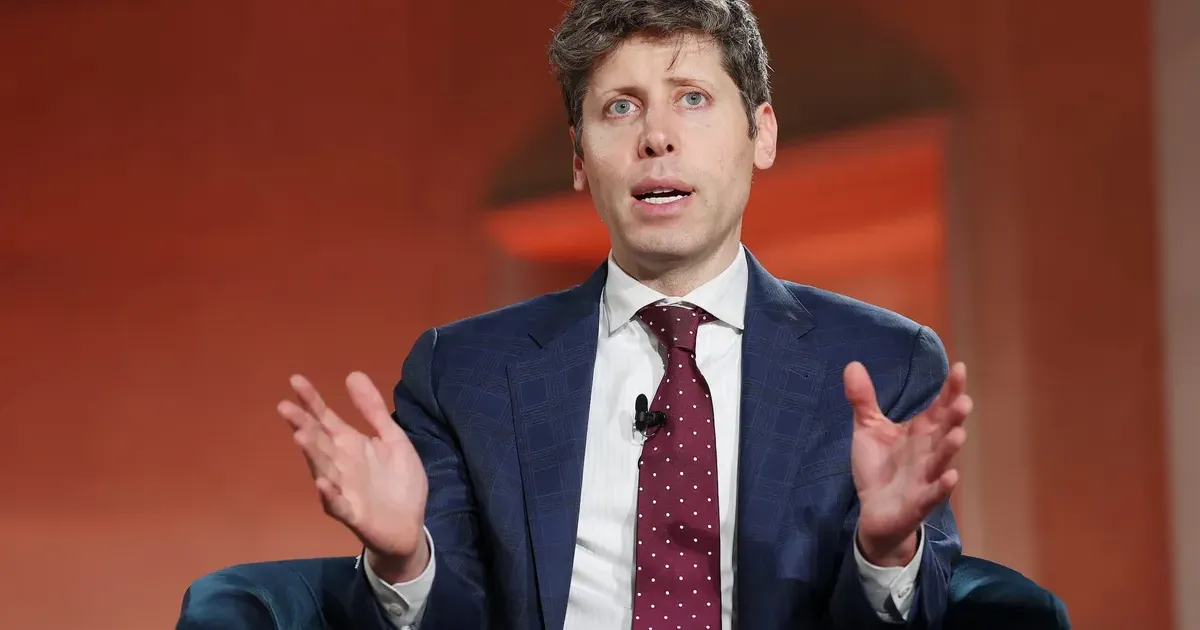
Sam Altman's warning about souring public sentiment shows that AI companies are entering a colder political phase. The warning came on March 12, 2026, as AI companies faced a colder public mood shaped by job anxiety, copyright lawsuits, safety fears and distrust of technology executives. The remark reflected a change that executives can no longer dismiss as online noise. For years, the industry sold artificial intelligence as inevitable progress. The harder task now is proving that progress can be governed, shared and trusted.
Sam Altman's warning about souring public sentiment shows that the AI industry is no longer protected by novelty and investor enthusiasm.
Why the Mood Changed
Public enthusiasm often fades when a technology moves from demonstration to consequence. Chatbots were impressive when they wrote poems and code snippets; they became more threatening when employers, schools, publishers and governments began reorganizing around them. The phrase AI public backlash captures several concerns at once. Workers fear replacement, artists fear uncompensated training, parents fear cheating, voters fear manipulation and regulators fear they are moving too slowly. That does not mean the public rejects AI outright. It means people are asking who benefits, who pays and who is accountable when systems fail.
Trust Beyond Performance
AI companies often answer criticism with better benchmarks, larger models and new product demos. Those things matter, but they do not resolve questions about power. A model can be more capable and still leave users unsure whether their data was used fairly, whether an answer is reliable or whether a company will accept responsibility for harm. Trust will depend on behavior as much as technology. Companies that overpromise, hide limits or treat public concern as ignorance will deepen the backlash they want to escape.
Jobs and Economic Anxiety
The labor question is central because AI arrives after years of corporate efficiency campaigns. When executives describe automation as productivity, workers hear a possible layoff plan. Some roles will change rather than vanish, but that distinction is not reassuring if firms use AI to justify cuts before new paths are clear. The industry needs a better answer than telling displaced workers to reskill in the abstract. Public trust will improve only if AI benefits are visible outside investor returns and executive presentations. People need to see practical gains in health care, education, accessibility and everyday services.
Regulatory Moment
Governments are moving from curiosity to rulemaking. Copyright, privacy, model safety, election use and liability are all becoming policy questions rather than technical debates. AI firms still have a chance to shape that process constructively. But if they resist every constraint, they will invite stricter rules written by lawmakers who no longer believe voluntary governance is credible.
Trust Is Now the Product Test
Altman's warning matters because it treats public consent as a business constraint, not a public-relations inconvenience. AI companies cannot assume admiration will last while workers, creators, schools and regulators absorb the costs of rapid deployment.
The industry's next phase will be judged less by whether models can do astonishing things and more by whether the systems around them are fair, explainable and accountable. Job disruption, copyright disputes and safety failures are not side issues; they are the reasons public patience is thinning.
The companies that survive the backlash best will likely be the ones that accept governance as part of the product. Documentation, auditability, data controls and honest limitation language are no longer optional extras. Capability made AI famous. Trust will decide whether it remains welcome.