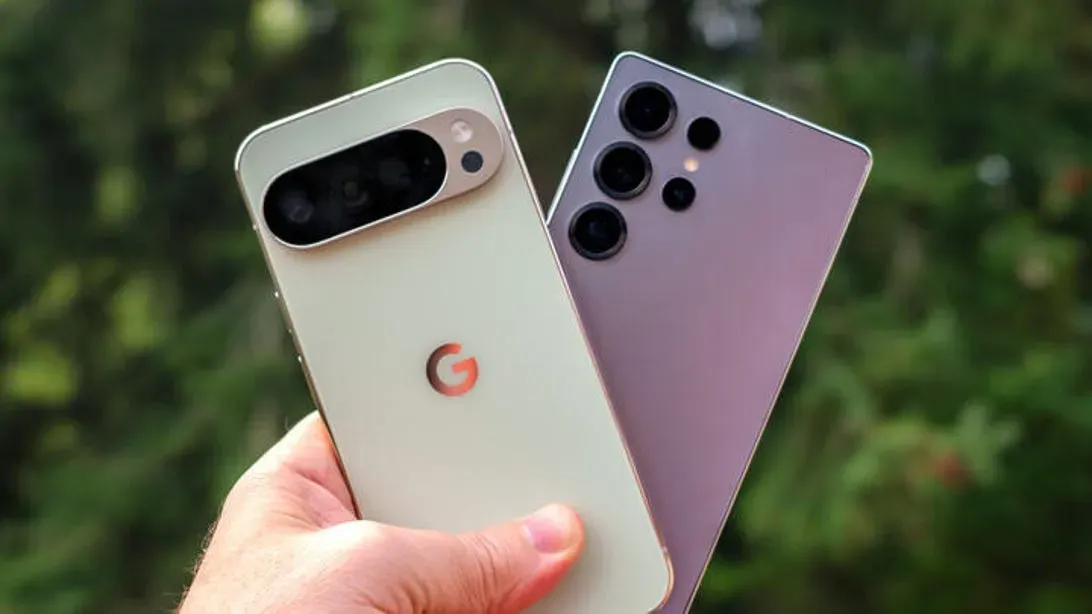
Samsung’s Galaxy S26 Ultra is betting on privacy display hardware while the rest of the lineup risks looking too familiar.
Samsung Splits the S26 Line
Seoul and San Francisco stand as the twin poles of a hardware debate that reached a boiling point this spring. Samsung Electronics recently unveiled its Galaxy S26 lineup, revealing a deep strategic rift between its premium Ultra model and the standard offerings. Reviewers are currently dissecting these machines with a mixture of awe and fatigue. The split strategy was clear by March 11, 2026, as reviewers separated the Ultra from the rest of the line. While the Galaxy S26 Ultra introduces a specialized Privacy Display, the standard S26 and S26 Plus appear trapped in a cycle of incrementalism.
Industry analysts at The Verge characterize the entry-level models as awfully familiar, a sentiment suggesting Samsung might be coasting on its brand name for the mass market. These standard devices lack a killer hardware feature to distinguish them from the S25 or even the S24 iterations. Samsung opted for tiny tweaks like a slightly larger battery for the base S26 and faster wireless charging for the Plus. Such minor adjustments fail to excite a consumer base that is increasingly holding onto devices for four or five years. Critics are particularly vocal about the absence of magnetic Qi2 charging.
Google already implemented this standard, allowing for a more seamless ecosystem of accessories and faster alignment. Samsung's refusal to adopt Qi2 in 2026 feels like a missed opportunity to lead the Android market in utility. It suggests a certain stubbornness in the design lab, or perhaps a cost-saving measure that insults the premium price tag. Joe Maldonado of Mashable offers a much more optimistic perspective when focusing on the Galaxy S26 Ultra. He describes the device as a stunner that tempted him to abandon his long-held loyalty to the iPhone.
Much of this praise centers on the Snapdragon 8 Elite Gen 5 for Galaxy processor. This custom chipset provides the raw horsepower necessary for the aggressive on-device AI features Samsung is marketing.
The Ultra Bets on Privacy Display
From real-time translation to advanced image manipulation through Gemini and Perplexity, the Ultra handles heavy workloads without the stutter seen in previous generations. Battery life also sees a significant boost because of the efficiency of the three-nanometer architecture in the Gen 5 chip. During a two-week intensive test, the Ultra comfortably lasted through long days of reporting, photography, and high-intensity gaming. The camera system remains a focal point of the hardware suite. Samsung delivered substantial sensor upgrades that allow for better low-light performance and faster shutter speeds.
These improvements address long-standing complaints about motion blur in Samsung's flagship photography. Privacy Display represents the most distinct hardware innovation of the year. This hardware addition allows users to narrow the viewing angle of the screen with a software toggle, making it nearly impossible for people sitting nearby to read sensitive information. It is a direct answer to the growing concern over digital privacy in public spaces like airplanes or crowded trains. While Apple's recent iPhone Air innovation largely fell flat with consumers, Samsung's push into specialized display tech provides a tangible reason for power users to consider a switch.
Apple eclipsed Samsung to become the top global smartphone brand in January 2026. This strategy creates a visible gap in the market that Samsung is desperate to close. The company is leaning heavily into its folding technology, including the rumored Galaxy Z TriFold, but the S-series remains its primary volume driver. Cross-testing against OnePlus and Google flagships leaves Samsung ahead on hardware muscle but less convincing on software polish. Innovation in the mobile sector has slowed to a crawl for many manufacturers.
CNET experts have tested the S26 against the OnePlus 14 and the Google Pixel 10 Pro, finding that while Samsung leads in raw specs, Google is winning the battle of software elegance.
Why the Standard S26 Feels Stale
Stop pretending that a slightly faster processor and a privacy screen justify a fifteen-hundred-dollar price tag. Samsung is currently engaged in a transparent act of brand dilution, milking the standard Galaxy S26 for every cent of profit while reserving actual engineering effort for a single, prohibitively expensive model. The Privacy Display is a clever piece of glass, but it is ultimately a solution in search of a problem for ninety percent of the population. We are being asked to celebrate a return to form that only exists if you are willing to pay the cost of a used car for a handset. Such a choice to omit Qi2 magnetic charging in 2026 is nothing short of a middle finger to consumer convenience.
While Google and even smaller Chinese manufacturers embrace universal standards, Samsung remains tethered to a proprietary vision that serves its bottom line rather than its users. The Snapdragon 8 Elite Gen 5 is an impressive piece of silicon, yet most users will never push it past fifteen percent of its capacity while scrolling through social media. We should demand more than refined increments. If the S26 and S26 Plus are the best the largest phone manufacturer in the world can do for the average person, then the era of smartphone excitement is officially dead.