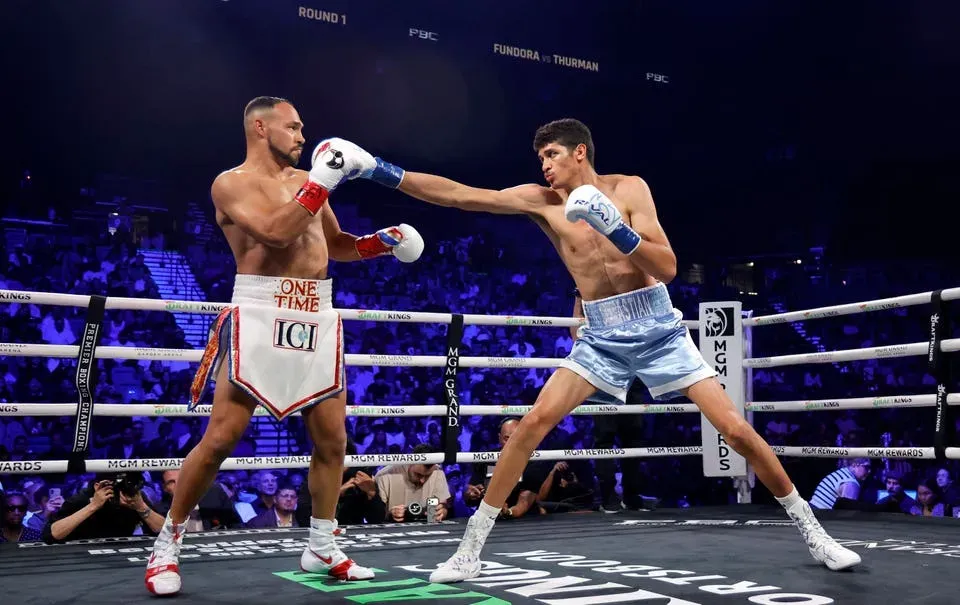
Sebastian Fundora kept control of the WBC super welterweight picture with a sixth-round stoppage of Keith Thurman in Las Vegas. The stoppage mattered because an aging former champion gives a prospect a recognizable measuring point. The result changed how the division reads an older champion against a rising titleholder. The March 29, 2026 result at the MGM Grand paired a rising champion's physical advantages with a veteran challenger trying to close distance after long stretches of inactivity.
Fundora used his height, reach and volume to keep Thurman from setting his feet. The early rounds followed a clear pattern: Thurman looked for a counter right, while Fundora jabbed, stepped around danger and forced the former welterweight champion to reset before he could build combinations.
Fundora Turns Reach Into Control
The stoppage came after Fundora trapped Thurman near the ropes and landed a series of uppercuts and hooks that left the challenger unable to answer cleanly. Referee Harvey Dock stepped in during the sixth round, ending a fight that had become increasingly one-sided. Thurman did not mount a visible protest, a sign of how decisively the rhythm had shifted.
The win matters because Fundora has sometimes been judged more by his frame than by his craft. This performance showed a champion who understood range, maintained discipline and did not chase a reckless finish. His volume created the opening, but his improved defensive shape kept Thurman from turning the fight with one veteran punch.
For Thurman, the defeat raises the familiar question of whether name value can still compensate for inactivity. He remains an accomplished fighter, but the speed gap and punch output were difficult to ignore. At 154 pounds, the division is moving toward younger, larger and busier athletes.
UFC Seattle Adds to the Generational Theme
The same weekend produced a similar story in mixed martial arts. Joe Pyfer scored a second-round stoppage of Israel Adesanya at UFC Seattle, turning a patient opening round into a sudden finish against one of the sport's most recognizable middleweights. Pyfer cut off the cage, waited for a clean moment and followed a damaging shot with enough pressure to force the referee's intervention.
Alexa Grasso also delivered a fast finish, stopping Maycee Barber in the first round with precise counter-punching. The result reinforced Grasso's reputation as a technical striker who does not need long exchanges to find a decisive opening. Barber entered with momentum, but the timing difference was visible almost immediately.
Across the UFC card, stoppages became the defining pattern. A high finish rate can be partly random, but it also reflects matchmaking that rewards aggression and athletes willing to accept risk early. Broadcasts, promoters and highlight packages all benefit when contenders turn competitive fights into short, shareable moments.
What the Results Mean
The weekend did not prove that every veteran is finished or that every young contender is ready for a title run. It did show how unforgiving combat sports can be when activity, size and timing move against an established name. Fundora, Pyfer and Grasso won in different ways, but each victory rested on making the older or more familiar opponent react first.
Promoters now face a balancing act. Veteran names still sell tickets, yet the credibility of a card depends on whether the fights feel competitive rather than nostalgic. The best matchups will use legacy carefully, placing established fighters against contenders who can reveal whether reputation still has competitive substance.
Fundora's title defense leaves him positioned for bigger fights at super welterweight, while Pyfer and Grasso strengthened their claims to more prominent bookings. The market lesson is straightforward: fans still care about names, but they remember finishes. A clean stoppage can change a career faster than a careful decision.
The next step for Fundora should be chosen carefully. A unification fight would test whether his reach advantage holds against another champion, while a defense against a pressure fighter would show whether he can repeat this discipline when the opponent is younger and more relentless than Thurman. Either path carries commercial value because the win gave promoters a clearer story: Fundora is no longer only an awkward physical puzzle, but a champion making technical improvements under pressure.
For the UFC names, the lesson is similar but not identical. Pyfer still needs to prove that one headline stoppage can translate into round-by-round reliability against the division's best wrestlers and counter-strikers. Grasso has already shown championship-level poise, so her fast win reads less like a surprise and more like confirmation. Together, the results made the weekend feel like a status check on combat sports' middle class: established names remain useful, but they are increasingly useful as tests for fighters who can act faster. Matchmakers can use that tension well if they resist turning every veteran into a shortcut. The sport is healthier when reputations are tested against form, activity and style, not only against name recognition. Fundora's win, Pyfer's finish and Grasso's sharpness all point to the same competitive truth: timing beats nostalgia when the bell rings. That is why this weekend should be read as more than a highlights reel; it clarified which fighters can turn opportunity into leverage and which familiar names now need more careful matchmaking. It also gives viewers a cleaner way to separate durable contenders from names surviving mostly on memory.