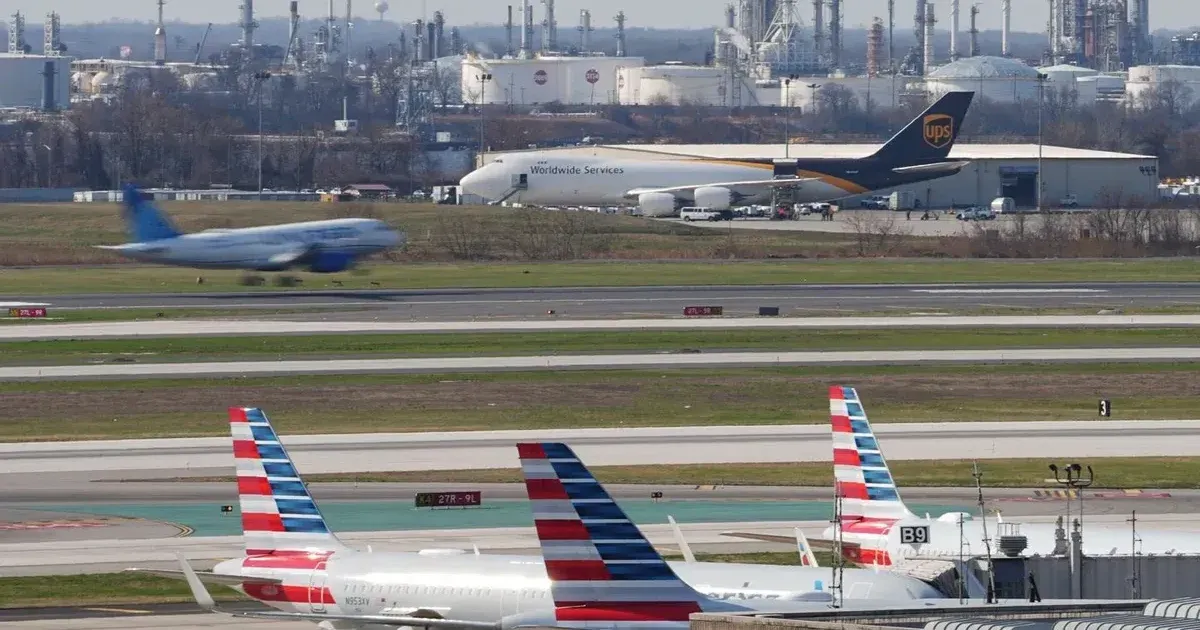
A Secret Service agent assigned to Jill Biden detail was hospitalized after an accidental weapon discharge at Philadelphia International Airport. The incident happened on March 27, 2026, in a secure area of the airport, and officials said the former first lady was not in danger.
Officials said the agent suffered a non-life-threatening leg wound and was transported to a nearby hospital. Biden was not in the immediate vicinity, and no other travelers or airport staff were reported injured. Security protocols remained in place while investigators reviewed whether the discharge involved equipment, handling or another procedural failure.
Philadelphia International Airport Security Response
Philadelphia police worked with airport authorities to limit disruption to standard flight operations. The presence of a high-profile protectee required more scrutiny than a routine workplace injury, so security teams preserved the area for federal review. Surveillance footage and witness accounts are expected to help investigators reconstruct the moments before the weapon fired.
Witnesses in nearby corridors described a sudden burst of law-enforcement activity after the shot. Passenger traffic continued elsewhere in the airport, though additional security was visible near restricted areas. Airport management issued a brief statement confirming cooperation with federal authorities.
The logistical challenge of handling a shooting in a secure airport zone is significant even when the injury is limited. Police maintained a visible presence as the agent was moved for treatment, and the firearm was taken for inspection. Security experts generally treat negligent discharges as serious internal failures because they test the most basic layer of protective discipline.
Secret Service Weapon Handling Protocols
Federal law-enforcement training emphasizes muzzle discipline, trigger-finger placement and careful holster use. Investigators will look at the issued weapon, holster condition, clothing, movement and any possible interference before assigning cause. The point is not to assume a mechanical flaw or an individual mistake before the review is complete; it is to determine why a firearm discharged in a controlled security environment.
Secret Service policy mandates that any discharge of a firearm outside of training or active engagement must undergo a formal investigation. These reviews determine whether the agent followed the strict safety guidelines outlined in the protective operations manual. Investigators will assess the condition of the agent's holster and the state of the firearm at the time of the event. Separately, the agency will evaluate the agent's recent training history and work schedule to identify potential fatigue factors. Negligent discharges often lead to disciplinary action or mandatory retraining for the personnel involved.
The Secret Service special agent suffered a "non-life-threatening injury" after they discharged their weapon at around 8.30am.
Safety procedures require agents to keep weapons secured unless they are cleaning, securing or preparing to use them. A discharge in an airport setting is therefore a serious planning and discipline problem, even when no member of the public is hurt. The weapon should remain out of service until its condition is verified and the handling sequence is clear.
Security Review
Forget the myth of the silent, infallible sentinel that the Secret Service works so hard to project. A special agent shooting himself in the leg at a major international airport is not just a tactical error; it is an embarrassing demonstration of professional rot. These agents are touted as the best in the world, yet a fundamental failure of firearm safety occurred in a setting where precision is the only acceptable standard.
While the agency will likely hide behind the shield of an ongoing investigation, the public deserves to know if this was a result of systemic training failures or individual incompetence. We are talking about a detail assigned to a former first lady, a position that requires the highest level of alertness. Instead, the biggest threat in the room at 8:30 AM was the very person carrying the badge. If an elite agent cannot manage the basic mechanics of a holstered weapon, the agency's credibility regarding more complex threats is effectively neutralized.
It is a symptom of an organization that has become overstretched and under-disciplined. The incident demands a full, unredacted disclosure of the investigative findings, as anything less is a disservice to the security of the officials they protect.