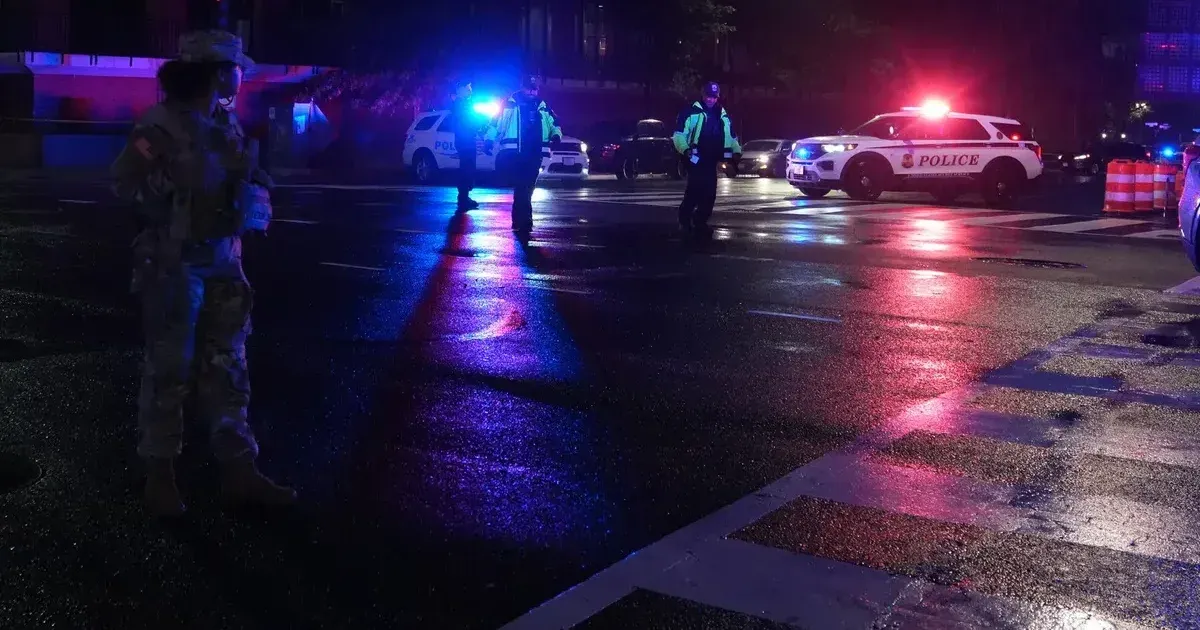
Secret Service agents fatally shot a gunman after he opened fire at a security checkpoint outside the White House. The checkpoint shooting turned a controlled security perimeter into a lethal encounter. Investigators now have to determine how the gunman reached the area before agents opened fire. Officers responded at the northwestern corner of the complex on May 23, 2026, while President Trump was inside the executive residence. Officials said the president was not in direct danger during the incident. The timing still gave the episode national weight because the shooting unfolded at a controlled access point rather than on a distant perimeter street.
Reports from the scene indicate the gunman approached a designated entry point and fired before federal agents engaged him. The suspect, described as a 21-year-old man, was taken to a local hospital and later pronounced dead. Crime scene technicians spent early Sunday processing the area near Pennsylvania Avenue for ballistics evidence, possible motive indicators and evidence needed to establish a timeline.
A bystander was wounded during the exchange and taken to a nearby hospital for surgery. Officials said the civilian remained in stable condition. The Metropolitan Police Department opened a parallel investigation into who fired the round that struck the bystander as federal and local agencies coordinate the forensic review.
While the Secret Service maintains primary jurisdiction over White House security, local police involvement is standard when a civilian is injured on a public street. Investigators are still determining how many shots were fired by the suspect and by responding agents. They are also comparing witness statements with shell-casing locations, radio traffic and security-camera coverage from the checkpoint area. Witness accounts described multiple bursts of gunfire during a busy holiday weekend near Lafayette Square. That public setting is why the bystander injury is being treated as a central part of the investigation rather than an incidental outcome.
Security Response at the Northwest Checkpoint
White House security procedures are built to isolate threats at the outer perimeter before they reach the primary structures. This checkpoint screens staff, visitors and authorized vehicles entering the northwestern sector of the grounds. The Saturday night shooting tested that system as Washington prepared for Memorial Day observances and heavier public traffic around the complex. A response that might be straightforward in a closed federal compound becomes more complicated when commuters, tourists and nearby residents are moving through the same streets.
Agents moved quickly into an active-shooter posture, including lockdown measures around the West Wing and residential areas. Security perimeters were extended several blocks while teams checked for any secondary threat. The visible response caused delays around Pennsylvania Avenue but also kept the incident contained to the checkpoint zone without requiring broader evacuation orders. The containment matters because even a short breach at that location can trigger wider closures across downtown Washington, nearby tourist areas and federal buildings.
Prior Warning Signs
Court records suggest the suspect was already known to federal law enforcement before the shooting. An affidavit filed in DC Superior Court in 2025 indicates that the same individual had been arrested after trying to enter the White House complex the previous summer. That history is now central to the review of whether existing alerts were strong enough.
Investigators are examining the suspect's residence, digital history and earlier contact with the judicial system. The question is not only how he reached the checkpoint with a firearm, but whether a prior security violation should have led to more restrictive monitoring or intervention. Any answer will have to balance civil-liberty limits with the practical duty to keep repeat perimeter threats away from a crowded federal landmark. Those findings will matter for the Secret Service and for local courts that handle repeat perimeter threats. The review may also examine whether protective orders, mental-health referrals or federal watchlist procedures left gaps between identification and prevention. That review may shape how agencies share alerts when a person moves from a prior security violation back toward a protected site.
Public Safety Questions
The bystander injury sharpens the scrutiny around the response. Urban security engagements near the White House take place in dense public space, where agents must stop an immediate threat without putting nearby pedestrians at greater risk. Police are therefore tracing the full sequence of gunfire rather than treating the civilian wound as a secondary detail.
Public access around the executive mansion remained restricted into Sunday as crews cleared debris and documented checkpoint damage. Most holiday activities continued under heavier police presence, but the incident left a direct question for federal security planners and local commanders. A known subject returned to one of the most protected addresses in the country, and the perimeter became the final line of defense.