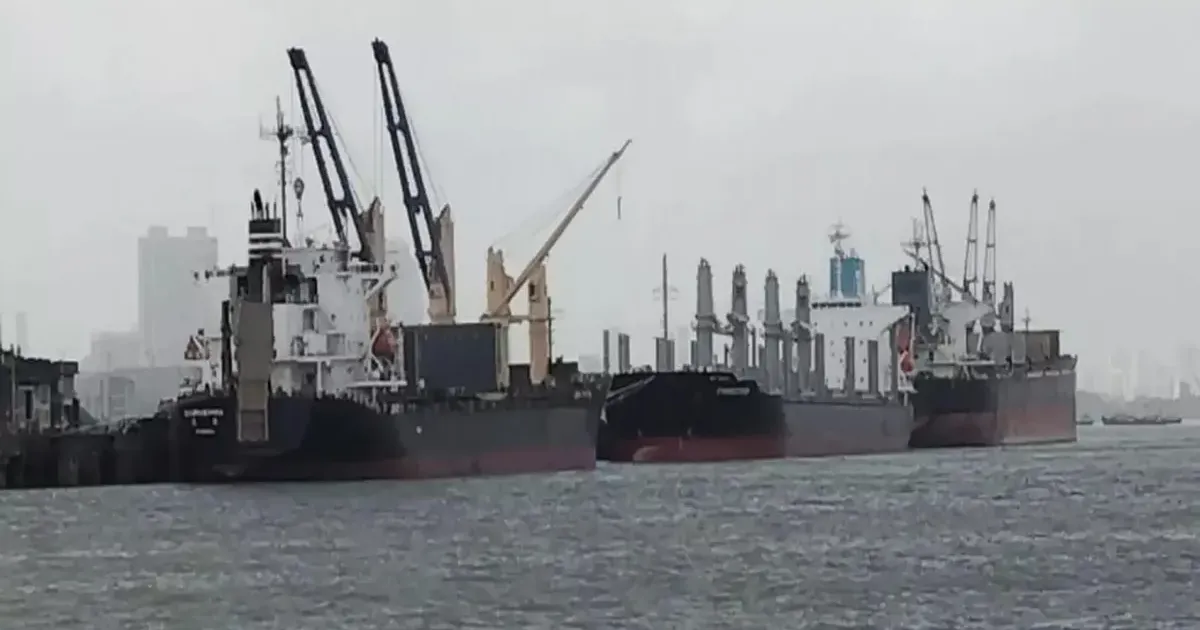
The Shenlong tanker reached Mumbai after a closely watched Hormuz passage that showed how energy markets are adapting to Gulf conflict risk. The arrival was watched closely because each safe passage now carries market meaning. The vessel reached port on March 12, 2026, after passing through the Strait of Hormuz, a route that remains one of the world's most important and most exposed energy chokepoints. For India, the cargo mattered because energy security is not an abstraction. Refiners need predictable arrivals, traders need insurance clarity and consumers eventually feel disruption through fuel prices and inflation.
The Shenlong tanker's arrival in Mumbai turned an ordinary crude delivery into a signal about how energy markets are living with Gulf conflict risk.
Why the Passage Was Closely Watched
A tanker can become a market signal when the route itself is under pressure. If ships continue moving, traders read that as a sign that risk is manageable. If owners hesitate, insurance costs rise and buyers begin pricing in uncertainty. The Hormuz passage risk is larger than one vessel because the strait carries flows that affect Asia, Europe and global benchmarks. Even rumors of disruption can push markets before any physical shortage appears. The Shenlong's successful arrival therefore offered reassurance, but not resolution. The route remains vulnerable to drones, mines, harassment, miscalculation and the broader military posture around Iran and the Gulf.
India's Energy Exposure
India has worked to diversify suppliers, but geography still matters. A large share of crude imports must move through maritime corridors shaped by conflict, weather, port capacity and naval security. That exposure creates a policy problem. New Delhi wants affordable energy without appearing dependent on any single power's security umbrella. It also wants supply reliability while maintaining diplomatic flexibility in the Gulf. Refiners can hold inventories and adjust procurement, but they cannot fully escape a chokepoint that sits between producers and consumers. That is why the safe arrival of one tanker receives attention far beyond the port.
Insurance and Freight Costs
The first economic impact of tension often appears in insurance and freight rather than empty fuel pumps. War-risk premiums, rerouting concerns and crew-safety calculations can add costs before any cargo is lost. Those costs travel through the system. A more expensive voyage can affect refinery margins, import bills and the price expectations used by traders and policymakers. Shipping companies also have to decide whether the fee is worth the risk. If enough owners demand higher premiums or delay departures, the market tightens even without a formal blockade.
Hormuz Turns Routine Cargo Into Strategy
The voyage underscores how deeply civilian energy systems depend on military restraint. Naval patrols, regional diplomacy and crisis communication all help keep commercial shipping from becoming collateral damage. For India, the lesson is not that Hormuz is safe. It is that energy planning must assume intermittent risk and build buffers before a crisis interrupts supply. The Shenlong voyage also matters because India cannot treat energy supply as a purely commercial issue. Import dependence means maritime security, refinery planning and diplomatic positioning are tied together every time a cargo crosses a contested route.
A tanker operator may look only at route risk, crew safety and insurance. A government has to think more broadly: what happens if several ships delay, if freight costs rise together or if suppliers demand new terms during a crisis. That is why energy ministries track these passages closely. The safe arrival of one vessel does not remove danger, but it gives planners evidence that the route remains workable under current conditions. The next risk is cumulative. Markets can absorb one tense voyage, but repeated near misses or security incidents can change expectations quickly. Once insurers and shipowners adjust, costs can rise faster than diplomats can calm them.
India's refiners are also balancing price and reliability. Cheaper crude is less useful if delivery windows become unpredictable, and alternative suppliers may not be able to replace Gulf volumes at the same scale. The Shenlong's arrival is therefore both reassurance and warning. It proves the corridor is still functioning, while reminding every buyer how much of the energy system depends on restraint in a narrow stretch of water. That is the uncomfortable lesson of Hormuz: a single safe arrival can calm a market for a day, but it cannot make the chokepoint disappear.
The route also shows how energy security has become a daily operational problem rather than a distant strategic theory. A minister can talk about diversification, but a refinery still needs a specific cargo to arrive at a specific berth within a workable time window. When that schedule is threatened, the consequences spread quickly. Storage plans change, replacement cargoes become more expensive and traders begin testing how much fear is already reflected in the market. India's exposure is especially important because demand growth leaves less room for complacency. A mature importer can sometimes absorb delays with inventories; a fast-growing economy has to protect supply while keeping prices politically manageable.
The Shenlong voyage therefore functions like a stress test. It did not prove that Hormuz is free of danger, but it showed that commercial shipping can still move when insurers, crews, ports and governments judge the risk to be acceptable. That judgment could change quickly after a single incident. A boarding, missile warning or drone strike near the route would force shipping desks to recalculate risk in hours, not weeks. For policymakers, the answer is not panic. It is redundancy: alternative suppliers, larger buffers, clearer naval coordination and pricing plans that do not assume uninterrupted calm in one narrow waterway.
The financial channel is just as important as the physical route. If insurers mark the Gulf as more dangerous, the cost can rise even when every tanker reaches port safely. That is why market pressure can appear before supply pressure. India's advantage is that it has experience managing complicated procurement. Its disadvantage is that no importer can fully diversify away from a chokepoint that sits at the center of so many producer-to-consumer flows. The practical lesson is to treat safe arrivals as time bought, not risk solved. Each calm voyage gives governments room to build reserves, negotiate alternatives and refine contingency plans before the next shock.
The Shenlong reached Mumbai, but its route remains a warning. The global economy still depends on narrow waters where one incident can become a price shock.