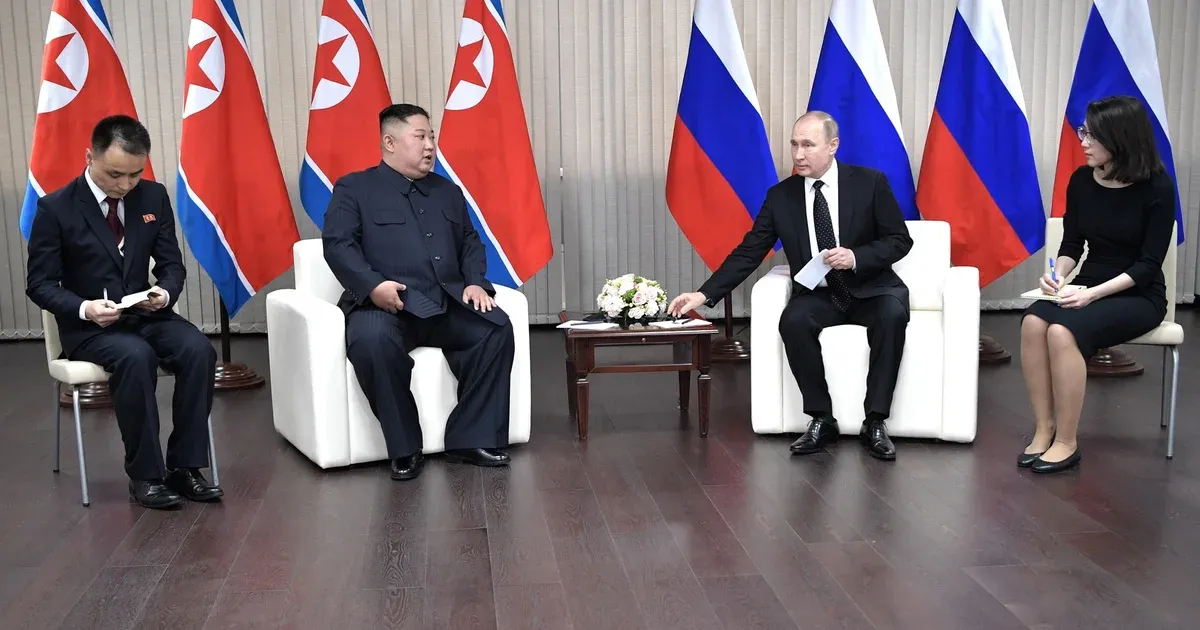
Declassified records expose how Seoul leveraged the collapse of the Soviet Union to methodically dismantle the military architecture supporting Pyongyang. Intelligence reports and diplomatic cables from the mid-1990s reveal a sustained campaign to terminate the 1961 Mutual Defense Treaty between the Soviet Union and North Korea. Foreign policy strategists in Seoul identified the transition of power in Moscow as a critical window to sever the automated military intervention clause that had protected the Kim dynasty for decades.
Economic incentives were the primary instrument for this geopolitical surgery. South Korean officials proposed multi-million dollar loan packages and infrastructure investments to the administration of Boris Yeltsin in exchange for a cooling of ties with the North. Documents show that Russian officials, struggling with a collapsing post-Soviet economy, were increasingly receptive to these overtures. Moscow prioritized currency and trade over the ideological baggage of its former client state in Northeast Asia.
Diplomatic Pressure on Yeltsin Administration
Negotiations regarding the 1961 treaty began in earnest during the early 1990s. South Korean diplomats argued that a mutual defense pact involving automatic military intervention was incompatible with the new era of Russo-South Korean cooperation. Records indicate that Seoul officials met with their counterparts in Moscow repeatedly to emphasize that the survival of the defense pact hindered regional stability. Russia eventually conceded to these demands by allowing the treaty to expire in 1996. This move effectively stripped Pyongyang of its most serious security guarantee from a nuclear superpower.
Moscow replaced the Cold War era agreement with a more modern Treaty of Friendship, Good-Neighborliness and Cooperation in the year 2000. This successor document especially omitted the clause requiring immediate military assistance in the event of a conflict. Seoul viewed this exclusion as a major victory in its long-term strategy to neutralize the Northern threat through diplomatic attrition. Intelligence summaries suggest that the North Korean leadership perceived this shift as an existential threat to their sovereign continuity.
North Korea Backlash Against China Ties
Pyongyang reacted with comparable vitriol toward the normalization of relations between Seoul and China. While Russia was moving toward a transactional relationship with the South, Beijing pursued a dual-track policy that sought to maintain its influence over the North while reaping the economic benefits of the Southern markets. Declassified files from March 31, 2026, describe an internal crisis within the Workers Party of Korea when the South Korea-China normalization was announced in 1992. Senior North Korean officials characterized the development as a strategic abandonment by their most essential ally. The shifting nature of China-North Korea relations continues to influence modern regional logistics and diplomatic connectivity.
According to declassified diplomatic cables, Kim Jong-il described the 1992 normalization of relations between Seoul and Beijing as a betrayal of the revolution and an act of selling out the blood of the people.
Retaliation from the North was swift and calculated. High-level diplomatic channels between Pyongyang and Beijing were frozen for several months. Documents suggest that North Korean leadership considered the Chinese moves a direct violation of the historical bond forged during the Korean War. North Korean state media, though often indirect, began emphasizing self-reliance with renewed intensity to counter the perceived unreliability of its neighbors.
Strategic Realignment of the Kim Regime
Records from the Ministry of Foreign Affairs indicate that Kim Jong-il personally directed the suspension of senior-level talks with Chinese delegations during the mid-1990s. This period of cooling relations coincided with the onset of the Difficult March, the devastating famine that weakened the North Korean state. Despite their internal struggles, the leadership in Pyongyang prioritized diplomatic signaling over humanitarian coordination. Seoul monitored these tensions closely, hoping that the rift between the communist allies would lead to a breakthrough in reunification talks.
Internal memos from the South Korean embassy in Beijing suggest that Chinese officials were frustrated by the North Korean stubbornness. China attempted to bridge the gap by offering limited food aid and energy subsidies, but Pyongyang remained suspicious of Beijing's long-term intentions. Documents paint a picture of a fractured regional order where ideological solidarity was being replaced by cold, nationalist interests. The period defined the modern geopolitical landscape of the peninsula quickly. The historical context makes the current request more sensitive. Seoul is not only asking Moscow to revise a document; it is asking Russia to narrow one of the few formal security guarantees Pyongyang can still cite.
That pressure also interacts with China. If Moscow steps back, North Korea may seek a stronger signal from Beijing, which would shift the diplomatic problem rather than end it.
For South Korea, even a partial Russian retreat would be useful because it would reduce uncertainty in a crisis. The goal is to make automatic escalation less likely before the next peninsula flashpoint.
The archive record also shows why the issue keeps returning. Defense treaties can outlive the governments that signed them, and even outdated language can shape how commanders assess risk during a sudden crisis. Any Russian concession would therefore carry symbolic and operational value. It would tell Pyongyang that old guarantees are no longer automatic, while giving Seoul more room to manage deterrence with allies.
That is why the treaty question still matters decades after the Cold War. Old clauses can influence modern crisis planning when leaders are unsure how far an ally would go. Seoul wants that ambiguity reduced before North Korea can use it in a confrontation.
The immediate gain would be diplomatic clarity. If Moscow distances itself from automatic defense language, Seoul can argue that North Korea is more isolated than its public statements suggest during any future crisis on the peninsula.
Defense Pact Pressure
Seoul is trying to make the pact costly for Moscow without closing diplomatic channels. That balance is difficult because Pyongyang can treat every Russian hesitation as leverage.
The pressure campaign also gives South Korea a way to test whether Russia sees the pact as leverage or as a lasting strategic commitment.