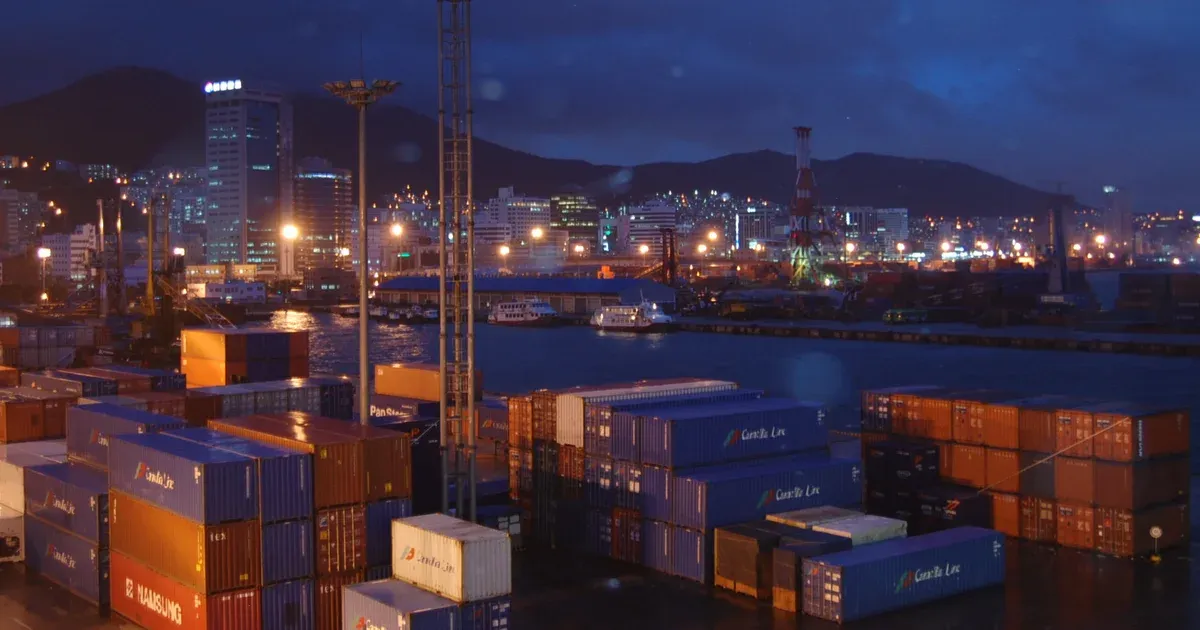
South Korea's record current-account surplus shows the strength of its export machine, especially in semiconductors. It also highlights how far the external sector can pull ahead of households when domestic consumption remains weaker. Bank of Korea data released on April 8, 2026, put the February surplus at $23.19 billion. Semiconductor exports, lower energy import costs and overseas income flows all contributed to the record figure.
Bank of Korea Reveals Trade Performance Breakdown
Detailed records from the central bank show that the current account, which measures the flow of goods, services, and investment income, remains the most detailed gauge of national trade health. February's performance reflects a systemic recovery in the global electronics cycle. High-bandwidth memory chips, essential for server farms and generative artificial intelligence platforms, saw price increases alongside volume growth. South Korea maintains a dominant position in this specific niche, allowing local manufacturers to dictate terms in several key markets. Export totals for memory products rose by nearly 60 percent compared to the same period in 2025.
Automotive shipments provided a secondary layer of support to the overall surplus. Electric vehicle exports to Europe and North America stayed resilient, even as competitors faced supply-chain disruptions. Domestic manufacturers successfully transitioned production lines to satisfy shifting consumer preferences for hybrid and long-range electric models. Customs data shows that the average export price per vehicle climbed to an all-time high in February. Higher margins on premium SUVs helped offset the volume decline in entry-level sedans.
Semiconductor Exports Drive National Revenue Surge
Semiconductor manufacturers in Hwaseong and Icheon reported near-maximum capacity use throughout the first quarter. Industry analysts point to the rapid adoption of specialized chips as the primary driver of this $23.19 billion windfall. While traditional PC and smartphone markets show signs of saturation, the infrastructure layer of the global tech economy is expanding. South Korean firms now supply the vast majority of the specialized memory required for advanced computing tasks. This technological monopoly ensures a steady stream of foreign currency into the domestic banking system.
Shipments to China, the largest trading partner for South Korea, showed signs of stabilization after months of contraction. Gains in high-tech components offset losses in intermediate industrial goods. Manufacturers are diversifying their reach, with shipments to Southeast Asia and India growing at a faster clip than traditional routes. Trade officials in Seoul noted that the geographic spread of exports is now more balanced than it was a decade ago. Diversification reduces the risk of localized economic downturns impacting the national bottom line.
The sharp increase in the current account surplus reflects the underlying strength of our export engine and a favorable shift in the global commodity cycle, an official from the Bank of Korea stated during the briefing.
Primary income, which includes interest and dividends from overseas investments, contributed significantly to the February total. Large domestic conglomerates have expanded their global footprints, leading to a steady repatriation of profits. Dividend income from foreign subsidiaries reached its highest level for a February window. This income stream provides a counterweight to the often-volatile services account, which frequently runs a deficit due to outbound tourism. Strong investment returns from sovereign wealth funds and private institutions added billions to the final tally.
Services trade continues to show a deficit, though the gap narrowed slightly in February. Travel spending by residents going abroad stayed high, but an influx of international tourists reduced the impact. Seoul hosted several international conferences and sporting events during the month, boosting local service revenue. Transport services also saw a slight uptick as shipping rates stabilized along major maritime routes. Logistics firms reported higher demand for air cargo, particularly for time-sensitive electronic components destined for the United States.
Imports, by contrast, continued a downward trend that started late last year. Energy purchases, which typically dominate the national import bill, fell as local refineries used existing stockpiles. Natural gas prices in the spot market dropped sharply, providing relief to the industrial sector. Domestic demand for luxury consumer goods also softened, further curbing the outflow of capital. The resulting surplus creates a buffer for the local currency against volatility in the international exchange markets. Foreign demand for South Korean technology is the primary catalyst.
Secondary income, covering transfers such as remittances and government grants, stayed largely neutral. This category typically has little impact on the overall current account compared to the multi-billion-dollar movements in goods and primary income. Small-scale outflows for international aid and personal transfers were offset by inbound grants and institutional movements. The stability of this sector allows policymakers to focus almost exclusively on trade and investment flows when crafting fiscal strategy.
Global interest rate policies still influence the sustainability of these record figures. If central banks in major economies maintain high rates, consumer spending on durable goods could eventually wane. South Korea faces the challenge of maintaining its export momentum in a cooling global environment. Exchange rate fluctuations also play a role, as a strengthening won could make Korean products more expensive for international buyers. The Bank of Korea keeps a close watch on the real effective exchange rate to ensure local exporters stay competitive.
The Surplus Masks a Two-Speed Economy
A large surplus gives South Korea currency support and policy room, but it does not automatically mean the whole economy feels strong. Export champions and households can experience the same cycle very differently. That is the caution inside the record. The more the surplus depends on chips and global technology demand, the more Seoul has to manage the risks of a two-speed economy.