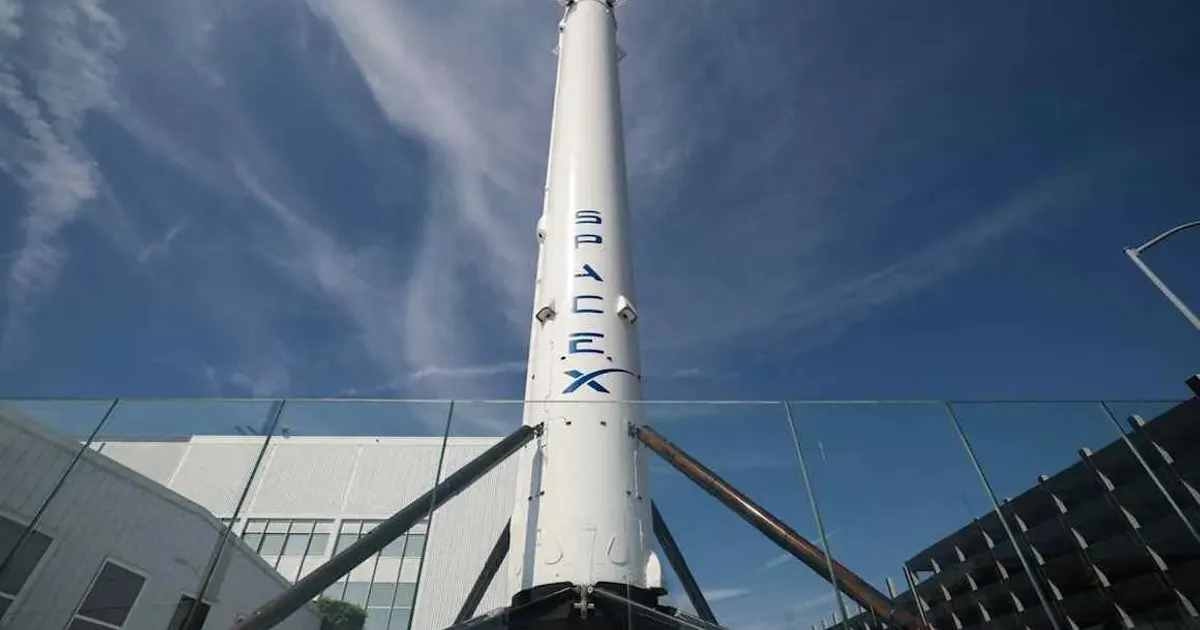
SpaceX's public S-1 filing changed the IPO story more than the valuation did. Before the prospectus, investors could argue about reusable rockets, Mars ambitions, Starlink dominance and Elon Musk's record of bending industrial timelines. After the filing, the argument had to pass through audited numbers, risk factors, control terms, government-contract exposure and the cost of building future orbital infrastructure.
Recurring revenue is why Starlink sat at the center of the document's meaning. A public market can admire rockets, but it needs a business it can model. Starlink gave SpaceX that business: recurring revenue, subscribers, terminals, country approvals, enterprise demand and the possibility of direct-to-device communications. The IPO was sold as a space story. The disclosure burden made it a network story first.
The Filing Replaced Mystery With Line Items
Confidential filing language had allowed SpaceX to stay partly mythic. A public S-1 removes that protection. Investors can see revenue categories, losses, capital requirements, related-party issues, legal risks, voting structures and executive control. They can compare the company's story with the cost of making that story real.
Public disclosure is healthy, even when it makes the company look less magical. SpaceX has operated for years with unusual privacy despite its central role in U.S. launch capacity, satellite internet and national-security contracting. Public disclosure does not weaken the engineering. It makes the economics harder to romanticize.
Starlink Is the Model Wall Street Understands
Starlink gives SpaceX the recurring-revenue profile that launch services alone cannot provide. Falcon launches are dominant, but they are episodic. Government contracts are valuable, but politically exposed. Starlink looks more like a global communications platform, with customer growth, average revenue, churn, terminal costs and service tiers that analysts can turn into forecasts.
Model visibility does not make Starlink simple. The constellation needs constant replenishment. Spectrum rights and country approvals can slow growth. Governments may favor domestic alternatives or restrict service in conflict zones. Competitors can attack rural broadband, enterprise connectivity and direct-to-phone use cases. Starlink is the proof point, but it is also where the valuation has to become measurable.
Starship Is the Cost Before the Payoff
Starship remains the part of SpaceX that makes ordinary valuation methods feel inadequate. If the vehicle becomes reliably reusable at scale, it could change launch economics, support larger Starlink satellites, expand lunar logistics and open markets that do not yet exist. That optionality is why investors accept a premium.
The S-1 also forces the other side of that story into view. Starship development consumes capital, attracts regulatory scrutiny and creates visible technical risk. A test failure is no longer just a dramatic video and a learning cycle. For a public company, it can become a market event, a risk-factor update and a test of whether investors still believe the long-term curve.
Government Work Complicates the Growth Story
SpaceX is not only a consumer satellite company. It is a critical contractor for NASA, the Pentagon and other government customers. That relationship gives the company stability, strategic importance and barriers to entry. It also brings political risk, procurement scrutiny and dependence on agencies whose priorities can shift.
Public investors have to price both sides. Government demand can anchor revenue during private-market weakness. It can also expose SpaceX to budget fights, national-security restrictions, export controls and oversight. A company that helps define American space capacity cannot be judged like a normal tech platform, even if part of the valuation borrows from tech-platform language.
Control and Liquidity Matter More After Listing
The filing also matters because it sets the rules for who actually controls the company and who can sell. Voting structure, insider ownership, employee stock, lockup timing and secondary-sale limits all shape how much public shareholders influence the business. For a company built around founder control and fast engineering decisions, governance is not a footnote.
Liquidity cuts both ways. Employees and early backers may gain access to life-changing value. Public shareholders may worry about future selling pressure as lockups expire. That tension is normal after a large IPO, but SpaceX's scale makes it larger. A company can raise public money and still keep public investors at a distance if control rights are structured that way.
The S-1 Was the Beginning of Accountability
The central point is that SpaceX did not become easier to understand when it went public. It became harder to excuse. The filing forced investors to separate four stories that had often been bundled together: Starlink cash generation, Starship technical risk, government-contract stability and Musk-scale industrial ambition.
Separating the businesses is useful. SpaceX may still justify an enormous valuation if Starlink keeps scaling, Starship proves repeatable and government work remains deep. But the public-market era will not let all of that sit under one heroic narrative forever. The IPO asked investors to buy the future of orbit. The S-1 made clear that the future comes with footnotes, costs, control questions and risks that can no longer stay behind closed doors.