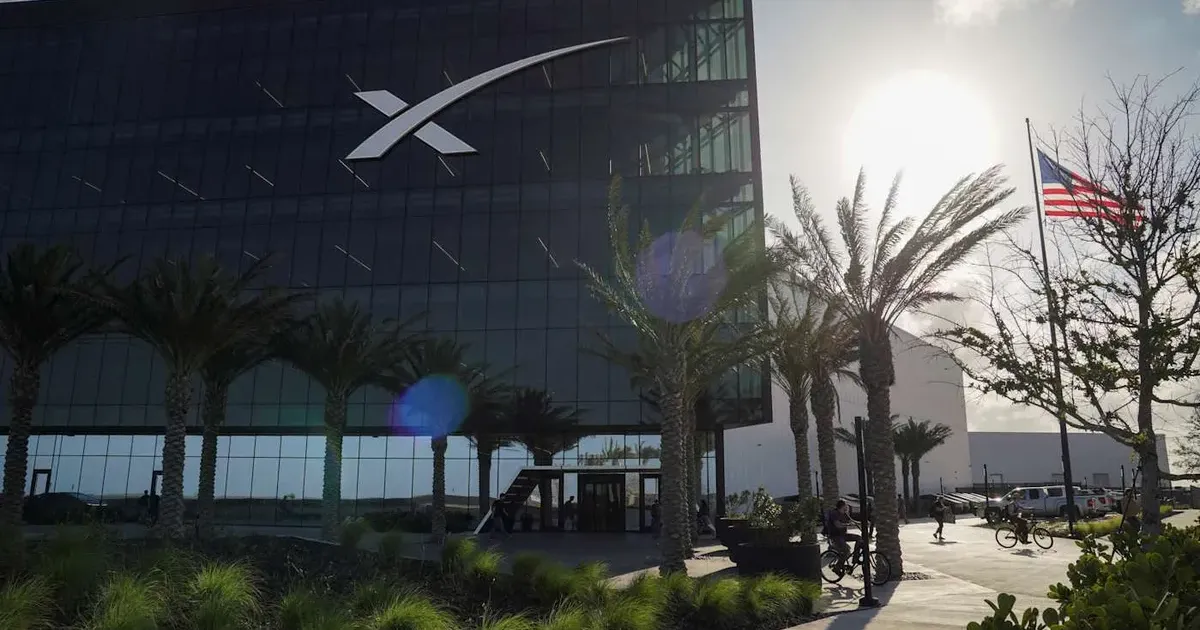
SpaceX's IPO was supposed to give public investors a piece of the most valuable space company on earth. It did that. It also gave them public-market gravity. After listing on Nasdaq under the symbol SPCX at an IPO price of USD135 a share and a valuation around USD1.75 trillion, the stock surged, then fell sharply back toward its offer price by mid-July.
The stock reversal does not erase the company's strategic importance. SpaceX is still a launch powerhouse, a satellite internet operator, a major government contractor and the company most closely associated with reusable rockets. But public markets price excitement differently from private rounds. Once a company trades every day, the Mars story has to share space with revenue, losses, debt spreads, lockups, test-flight risk and subscriber economics.
The IPO Turned Myth Into a Ticker
Before the listing, SpaceX could be discussed as a private industrial myth: Falcon reusability, Starlink scale, Starship ambition and Elon Musk's long campaign to make space access cheaper. Public trading changed the frame. Investors now see a quoted price, a market cap, analyst targets and daily volatility.
Daily pricing makes psychology more fragile. The stock reportedly climbed above USD225 after the June IPO, then dropped by roughly a third to near USD139 on July 13, close to the IPO price. That move wiped out hundreds of billions of dollars in market value and forced investors to decide whether the first surge had priced in too much of a future that still depends on execution.
Starlink Carries the Financial Case
Starlink is the clearest reason SpaceX can be valued as more than a rocket company. Satellite internet gives the business recurring revenue, a direct customer base and a platform story that Wall Street can model. Analysts can estimate subscribers, average revenue, churn, terminal costs, country approvals, enterprise demand and direct-to-device partnerships more easily than they can model Mars.
The catch is that Starlink is capital hungry. Satellites wear out, launch capacity has to keep refreshing the constellation, spectrum fights matter and national-security rules can limit service in contested regions. The business is more legible than Starship, but it is not low-risk infrastructure. It has to keep growing fast enough to justify a valuation that already assumes orbital dominance.
Starship Is the Upside and the Hazard
Starship is the engineering story that keeps SpaceX from being valued like a traditional aerospace contractor. If the system becomes reliably reusable at scale, it could cut launch costs, deploy larger Starlink satellites, support lunar missions and create markets that barely exist now. The upside is why investors still watch every test flight like a financial event.
The next catalyst is direct. SpaceX is preparing Starship's 13th test flight, with the FAA clearing a launch window beginning July 16. The mission is expected to attempt deployment of 20 Starlink V3 satellites and test capabilities tied to higher-capacity service. Success could steady sentiment. A failure would not end the program, but public shareholders may be less forgiving of explosions, redesigns and investigations than private backers were.
The Valuation Leaves Little Room for Ordinary Doubt
The public-market problem is not that SpaceX lacks ambition. It is that the valuation already capitalizes an enormous amount of success. MarketWatch cited 2025 revenue around USD18.6 billion and a net loss of about USD4.9 billion, while Barron's noted that the stock was valued near USD1.8 trillion and not expected to be profitable in 2026. Those numbers create a difficult multiple even before technical setbacks or competition enter the picture.
China's reusable-rocket progress, Blue Origin's fundraising and the wider space-sector capital cycle all matter because SpaceX is no longer only competing with skepticism. It is competing with other claims on the same future. A dominant company can still be overvalued if the market buys too much of the end state too early.
Debt Markets Are Sending Their Own Signal
The stock is not the only pressure point. The Financial Times reported that SpaceX's bond spreads widened sharply after the IPO, with its 2056 bonds moving closer to junk-like pricing behavior. That does not mean the company is distressed. It does mean credit investors are asking for more compensation to hold long-dated SpaceX risk.
The credit signal matters because SpaceX's ambitions are capital intensive. Starship, Starlink refresh cycles, space-based data-center concepts, national-security work and acquisitions all require funding. If equity investors are volatile and debt investors demand higher yields, the company still has options, but the cost of those options becomes part of the story.
Public Markets Will Not Fund Mystery Forever
The central lesson of the IPO is that SpaceX can be both extraordinary and overpriced at the same time. Public investors are not buying a normal aerospace company. They are buying a claim on launch infrastructure, satellite communications, defense logistics and the possibility of a larger orbital economy. That claim may prove valuable. It also requires enormous trust in execution.
The next phase will be less forgiving than the private era. Starlink has to keep converting satellites into cash. Starship has to keep moving from spectacle toward repeatable service. Management has to explain losses without relying only on destiny. SpaceX went public as a company selling control of orbit. Now it has to trade like a company whose future is still remarkable, but no longer protected from the market's daily habit of asking what the future is worth today.