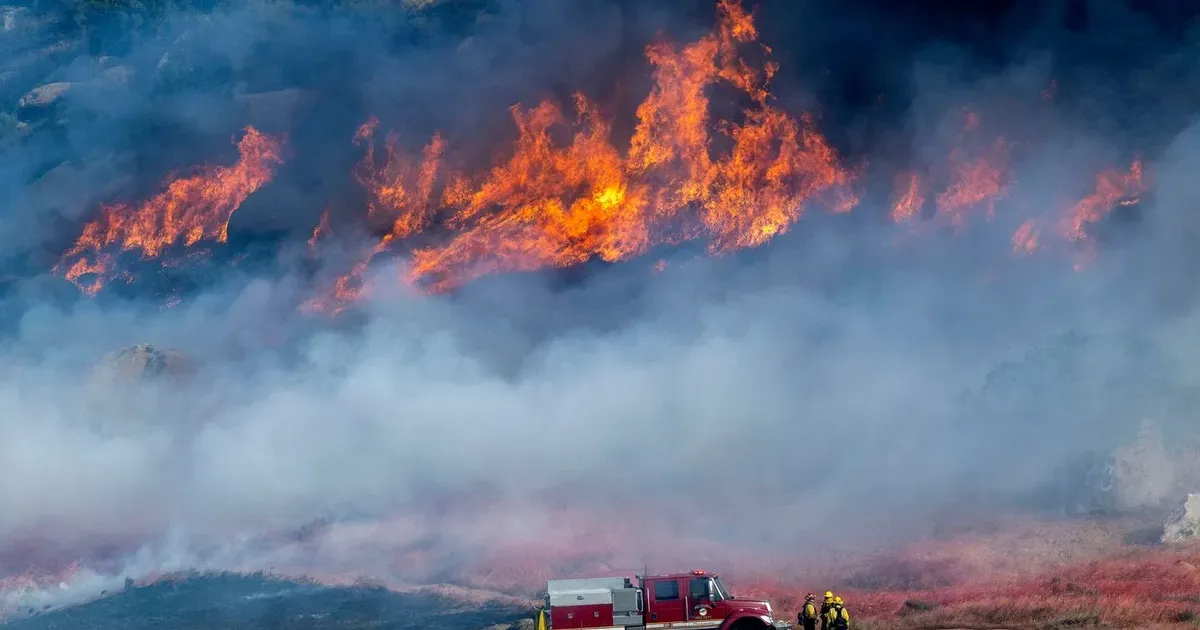
On April 4, 2026, Springs Fire emergency personnel established 45 percent containment on the fast-growing wildfire burning through brush-heavy terrain in Southern California. Mandatory evacuations remained in place for residential neighborhoods located within the path of the thick smoke and shifting flames. High-velocity winds pushed the blaze across several ridges Friday morning, forcing families to flee with minimal notice before daylight. Firefighters from multiple jurisdictions arrived to provide mutual aid as the region faced its first major test of the spring season.
Progress followed a night of aggressive aerial attacks and specialized hand-crew operations. Commanders at the scene indicated that the forward progress of the fire had slowed by Saturday afternoon. Localized warnings remained active for residents in surrounding areas due to unpredictable gusts. Smoke plumes visible from several miles away highlighted the severity of the initial breakout.
Springs Fire Containment Operations and Evacuation Orders
Evacuation orders affected several hundred households starting early Friday. Law enforcement agencies managed traffic flow out of the danger zones to ensure emergency vehicles had clear access to narrow canyon roads. Shelters opened at regional community centers to accommodate those displaced by the encroaching flames. Records show that Southern California fire departments have increased their early-season readiness in response to historical trends.
"Crews were making progress Saturday battling a fast-growing and smoky wildfire in Southern California that broke out Friday morning, prompting mandatory evacuations and warnings," the Washington Times reported.
Specific containment goals for the evening focused on securing the western flank where vegetation is densest. Crews used bulldozers to create breaks in the thick brush that fueled the early growth of the fire. The Washington Times reported that the fire moved with such speed that some residents had only minutes to clear their properties. Strategic coordination between state and local agencies prevented the fire from jumping main containment lines during the peak of the wind event.
Containment metrics remain the main focus for regional commanders. Ground crews faced steep, inaccessible terrain that complicated direct suppression efforts. Hand crews spent hours carving lines through chaparral to prevent the fire from descending into populated valleys. Water-dropping helicopters cycled through nearby reservoirs to provide continuous support to the teams on the ground. Temperatures remained unseasonably high, which accelerated the evaporation of moisture from the surrounding foliage.
Environmental Drivers of the Early California Fire Season
April is traditionally a transition period for California weather, though recent meteorological data indicates that the window for high-risk fire events is expanding. Less winter precipitation than expected left the regional landscape vulnerable to early ignition. Dried brush and dead timber provided the fuel for a single spark to ignite an enormous blaze. Experts note that the lack of soil moisture enables rapid flame spread even in moderate wind conditions. Early appearances of such blazes suggest a change in environmental baselines. This shift puts a strain on seasonal staffing models that typically do not ramp up until late May. Officials are now considering year-round fire staffing as a permanent necessity to combat the year-long threat. Budgetary allocations for fire suppression have risen to $2.7 billion annually to meet these demands. Evacuation orders persist for all residents within a five-mile radius of the canyon floor. Vegetation cycles in the region have become increasingly erratic. Heavy rains in previous years spurred the growth of invasive grasses that now serve as kindling for larger timber fires. Once these grasses dry out in the spring heat, they allow small ignitions to reach the forest canopy within minutes. Incident commanders reported that the Springs Fire moved through these grassy corridors with exceptional velocity on its first day.
Power grids often sit at the center of the wildfire debate. Aging equipment and wooden poles present ongoing hazards during periods of high wind in rural corridors. Utility providers have implemented public safety power shutoffs in certain areas to reduce these dangers. Critics argue that these measures are temporary fixes for systemic infrastructure neglect. Urban sprawl further complicates the fire management landscape as homes built in the wildland-urban interface create complex challenges for tactical suppression.
Insurance companies have started withdrawing from these high-risk areas entirely. Homeowners now face skyrocketing premiums or a total loss of coverage options for their properties. The wider economic effects of a single wildfire extend far beyond the immediate damage to physical structures. State legislators are debating new subsidy programs to keep the regional housing market from collapsing under the weight of climate-driven risk. High-density development in fire corridors continues despite these escalating costs. Rehabilitation of scorched earth will begin once the fire is fully extinguished. Erosion controls become the next priority to prevent mudslides during future rain events. Local ecosystems require years to recover from the intense heat generated by modern wildfires. Forestry experts are monitoring the area for signs of permanent habitat loss.
Springs Fire Progress Leaves Containment Work Ahead
The containment figure is progress, but not a finish line. California fire crews still need favorable weather, secure lines and continued evacuation discipline before the Springs Fire is fully controlled.