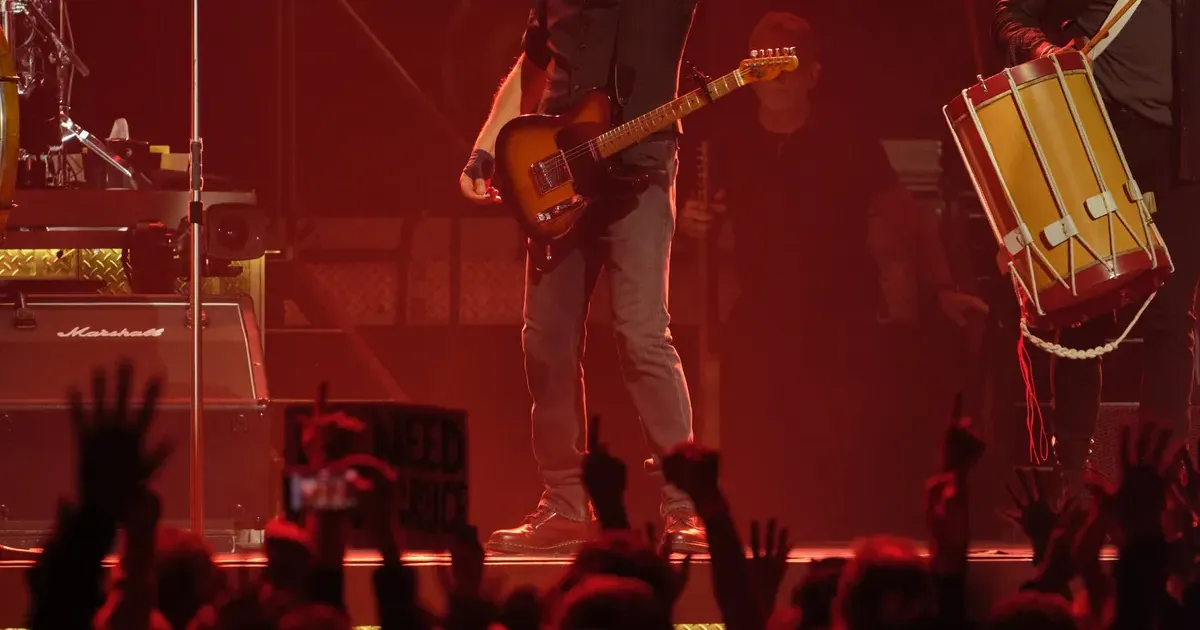
Bruce Springsteen opened the Land of Hope and Dreams American Tour in Minneapolis with language that sounded, at first, like a broad civic appeal. Hope over fear. Democracy over authoritarianism. Unity over division. Peace over war. In a normal arena setting, that could have landed as safe, vague uplift. Springsteen did not leave it there.
The nearly three-hour opener turned those words into a position. He began with War, brought Tom Morello into the night, returned to songs that have always mixed patriotism with accusation, and made Minneapolis feel like more than a convenient first stop. The message was unity, but not the kind that asks everyone to lower the temperature and forget what caused the fire.
The Sermon Came Before the Nostalgia
Springsteen has never been shy about turning a concert into a civic argument, but the Minneapolis opener made the framing unusually explicit. The tour was promoted as a defense of American democracy, freedom and constitutional life. That meant the audience did not have to wait for subtext. The speech at the top told them what kind of night they were entering.
The explicit framing changed the function of the catalog. Born in the U.S.A., No Surrender, American Skin, Long Walk Home and Chimes of Freedom are not neutral comfort songs in that setting. They become evidence in a case Springsteen has been making for decades: the American story is worth defending only if it is honest about who gets wounded, forgotten or excluded.
Minneapolis Gave the Message a Local Charge
Starting in Minneapolis gave the unity language a harder edge. The city carries national political memory around policing, protest, public grief and state power. Springsteen's Streets of Minneapolis tied the tour's broad civic vocabulary to a specific place and to the deaths that shaped the song's anger.
The local charge is why the opener did not feel like a detached speech about values. It placed the argument in a city already associated with arguments over law, force and accountability. A performer can say democracy anywhere. Saying it in Minneapolis, then singing a local protest song, made the word less ceremonial.
The E Street Band Kept It From Becoming a Lecture
The politics worked because the show still moved like a rock concert. The E Street Band gives Springsteen's speeches a release valve: the sermon points the night in one direction, then the band turns it into motion. Without that lift, the show could have become a lecture wrapped in applause.
The music-politics balance is central to Springsteen's public power. Fans can disagree about how much politics they want from the stage, but the songs have always carried workers, soldiers, migrants, small towns, police violence, lost jobs and damaged faith. The politics are not an add-on to the machine. They are part of the engine.
Unity Was Framed as Resistance
The important distinction is that Springsteen's unity was not quietism. He was not asking listeners to split the difference between democracy and authoritarianism, or between peace and war, or between law and lawlessness. He used the language of unity to name a side, then asked the audience to stand there.
The named side makes the message more confrontational than the word suggests. In American politics, unity often means smoothing over conflict for the comfort of people tired of arguing. Springsteen's version meant refusing to let democratic language be surrendered to whoever shouts loudest. It was a call to discipline, not a request for everybody to be nicer.
The Limits Were Obvious
A concert like this mostly reaches people prepared to hear it. Arena politics rarely converts a hostile audience in real time. Some fans will say they came for the songs and got a sermon. Others will hear the speech as the reason the songs still matter. Both reactions are predictable.
The harder value of the opener was not conversion. It was line-drawing. Springsteen used Minneapolis to make silence feel like a choice and nostalgia feel insufficient. Peace, democracy and unity were not presented as decorative tour words. They were treated as contested ground. The line-drawing is why the opening night carried weight beyond the setlist: it showed an artist refusing to let American language become soft while the country fights over what that language permits.