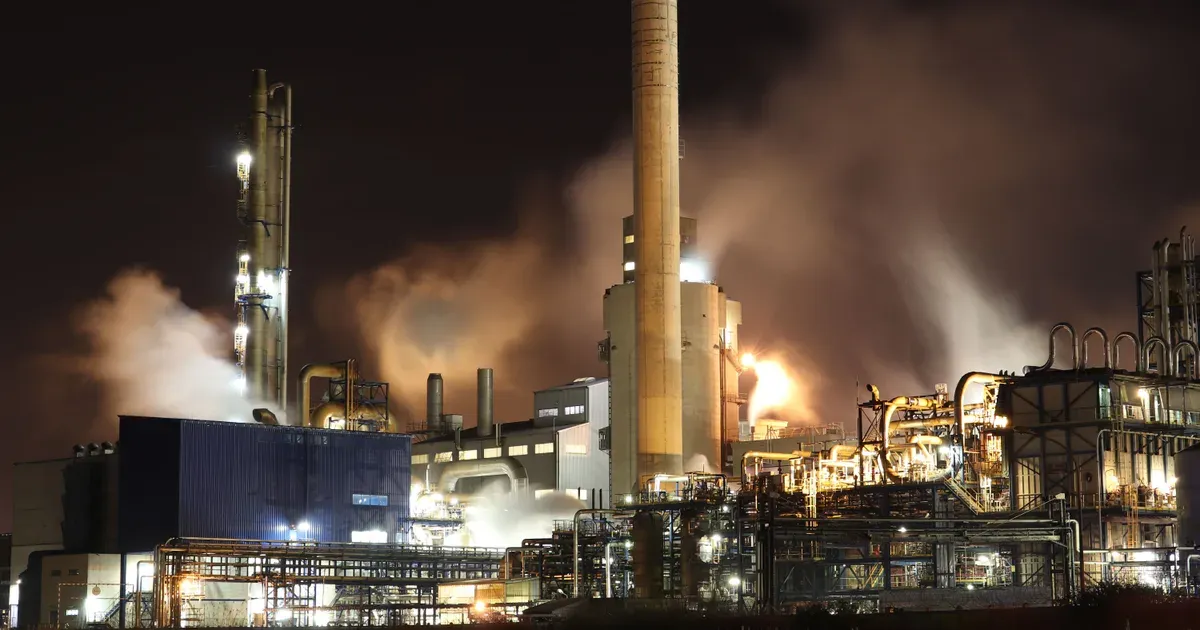
Neste executives issued a formal warning to European regulators regarding the influx of low-cost Chinese bio-based fuels. Refining margins for sustainable aviation fuel face a sharp decline as Beijing scales its export capacity. The Finnish energy giant recently completed extensive upgrades to its facilities in Singapore and Rotterdam to meet growing demand for low-carbon kerosene. Executives at the Helsinki-based firm argue that a lack of competitive parity threatens the viability of multi-billion-dollar decarbonization projects. Global aviation accounts for approximately 2% of total carbon dioxide emissions, and the industry views sustainable aviation fuel, or SAF, as the primary lever for reducing this footprint. Neste has committed more than $2 billion to expand its renewable products capacity, betting on strict Western mandates. Chinese producers are now entering the market with sharply lower price points. These firms benefit from lower operational costs and a domestic surplus of used cooking oil, the primary feedstock for current renewable fuel production. European officials are investigating whether these exports benefit from unfair state support or if they bypass environmental standards.
Biofuel Price Pressure Builds
Recent financial disclosures from the company indicate a tightening of margins in the renewable segment. Analysts at major investment banks have noted that the spread between conventional jet fuel and SAF remains wide, making the market sensitive to any influx of cheap supply. If Chinese refiners can undercut Western producers by a wide margin, the incentives for European and American airlines to buy locally diminishes. Mandates in the European Union require fuel suppliers to ensure that 2% of fuel at EU airports is SAF by 2025, rising to 6% by 2030 and 70% by 2050. These targets were designed to provide a guaranteed market for early movers who invested in expensive refining technology. But the arrival of cheaper Chinese alternatives could turn these environmental regulations into a conduit for capital flight.
We need to ensure there is a level playing field where all participants follow the same rules regarding sustainability and carbon intensity reporting.
Market dynamics are shifting faster than the regulatory structures designed to contain them. Export data from Beijing shows a sharp uptick in the volume of biodiesel and renewable fuels leaving Chinese ports. In the first half of the previous year, shipments to Europe surged, prompting calls for anti-dumping duties from local trade bodies. Chinese refiners use a vast internal collection network for used cooking oil, often referred to in the industry as UCO. This vast supply chain allows China to produce renewable fuels at a cost basis that Western firms struggle to match. Some market observers suggest that the current surge in Chinese exports is a strategic move to dominate the SAF market before newer technologies like power-to-liquids become commercially viable. Many Chinese petrochemical firms are repurposing existing refineries to process bio-feedstocks with minimal capital expenditure. The quality and origin of these feedstocks remain a point of contention. Industry whistleblowers have previously raised concerns about gutter oil being mixed with virgin palm oil to meet export criteria for renewable fuels. Verification of the carbon intensity of these fuels is difficult due to the opacity of the Chinese supply chain. Brussels has initiated several probes into the pricing of Chinese biofuels to determine if they are being sold below cost. Anti-dumping duties could provide temporary relief for firms like Neste, but such measures often lead to retaliatory trade actions. Meanwhile, the United States offers production tax credits under the Inflation Reduction Act to stimulate domestic SAF production.
These differing policy approaches create a fragmented global market where fuel may be diverted to the region with the most favorable subsidies or the weakest enforcement. Energy analysts point out that if Chinese producers can prove their environmental credentials, blocking their products becomes politically difficult for governments committed to rapid decarbonization. Reduced fuel costs could lower the green premium that airlines now pass on to passengers.
Price parity remains the ultimate barrier to mass adoption.
Green Protectionism Has a Price
Western governments are now trapped in a logical fallacy regarding their climate targets. For years, politicians in Washington and Brussels have championed a rapid transition to renewable energy while simultaneously promising to revitalize domestic manufacturing. The emergence of a Chinese price war in the sustainable aviation fuel sector proves that these two goals are often mutually exclusive. If the primary objective is to lower carbon emissions as quickly as possible, then cheap Chinese fuel should be welcomed as a market-driven solution to the green premium.
Instead, we see a frantic scramble to erect trade barriers that will inevitably increase the cost of decarbonization for airlines and travelers alike. This protectionist impulse suggests that the climate emergency is, for many leaders, secondary to the preservation of industrial market share. Relying on anti-dumping duties to prop up companies like Neste is a short-term fix for a systemic disadvantage in scale and feedstock access. China has mastered the art of scaling green technologies through state-backed dominance of the entire supply chain, from the collection of waste oils to the final refining process.
Unless Western nations are prepared to match that level of industrial coordination, they must accept that their green future will be built on Chinese foundations.