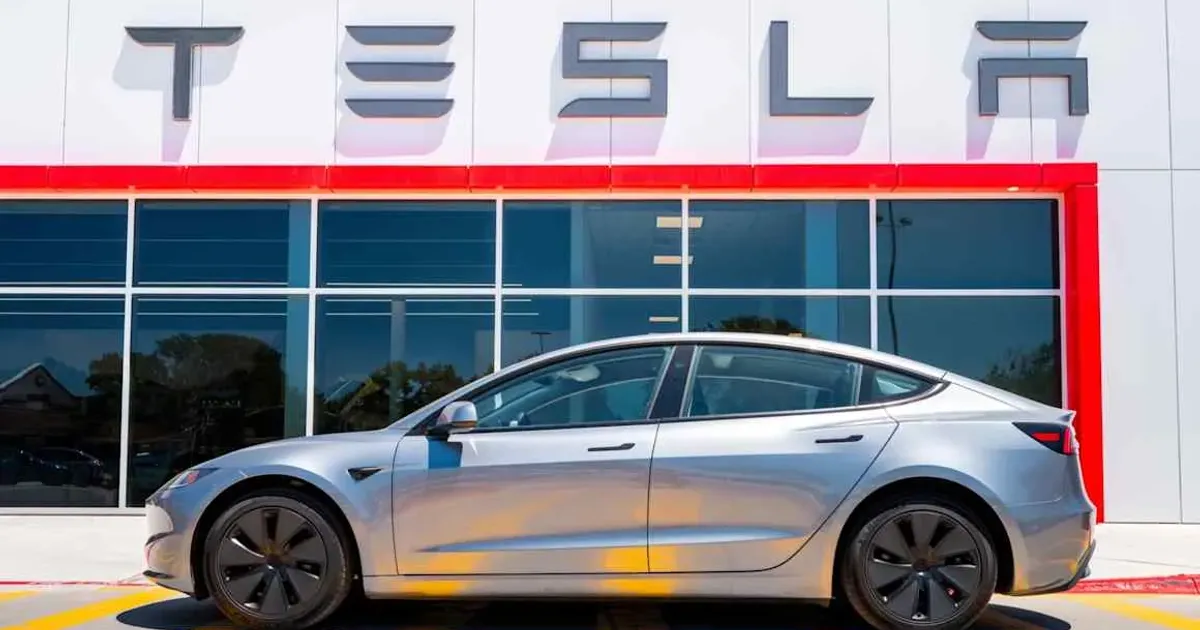
Tesla delivered 358,023 vehicles in the first quarter of 2026 while producing 408,386, a production-delivery gap large enough to change the tone of the electric-vehicle debate. The number was not a collapse. Deliveries were still up from the weak 2025 comparison. The problem was quality of demand. Tesla built roughly 50,000 more vehicles than it handed to customers, and that gap made investors look past the headline volume toward inventory, incentives and gross margin.
The distinction matters because Tesla is still priced and discussed as the company that sets the EV curve. When Tesla has to work harder to move cars, the market reads it as a signal about the wider transition. Buyers are no longer acting as if every new EV is scarce. They are comparing monthly payments, insurance costs, charging access, resale values, software promises and the age of the vehicle itself. The early-adopter phase gave Tesla room to sell aspiration. The post-credit phase asks whether the product stack is still compelling without taxpayer help and heavy financing support.
The Gap Was the Story
A production-delivery gap can be harmless when it reflects ships in transit, regional handovers or quarter-end timing. Tesla's Q1 gap was too visible to dismiss as paperwork. It raised a practical operating question for a company that has spent years treating factory scale as proof of future dominance. Scale is useful only when demand absorbs it at acceptable prices. If finished vehicles keep sitting longer, the next levers are discounts, cheaper financing, trade-in support and regional promotions.
Discounts and financing can protect delivery numbers, but they do not protect the story in the same way. A car moved through incentives is still a sale. It is also evidence that the list price did not do all the work. For Tesla, margin quality matters because automotive gross margin funds the larger autonomy, robotaxi and robotics narrative. A weaker vehicle business does not automatically kill those projects, but it reduces the cash cushion and makes each promise carry more of the valuation burden.
The Tax-Credit Hangover Changed the Buyer
The U.S. clean-vehicle credit ending after September 30, 2025 changed the showroom conversation. Tesla's own incentive page points buyers back to the expired federal framework, while the IRS states that the new clean-vehicle credit is not available for vehicles acquired after that date. The expired credit left state programs, utility incentives and manufacturer offers to carry more of the affordability work.
EV demand did not vanish, but buyers became less forgiving. A monthly payment that worked with a federal credit can become a harder sell without it, especially when insurance remains elevated and charging access is uneven outside dense metro areas. Some consumers will still buy because they want lower fuel exposure, home charging or Tesla's software ecosystem. Others will wait for price cuts or for newer models from rivals. The market is still moving, but it is moving with a calculator open.
The Lineup Has Less Freshness to Spend
The Model 3 and Model Y remain powerful products, yet familiarity now works both ways. Their scale gives Tesla manufacturing efficiency and charging-network recognition. It also gives competitors a clear target. Hyundai, Kia, GM, Ford, Volkswagen, Rivian and Chinese producers have had years to study Tesla's strengths and build around its weak spots. Buyers who once saw Tesla as the default EV choice now have more body styles, more lease structures and more dealer-driven discounts to compare.
Tesla can still win those comparisons, but it cannot win them by reputation alone. The company needs fresher vehicle reasons to buy, not only autonomy timelines and future-platform language. Cybertruck did not become the mass-market volume answer. The lower-cost vehicle story remains important but unevenly defined. The product gap leaves the existing range carrying too much of the sales burden at a time when the incentive backdrop is less generous.
Q2 Rebound Did Not Erase the Warning
Later Q2 delivery strength gave Tesla bulls a better short-term argument. It showed that the Q1 miss was not a straight-line breakdown and that demand can recover when fuel prices, regional pricing and incentive programs move in Tesla's favor. The Q2 rebound should be included because it prevents the Q1 data from being read too mechanically.
Still, the Q1 miss remains useful because it showed where the weak points sit. EV demand is more elastic than the industry liked to say. Policy changes can pull purchases forward, then leave a hole. Financing terms can rescue a quarter while pressuring future profitability. Inventory can move from a logistics detail into a valuation issue. Tesla's advantage is real, but it has become conditional rather than automatic.
Margins Are Now the Scoreboard
The sharper measure combines how many cars Tesla delivers next quarter with how much profit remains after they are moved. If sales recover through discounts, lease subsidies or cheaper financing, volume can look healthier while business quality weakens underneath. Investors will watch automotive gross margin, days of inventory, regional pricing and the mix between Model 3, Model Y and higher-priced vehicles.
Margin quality is the pressure point for Tesla's valuation. Robotaxis, Optimus and AI infrastructure keep the company described as more than an automaker. The cash still begins with vehicles. Q1 2026 showed that the EV transition has entered a stricter phase: fewer subsidies, more price comparison, older core models and less patience for promises that do not move current inventory. Tesla still has scale, brand recognition and a charging advantage. What it no longer has is a market willing to treat every delivery miss as a temporary footnote.