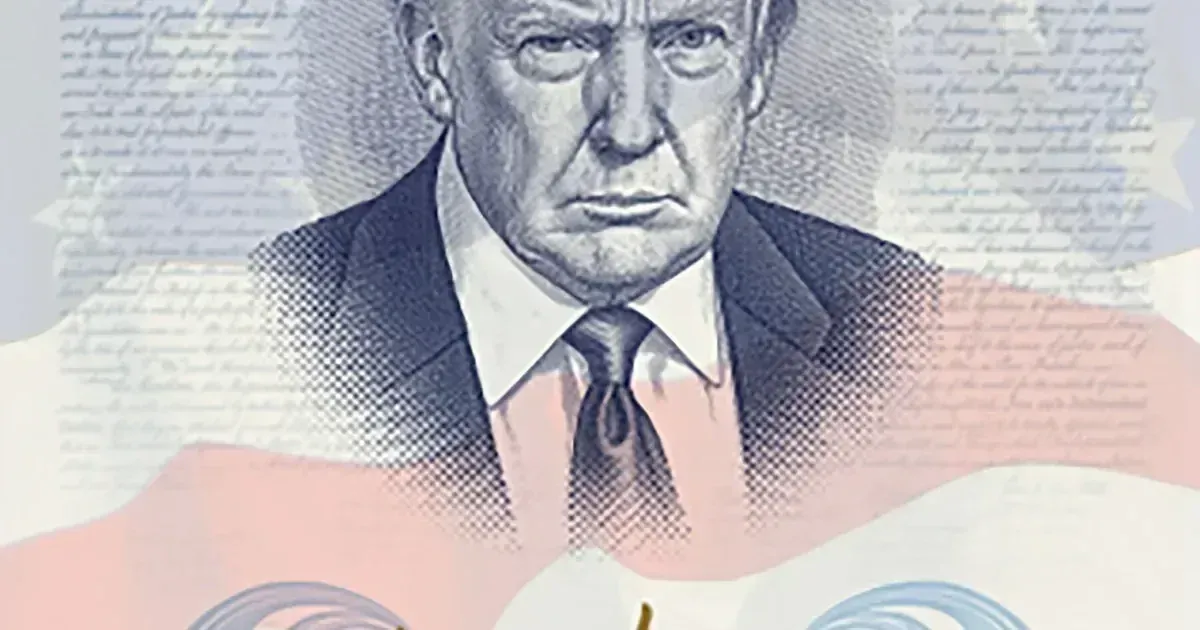
Treasury officials have initiated formal reviews for a commemorative banknote featuring the likeness of Donald Trump. The currency idea turns a commemorative bill into a test of law, symbolism and presidential image-making. Treasury officials also have to weigh whether a portrait debate distracts from the anniversary purpose of the denomination. This initiative aims to celebrate the 250th anniversary of the United States, an event scheduled for July 4, 2026. Treasury Secretary Scott Bessent confirmed during a press briefing on May 28, 2026, that his department is preparing for the potential issuance of the $250 denomination. Discussion surrounding the bill has intensified as legislators in Washington evaluate the necessary regulatory changes required to print the face of a living person on federal tender.
Existing statutes, however, present a legal barrier for the administration. Since the mid-nineteenth century, American law has prohibited the depiction of any living person on U.S. currency. Legislation passed during the post-Civil War era sought to distance the national image from monarchical traditions, where living rulers were frequently featured on coins and paper notes. Specifically, the 1866 Currency Act is the primary barrier to the current proposal. This law mandates that only deceased individuals can be honored on banknotes issued by the Treasury Department.
Legal Constraints of the 1866 Currency Act
Administrative staff at the Treasury confirmed that preparations for the note are a direct response to legislation proposed during the 2025 congressional session. Because the 1866 statute is still active, any move to place a current or former president on a bill while they are still living would require a specific legislative override. Legal experts suggest that such an exemption would need to be drafted with precision to avoid setting a broad precedent that could dismantle century-old currency standards.
Design specifications already circulating within the executive branch include both a central portrait and a facsimile of the signature of the current president. Sources close to the Bureau of Engraving and Printing indicate that preliminary sketches have been drafted to ensure the bill meets modern security requirements. These security measures include color-shifting ink, 3D security ribbons, and complex watermarks that have become standard for high-value denominations since the 1990s.
Legislation is making its way through Congress to potentially clear the way for President Trump's face to appear on a proposed $250 bill commemorating America's 250th birthday.
Secretary Scott Bessent provided this statement to reporters on Thursday, clarifying that the Treasury is not acting unilaterally. Instead, the department is waiting for a clear signal from Capitol Hill before beginning the heavy lifting of physical production. Because the design process for a new bill typically takes years, the shortened timeline for a 2026 release has put intense pressure on the Bureau of Engraving and Printing. Engineers must balance the commemorative aesthetic with the practical need to prevent high-tech counterfeiting.
Legislative Steps Toward a $250 Commemorative Note
Congressional members supporting the measure argue that the 250th anniversary justifies an exceptional departure from historical norms. These proponents view the banknote as a unique artifact rather than a permanent addition to the currency rotation. While most bills, such as the $20 or $100, undergo periodic redesigns for security, the proposed $250 note is being marketed as a one-time issue specifically for the Semiquincentennial. Records from last year show that early versions of the bill were discussed as part of a broader package of commemorative coins and stamps.
Internal documents suggest that the Treasury is evaluating the market impacts of introducing a new high-value denomination. Not since the 1969 withdrawal of $500, $1,000, and $5,000 bills from circulation has the federal government introduced a denomination higher than $100. Financial analysts have raised questions regarding how such a bill would be used in daily commerce, or whether it would primarily serve as a collector's item held in private reserves. Treasury officials maintain that the bill would be legal tender, though its rarity would likely keep it out of most retail transactions.
Current plans for the bill remain contingent on the speed of the legislative branch. Lawmakers must decide if the commemorative value outweighs the legal tradition established in 1866. If the bill fails to pass through both chambers of Congress, the Treasury would likely pivot to a different design or abandon the project entirely for the 2026 celebration. For now, design teams continue to refine the portraiture and security features to ensure readiness should the law change. Production capacity at the main printing facilities in Washington and Fort Worth is already being assessed for the potential surge in specialized banknote printing.
A Living-Person Exemption Could Reshape Currency Rules
A move to override the 1866 Currency Act is a calculated risk for the federal government. For over 150 years, the ban on living individuals has served as a firewall against the politicization of American tender. By maintaining a standard of posthumous recognition, the Treasury has historically avoided the immediate partisan fluctuations that characterize modern governance. Allowing an exception for a single president, even for a commemorative milestone, could invite future administrations to lobby for similar privileges.
Legal challenges from advocacy groups are anticipated if the legislation moves forward. These groups may argue that the 1866 law was intended to protect the stability and neutrality of the national brand. By contrast, supporters believe that the legislative branch has full authority to define currency standards as it sees fit. The outcome of this debate could determine whether the U.S. makes a narrow exception to its currency design rules or preserves the posthumous standards of the modern era. Any resulting court rulings could permanently alter the executive branch's power over national symbols.