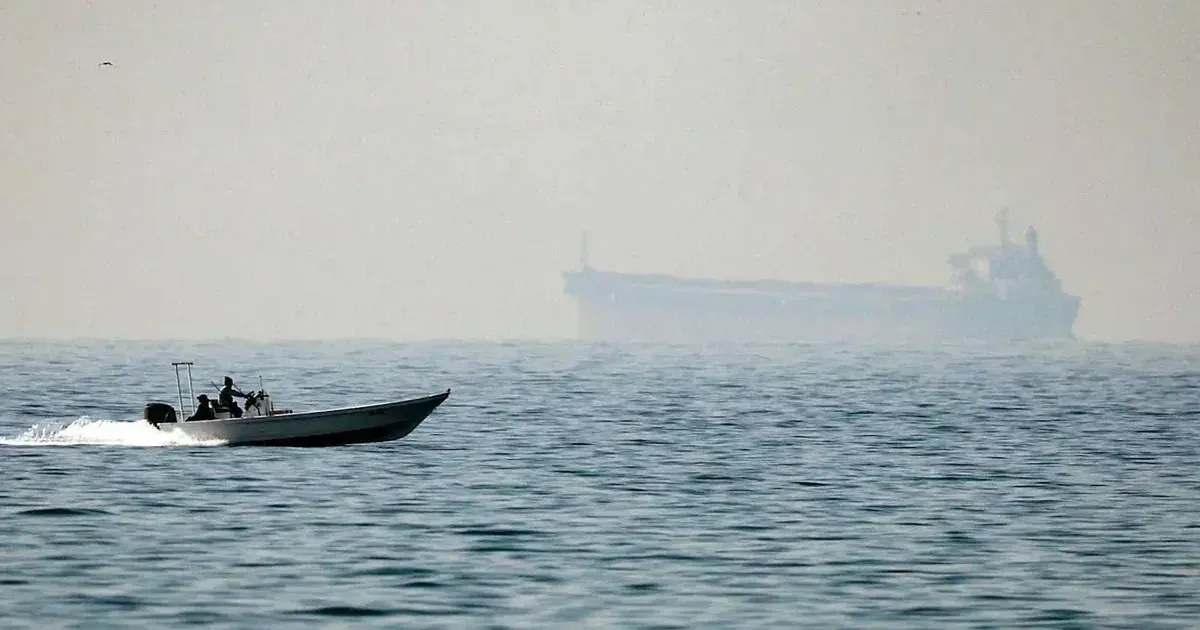
President Donald Trump redirected American diplomatic resources toward Tehran this week, effectively ending months of tentative negotiations between Kyiv and Moscow. White House officials confirmed that the administration no longer views the stabilization of Eastern Europe as a primary security objective. Intelligence assets previously focused on the Donbas region now monitor movements in the Strait of Hormuz. Russian forces responded to the shift by intensifying artillery barrages along the Dnieper River line. European officials expressed private alarm at the speed of the American pivot. For nearly a year, Washington served as the primary broker for a potential ceasefire that would have frozen the conflict in Ukraine. But the prospect of a deal evaporated as the White House prioritized a new campaign of what aides call shock and awe against the Iranian government. The sudden lack of American oversight allowed Vladimir Putin to harden his territorial demands during the latest round of failed talks in Istanbul. Economic analysts warn that the consequences of this military posturing will be more severe than the trade wars of the previous decade. While the 2024 tariffs caused logistical friction, a direct confrontation in the Middle East threatens the structural stability of global energy markets. Crude oil prices jumped to $120 a barrel within hours of the Pentagon announcing new deployments to the region. Shipping insurance rates for tankers in the Persian Gulf rose by 400 percent in a single afternoon.
Ukraine Talks Lose US Attention
Peace negotiations in Istanbul collapsed yesterday after the American delegation departed early to attend emergency briefings on the Gulf. The absence of a high-level US presence left Ukrainian negotiators without the security guarantees they required to entertain territorial concessions. Russian representatives withdrew their previous offers for a demilitarized zone near Kharkiv. Moscow now calculates that the West lacks the focus to maintain a unified front on sanctions. The Kremlin began a new mobilization effort to capitalize on the diplomatic stalemate. Reports from the front lines suggest Russian commanders are no longer concerned about American satellite surveillance or intelligence sharing with Kyiv. Volodymyr Zelenskyy remains in a risky position as his military commanders report dwindling ammunition stockpiles. The lack of an American-led peace process creates a scenario where the conflict could continue indefinitely with no clear exit strategy for either side. Oil markets reacted with immediate instability to the news. Financial institutions are already pricing in the risk of a total cessation of Iranian oil exports. Unlike the targeted sanctions of the past, the current administration seems prepared for a broader kinetic engagement that would disrupt supply chains across the entire Middle East. Banking sectors in London and New York are bracing for a prolonged period of high inflation driven by energy costs. For instance, Goldman Sachs updated its year-end inflation forecast to 6.5 percent following the collapse of the Ukraine talks.
Iran Crisis Pulls Resources Away
Trade disruptions in the Persian Gulf historically lead to deeper recessions than localized manufacturing disputes. The current escalation involves the potential closure of the world's most critical maritime chokepoints. Experts at the International Monetary Fund noted that a sustained conflict with Iran would likely subtract two percentage points from global GDP growth. This is a much larger threat than the previous administration's disagreements with Chinese exporters. The US domestic energy sector is seeing a surge in investment as producers anticipate higher prices. Shale companies in West Texas reported a 15 percent increase in rig activity since the pivot toward Tehran began. Even the domestic production boom cannot offset the loss of Middle Eastern crude on the global stage. Consumer confidence in the United States dropped to its lowest level in three years as gasoline prices reached five dollars per gallon in several states.
The shift in focus has left a diplomatic void that Moscow is already exploiting.
At the same time, the Treasury Department is preparing a new package of secondary sanctions. These measures will target any foreign entity continuing to purchase Iranian petrochemicals or providing maritime insurance to Tehran-linked vessels. Critics in Brussels argue that these sanctions will disproportionately harm European allies who are still recovering from the energy shocks of 2022. The $11 billion in projected losses for German industrial firms is a central point of contention in current trans-Atlantic discussions.
Brussels finds itself caught between an aggressive Russia and an American administration that has effectively abandoned the European security architecture. French and German leaders held an emergency summit to discuss the formation of an independent European defense fund. The European Union lacks the military hardware to replace the American presence in Eastern Europe. The continent remains dependent on Washington for everything from logistics to heavy artillery supplies.
Meanwhile, the Iranian government has signaled it will no longer abide by any enrichment limits. The International Atomic Energy Agency reported that cameras at three key sites in Isfahan were disconnected on Tuesday. The collapse of the Ukraine talks gave Tehran a clearer view of the limits of American diplomatic bandwidth. Iranian officials now believe the White House is too overextended to manage two major geopolitical crises simultaneously. This calculation has led to more aggressive maneuvers by the Revolutionary Guard in the Persian Gulf.
Europe now faces a security vacuum it is not prepared to fill.
The United Kingdom has attempted to act as a bridge between Washington and its disgruntled European partners. But British diplomats admit that the current administration is largely uninterested in multilateral consultations. The focus remains squarely on the tactical objective of neutralizing Iranian influence through direct military and economic pressure. This singular focus has left traditional allies scrambling to protect their own interests in a rapidly destabilizing global order.
Ukraine Pays for Washington Drift
The brutal reading is that Ukraine has become the file Washington can pause when a louder crisis appears. That is not strategy; it is attention management dressed up as diplomacy. If allies cannot tell which war has the president’s focus from one week to the next, adversaries will make that calculation for them.