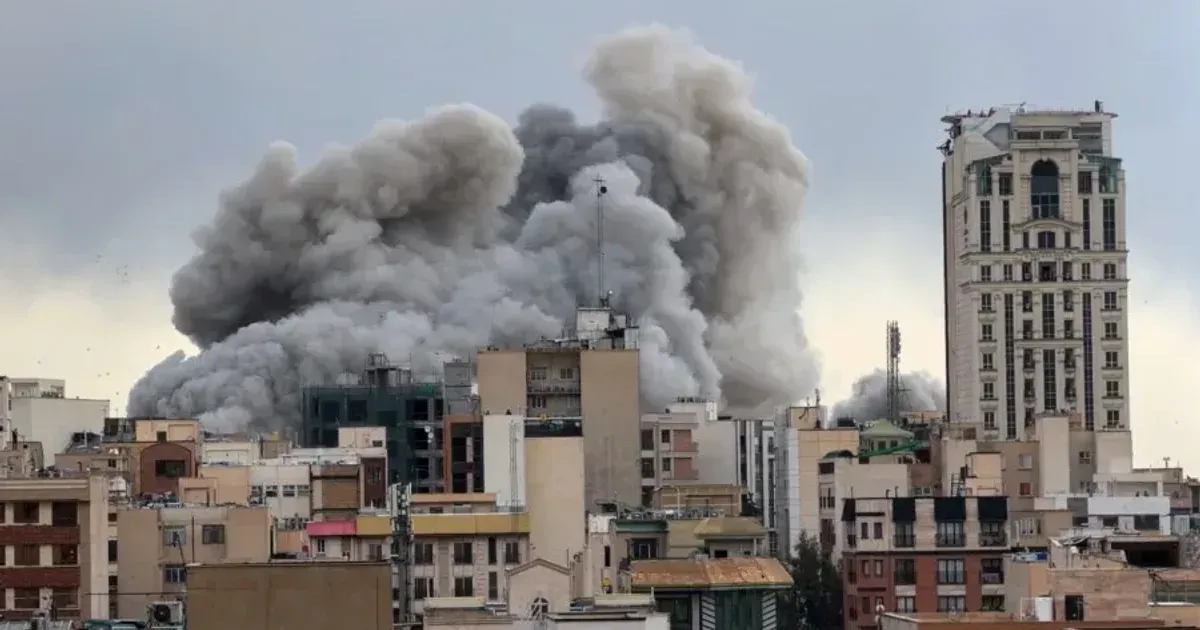
Pentagon officials confirmed on Friday that a KC-135 refueling aircraft crashed in Iraq, claiming the lives of four American service members. This incident occurred during a period of intense military activity, marking the second major briefing of the week from Defense Secretary Pete Hegseth. Rescue efforts for two remaining crew members continue in the Iraqi desert, according to Central Command. High altitude operations and rapid sortie rates have placed immense strain on the aging tanker fleet. The claim was reported on March 13, 2026, as U.S. officials debated the political meaning of the strike. Investigative teams are analyzing flight data to determine if mechanical failure or hostile fire brought the plane down. The crash adds a somber tone to a week defined by massive aerial bombardment across the Iranian plateau. Defense Secretary Pete Hegseth joined General Dan Caine on Friday morning to provide updates on the ongoing offensive. They revealed that the coalition has successfully struck 15,000 Iranian targets since the start of the current campaign. These targets include integrated air defense systems, ballistic missile silos, and command centers operated by the Islamic Revolutionary Guard Corps. In fact, the scale of the destruction has left large swaths of the Iranian military infrastructure in ruins. Hegseth noted that the operation is designed to neutralize the offensive capabilities of the regime. The briefing emphasized the coordination between various branches of the armed forces and allied partners in the region.
Trump Recasts the Strike Narrative
Mojtaba Khamenei, the newly installed supreme leader of Iran, remains the subject of intense speculation following a joint U.S.-Israeli operation. President Donald Trump addressed the status of the Iranian cleric during an interview with Brian Kilmeade. He indicated that intelligence suggests Khamenei survived the strike but sustained significant injuries. Such reports have circulated for days among regional intelligence networks without formal confirmation from Tehran. The Iranian state media continues to broadcast older footage of the leader to project stability. Still, the lack of a live appearance has fueled rumors of his incapacitation.
I think he probably is [alive]. I think he's damaged, but I think he's probably alive in some form, yeah.
Trump spoke with a level of certainty that suggests access to highly classified surveillance data.
Khamenei Succession Claims Intensify
Logistical success in the current campaign has allowed the Air Force to maintain a tempo of operations that exceeds previous conflicts in the region. Hegseth stated that the 15,000 targets represent a comprehensive dismantling of the regime's ability to project power beyond its borders. These strikes included drone manufacturing plants in Isfahan and naval assets in the Persian Gulf. In particular, the destruction of the drone facilities has immediate consequences for the ongoing conflicts involving Iranian proxies. Many of these proxies are now finding themselves without the technical support and hardware they have relied on for years.
Meanwhile, the humanitarian situation on the ground is becoming increasingly difficult to ignore.
And the refueling mission remains the most dangerous component of these long-distance sorties. The KC-135 that went down on Thursday was part of a rotation providing fuel to strike fighters returning from the northern provinces. Without these tankers, the range of the U.S. air assets would be severely limited. The loss of four service members highlights the inherent risks of maintaining a massive aerial presence over hostile territory. For one, the environmental conditions in the Iraqi desert are notoriously harsh for aviation maintenance. Sand ingestion and high heat have historically compromised the reliability of older aircraft models.
Military Logistics Come Under Review
Political divisions within the White House have surfaced as the conflict enters its second month. Reports of a disagreement between Vice President JD Vance and the president have begun to dominate the domestic news cycle. Sources suggest that Vance has expressed concerns about the long-term commitment of ground forces and the fiscal cost of the air war. Hegseth addressed these rumors during his Friday briefing, calling the vice president an indispensable voice within the administration. He attempted to project a unified front to the American public. Even so, the contrast between the vice president's previous isolationist rhetoric and the current military expansion is difficult to reconcile. Vance has frequently championed a policy that prioritizes domestic concerns over foreign interventions. Still, the administration maintains that the goal is the total neutralization of the Iranian threat.
Vance Friction Adds Political Risk
Operational data from the 15,000 strikes shows that the military is prioritizing the elimination of the regime's missile capabilities. The U.S. has used precision-guided munitions to take out mobile launchers before they can be deployed. In turn, this has prevented any significant retaliatory strikes against American bases in the region. General Caine noted that the success rate of the interceptions has been nearly perfect. But the logistical tail required to sustain such a high volume of fire is enormous. Munitions stockpiles are being depleted at a rate that has prompted calls for increased domestic production.
According to Central Command, the investigation into the crash in Iraq will be thorough and transparent. The names of the deceased service members have not been released pending notification of next of kin. The crash marks the single largest loss of American life in the theater since the start of the year. It is a grim data point in an otherwise successful military campaign. At its core, the mission depends on the bravery and technical skill of thousands of support personnel. The crash is a reminder of the physical limits of hardware and human endurance in a sustained combat environment.
Hegseth concluded his briefing by reiterating the president's commitment to seeing the operation through to its conclusion. He stated that the U.S. will not be intimidated by threats from the remnants of the Iranian leadership. To that end, more assets are being deployed to the region to bolster existing forces. The arrival of an additional carrier strike group is expected within the next 48 hours. Such a move will provide even more flexibility for the commanders on the ground. The Iranian regime now faces a choice between total collapse or a desperate attempt at negotiation from a position of weakness.
Escalation Politics Needs Restraint
Western observers often mistake military dominance for political victory. While the Pentagon boasts of hitting 15,000 targets, it fails to account for the ideological resilience that a decades-old theocracy can muster under fire. The current administration is playing a dangerous game of whack-a-mole with the Iranian leadership, hoping that a few well-placed bunker busters will solve a fifty-year geopolitical rivalry. President Trump's casual commentary on the health of Mojtaba Khamenei reveals a shocking lack of gravity regarding the potential for regional chaos. If the supreme leader is indeed alive and damaged, he becomes a more potent martyr for a population that is being pushed toward radicalization by foreign bombs. The reports of friction between JD Vance and the president suggest that even the inner circle is beginning to smell the rot of overreach. What is unfolding is the birth of another quagmire, dressed up in the shiny language of precision strikes and technological superiority. History has shown that you cannot bomb a country into submission without a plan for what happens when the smoke clears. The American public is being fed a narrative of clinical success while the bodies of service members return in flag-draped coffins from the Iraqi desert.