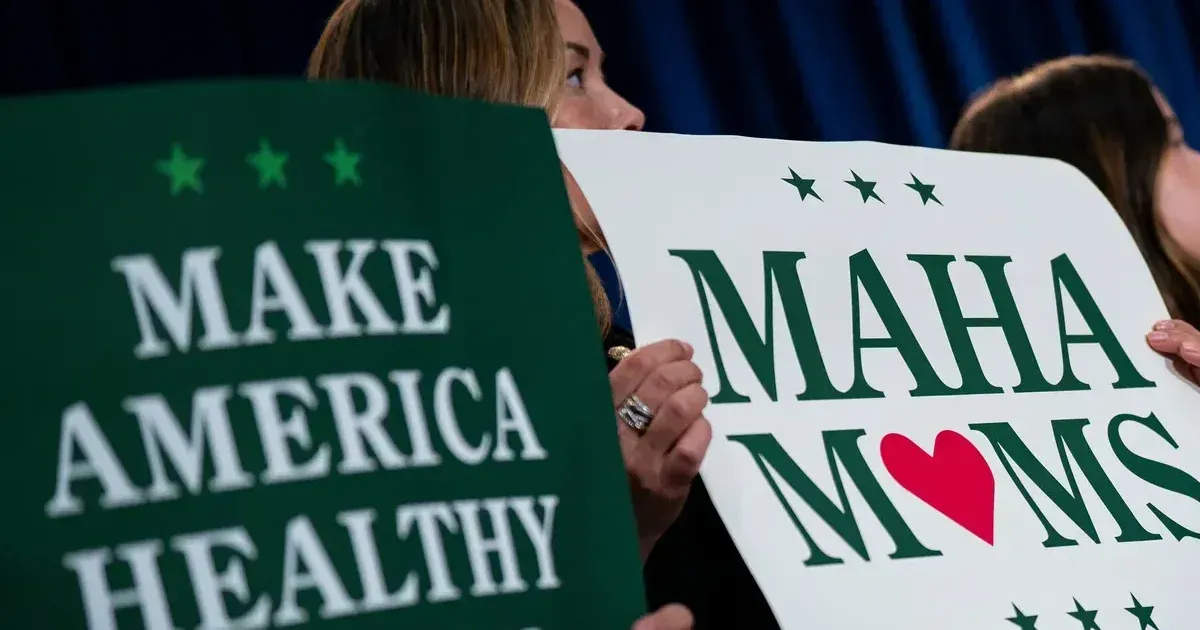
Donald Trump met privately with leaders of the Make America Healthy Again movement as tensions inside his health coalition became harder to contain. Cabinet officials joined the White House session to address disputes over food policy, vaccines and federal health priorities. The internal disagreements had grown visible enough that a routine policy conversation was no longer enough. White House aides also had to separate symbolic promises from actions agencies can legally defend. The April 9, 2026 meeting showed that a movement useful in campaign politics is more difficult to manage inside government. MAHA leaders helped turn distrust of institutions into political energy. Governing requires a different skill. Agencies need evidence standards, legal authority and workable timelines, while activists often want faster and more symbolic action.
MAHA Politics Inside Government
The coalition includes people focused on processed food, chronic disease, pharmaceutical influence and vaccine skepticism. Those concerns overlap in campaign speeches, but they do not always produce the same policy agenda. A meeting can expose those differences rather than resolve them.
Trump's role is to keep the movement close without letting it create administrative chaos. If he ignores MAHA leaders, he risks alienating supporters who believe they helped define his health message. If he gives them too much influence, agencies may face legal and scientific pushback.
Health Policy Friction
Food regulation is the easiest area for limited agreement. Labeling, school meals and additives can be debated through familiar regulatory channels. Vaccine policy is more explosive because it touches public health authority, medical trust and state-level requirements.
Cabinet officials also have to consider industry reaction. Food companies, drugmakers and hospital groups will resist abrupt changes that threaten revenue or create liability. That resistance can slow reforms even when the White House wants a visible win.
Coalition Management
The meeting therefore served as a pressure valve. It allowed activists to be heard and gave officials a chance to define what can actually be done. Whether that reduces friction depends on follow-through.
The larger question is whether MAHA becomes a governing program or remains a campaign identity. A program needs priorities, tradeoffs and evidence. An identity can survive on grievance. The White House now has to decide which version it wants to carry into policy.
The movement also contains different definitions of success. Some supporters want aggressive action against food additives and corporate influence. Others are more focused on vaccine policy, agency staffing or a broader critique of medical institutions. Those priorities can point in different directions once officials have to write rules that survive court review.
That makes personnel choices important. A sympathetic appointee can keep activists engaged, but the person still has to manage scientists, lawyers and career staff. If the White House treats technical agencies as campaign platforms, it risks policy mistakes that opponents can challenge quickly.
The administration may find more room on chronic disease prevention than on vaccine confrontation. Nutrition research, school-food standards and consumer labeling can be framed as public-health modernization rather than institutional warfare. That path would not satisfy every activist, but it could produce tangible changes without triggering the same level of legal resistance.
The meeting therefore tested whether Trump can convert movement energy into usable governance. The answer will depend less on one private session than on whether officials produce a sequence of credible decisions that activists understand and agencies can actually implement. The policy challenge is that MAHA's appeal comes from distrust, while governing depends on institutions that can justify decisions. A food-labeling rule can be written, challenged and defended through evidence. A vaccine directive or agency overhaul can produce faster conflict because it touches medical authority and state systems. The White House therefore has to choose where it wants an early win and where it is willing to absorb legal and scientific scrutiny. Supporters will look for visible proof that the movement has influence. Agencies will look for instructions they can implement without breaking procedure. The meeting matters because those two demands are now colliding inside the administration rather than outside it. The MAHA meeting will be judged by policy sequencing. If the White House chooses a few achievable rules and explains the evidence behind them, the movement can claim progress. If every faction expects immediate victory, officials may spend more energy managing disappointment than improving health policy. The White House now has to convert competing demands into a sequence that can survive oversight, litigation and agency review. That means choosing priorities carefully, documenting the evidence behind each move and explaining why some activist demands may take longer than campaign speeches suggested. If officials can do that, MAHA keeps influence without overwhelming the system. The administration also has to decide how much conflict it wants with medical, food and pharmaceutical institutions at once. Taking on every front simultaneously may satisfy activists briefly, but it can weaken execution. A staged agenda would give officials a better chance to prove results and keep the coalition intact.