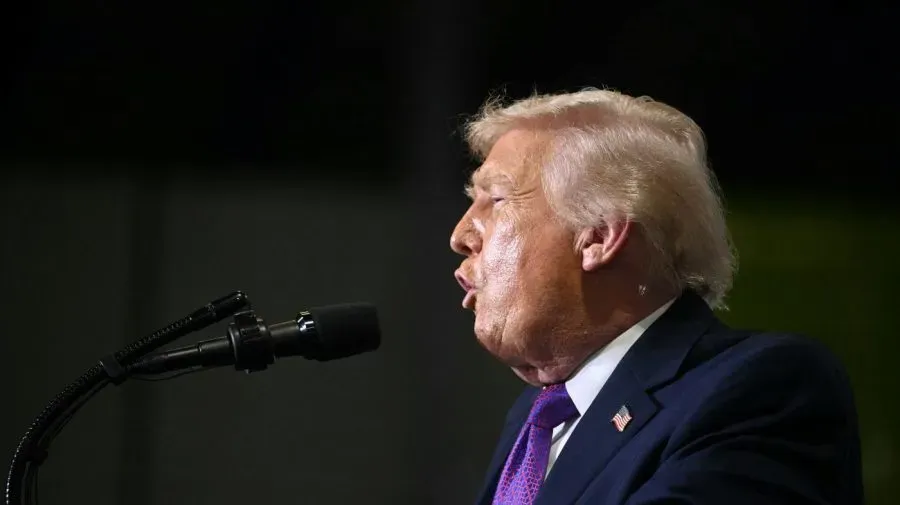
Trump's Kentucky attack on Thomas Massie escalated on March 12, 2026, turning a local speech into another Republican loyalty test.
Trump’s Kentucky attack on Thomas Massie has turned a local speech into another Republican loyalty test.
Massie Becomes the Target
Hebron, Kentucky, became the latest staging ground for an intra-party execution on Wednesday. Standing inside a bustling packaging plant in the heart of the Bluegrass State, President Trump dropped any pretense of Republican unity. He looked directly at the local crowd and signaled that seven-term Representative Thomas Massie had exhausted his political capital. Massie, a libertarian-leaning lawmaker known for his stubborn independence, now finds himself in the crosshairs of a commander-in-chief who demands total legislative alignment. The President did not mince words when describing the man who represents the very district he was visiting. Trump labeled Massie as the worst member of the Republican caucus, a designation he has previously reserved for his most hated Democratic rivals. Such a public denunciation on home soil is a calculated attempt to primary the incumbent. Trump's visit to Hebron was not a coincidence. He was making Massie a test case for Republican obedience. It was a targeted strike against a legislator who refused to bend the knee during the most recent budgetary battles in Washington. Critics of the President often point to his penchant for loyalty, but this specific instance involves more than personality clashes. Massie's recent vote against the One Big initiative, a massive legislative package designed to consolidate executive spending power, appears to be the primary catalyst for the fallout. The President views this opposition as a betrayal of the MAGA movement.
Kentucky Speech Tests Party Discipline
He told the gathered workers that Massie is a disaster for Kentucky and an obstacle to national progress. This strategy of public shaming has become a staple of Trump's 2026 political maneuvers. Military action in the Middle East provided the backdrop for this domestic political theater. Trump used his first major appearance since launching strikes against Tehran to provide what he called an excursion report.
He described the military intervention in Iran with casual confidence, calling it a little trip to handle business. The crowd responded with roars of approval, seemingly unfazed by the gravity of a renewed conflict in the Persian Gulf. By framing the strike as a brief outing, the President sought to project strength without the baggage of a prolonged war. While the White House characterizes the Iran strikes as a surgical necessity, Thomas Massie has historically questioned the constitutionality of such interventions.
This ideological gap is widening into a canyon. Massie advocates for a strict interpretation of the War Powers Act, a position that frequently puts him at odds with the executive branch's broad interpretation of military authority. Trump knows that Massie's brand of fiscal and foreign policy restraint can be contagious among the libertarian wing of the party. He wants to inoculate the rest of the GOP by removing the source.
Primary Threats Are the Point
The vote count behind the One Big initiative explains the President's fury. Republican leadership had spent months crafting a deal that would fund major infrastructure projects while stripping away several environmental regulations. Massie remained one of the few holdouts, citing concerns over the massive increase in the national debt. His refusal to sign on forced several last-minute concessions that weakened the President's hand in negotiations with the Senate.
Trump has a long memory for such slights. He reminded the Kentucky voters that their representative often votes with the radical left when it comes to blocking his agenda, a claim that ignores Massie's deeply conservative, if unorthodox, voting record. Political analysts see this as a test of Trump's kingmaking abilities in a post-2024 environment. If he can successfully unseat a popular incumbent like Massie, it will send a message to every other Republican who might consider breaking ranks.
Still, Massie is no stranger to these fights. He survived a similar attempt at ouster during the 2020 cycle when he angered the then-President by forcing a recorded vote on the first COVID-19 relief package.
The Party Is Being Managed Through Fear
Trump demanded Thomas Massie be removed during a Kentucky speech. The attack turned an intraparty dispute into a broader loyalty test. Primary threats remain one of Trump's most effective tools for enforcing discipline. Massie has often broken with party leadership on spending, war powers and executive authority. The demand is not only about one lawmaker. It is a reminder to every Republican that independence carries a price when the party leader decides dissent is disloyalty.