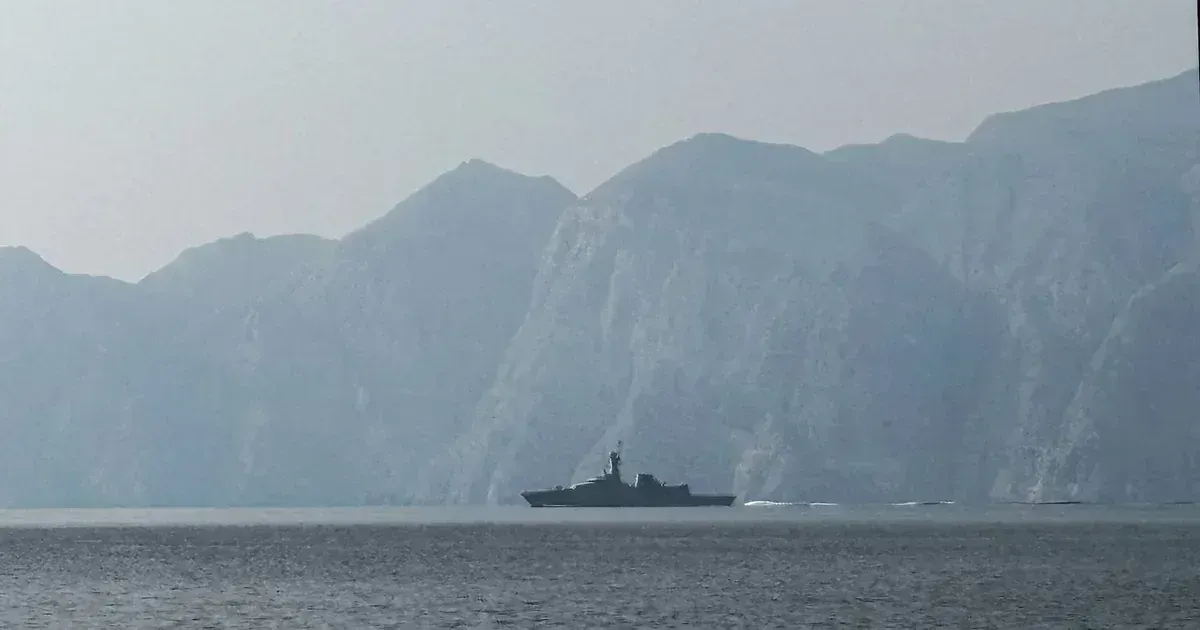
Donald Trump said military tensions with Tehran were nearing a decisive conclusion even as he authorized 10,000 additional troops to depart for the Middle East. The deployment made the public message harder to read. The deployment complicated the administration’s public confidence. A larger force usually signals unresolved risk rather than closure. The April 15, 2026, order exposed the gap between victory language and military movement. News of the deployment reached the public through a series of military orders and White House briefings, highlighting a paradox between diplomatic rhetoric and large naval movements. Pentagon officials confirmed that these forces will strengthen existing units already positioned near the Strait of Hormuz. Specific orders include the activation of the USS George H.W. Bush carrier strike group and the Boxer Amphibious Ready Group to enable regional stabilization. Planning documents suggest the primary objective involves securing nuclear facilities to prevent the proliferation of weapons-grade material.
Pentagon Orders 10,000 Additional Troops to Persian Gulf
Military transport planes began moving personnel from bases in the United States and Europe early this morning. This surge comes despite a two-week ceasefire that many international observers hoped would lead to a permanent peace treaty. Naval assets currently in transit carry specialized equipment designed for rapid airfield seizure and perimeter defense of sensitive industrial sites. Intelligence reports from the Washington Post indicate that the 10,000 soldiers include special operations forces trained in radiological recovery. Personnel from the 101st Airborne Division have reportedly been put on high alert for immediate deployment to support the initial wave. Logistics chains across the Mediterranean are now prioritizing fuel and ammunition shipments over humanitarian supplies.
Tehran maintains that its nuclear program serves only civilian energy purposes. U.S. intelligence agencies, however, provided evidence to the White House suggesting that enrichment levels at the Fordow facility have surpassed 60%. Deployment of the Boxer Amphibious Ready Group places a Marine Expeditionary Unit within striking distance of the Iranian coastline. These marines are equipped with heavy-lift helicopters and amphibious assault vehicles capable of reaching inland targets. Command staff at U.S. Central Command has designated specific landing zones near Bushehr to ensure rapid access to the reactor complex. Every battalion involved in the operation has undergone intensive training in urban combat within simulated desert environments.
Naval Strike Groups Converge on Iranian Coastline
Carrier Strike Group 10, led by the USS George H.W. Bush, represents the most meaningful concentration of American airpower in the region since the initial invasion of Iraq. Its complement of F-35C Lightning II fighters and E-2D Advanced Hawkeye surveillance aircraft provides total dominance over the Persian Gulf airspace. Strike packages are currently being mapped out by naval aviators to disable Iranian radar installations if the ceasefire collapses. Defense analysts at the Pentagon suggest that the carrier group is a floating base for electronic warfare operations aimed at disrupting Tehran's command and control.
Surveillance drones have already begun 24-hour patrols over the Natanz enrichment plant to monitor for any movement of nuclear canisters. Surface combatants accompanying the carrier include Aegis-equipped destroyers capable of intercepting short-range ballistic missiles.
"The war with Iran is very close to over, and they want to make a deal very badly," President Donald Trump told reporters in Washington.
Direct communication between Washington and Tehran continues through Swiss intermediaries while the troop movements proceed. Recent statements from the Iranian Foreign Ministry indicate a willingness to return to the negotiating table if economic sanctions are lifted immediately. Projections from the Department of Energy show that a successful seizure of enriched uranium would remove the immediate threat of a nuclear-armed Iran for at least a decade. Military planners emphasize that the current surge is not an invasion force but a tactical intervention team. Beyond securing nuclear facilities, the administration has also authorized a broader seizure of Iranian oil assets.
Practical intelligence regarding the location of mobile missile launchers has been shared with allied regional partners in Riyadh and Jerusalem. Reports from Yonhap News suggest that the Trump administration believes Iranian leadership is desperate to avoid a full-scale ground conflict.
White House Strategies for Securing Enriched Uranium
Securing nuclear material requires specialized containment vessels and expert engineers who can operate under combat conditions. Trump has instructed the Department of Energy to coordinate closely with the 15th Marine Expeditionary Unit for the extraction phase of the mission. Estimates suggest that Iran currently possesses enough fissile material for at least three nuclear devices if further refined. Ground operations would likely target the underground halls of Fordow, which are carved deep into a mountain to resist conventional bunker-busters. Satellite imagery confirms that Iranian forces have reinforced these sites with S-300 surface-to-air missile batteries.
Washington intends to use the 10,000 troops to establish a 50-mile security buffer around these locations until the material can be safely neutralized. Nuclear experts from the Oak Ridge National Laboratory are scheduled to join the second wave of the deployment.
While Bloomberg suggests the mission focuses on regime change, Reuters' sources claim the Pentagon is strictly limited to the uranium objective. Military personnel must balance the need for speed with the risk of causing a radiological release during a firefight. Advanced radiation detection equipment has been distributed to every squad leader in the Boxer Amphibious Ready Group. Success in this mission would provide the White House with ultimate leverage in any final peace settlement. Diplomatic cables leaked from London show that UK officials are concerned about the sustainability of a ground occupation in central Iran.
Planners have countered these concerns by highlighting the limited duration of the proposed extraction operation. Every soldier has been briefed on the specific layout of the Natanz centrifuge halls.
Deployment Undercuts Victory Claim
Diplomacy at the end of a gun barrel is the defining characteristic of this administration's foreign policy. Betting on a peace deal while moving heavy armor into the theater constitutes a high-stakes gamble that ignores the volatility of Middle Eastern power dynamics. Washington claims the war is nearly over, yet the deployment of 10,000 soldiers tells a more honest story of an impending ground invasion. If President Trump truly believed Tehran was ready to capitulate, he would not be risking the USS George H.W. Bush in the narrow confines of the Gulf.
This is not the behavior of a leader confident in a negotiated settlement. It is the behavior of a commander preparing to seize by force what he could not obtain through sanctions.
Securing enriched uranium from hardened underground facilities is a fantasy of surgical precision that rarely survives the reality of combat. Iranian forces will not simply stand aside while American marines dismantle their national pride at Natanz and Fordow. The White House is walking into a trap of its own making, where any minor tactical error could trigger a regional fire that lasts for years. By framing this as a mission of containment, the administration provides itself with a thin veneer of legality for what is clearly a preemptive strike. The cost in blood and treasure will far exceed the current $2 billion estimate. Washington is not ending a war. It is starting a much more dangerous one.