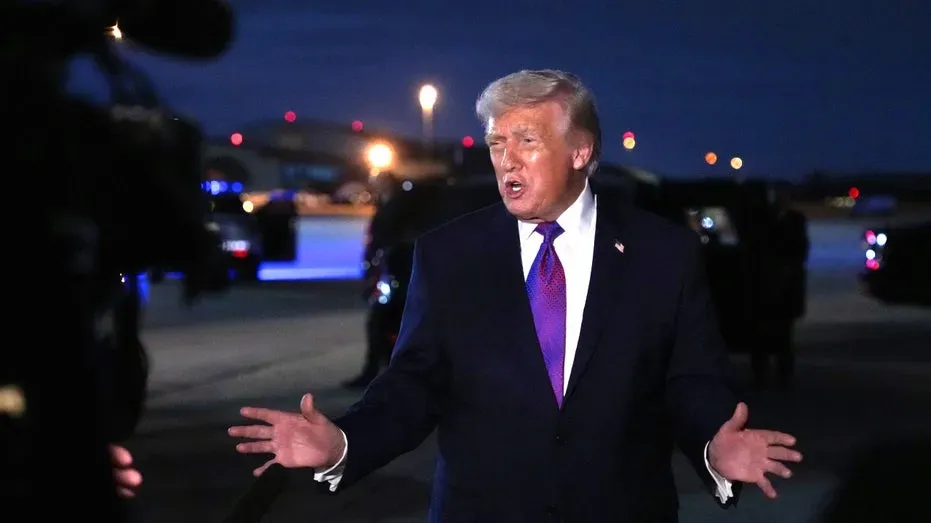
Donald Trump warned that hostile drones could turn the Iran conflict into a domestic security debate reaching airports, energy sites and public events. His comments moved the conversation beyond military targets in the Middle East and toward airports, energy sites, military bases and public events inside the United States. The report was published March 14, 2026. The warning reflects a broader concern that cheap aerial systems can create pressure far from a formal battlefield. Drones have changed the security calculus because they are relatively inexpensive, hard to detect at low altitude and capable of carrying cameras, sensors or small payloads. A state does not need to launch a missile to create disruption if an allied militia, criminal network or lone actor can use a commercial platform near sensitive infrastructure.
Donald Trump warned that hostile drones could become a domestic security threat as the Iran conflict sharpened debate over how far overseas instability can reach into American life.
Domestic Airspace Becomes Part of the Debate
The United States already restricts drones around military installations, airports and major government buildings, but enforcement remains uneven. Local police often lack the authority or equipment to disable a drone safely. Federal agencies have stronger tools, yet they cannot cover every stadium, refinery, power substation and port at the same time. Trump’s warning fits into that gap. It suggests that a conflict with Iran would not be measured only by strikes abroad or troop deployments. It would also test whether American agencies can identify suspicious drone activity quickly enough to prevent disruption without grounding normal commercial and recreational use. That balance is difficult because drones also support legitimate work. Newsrooms, farmers, engineers, emergency responders and infrastructure inspectors rely on them. A broad crackdown could create legal and economic friction, while a narrow response could leave obvious targets exposed.
Iran Conflict Raises Proxy Concerns
Iran has invested heavily in drone warfare and has supplied or inspired allied groups across the region. That does not mean every domestic drone incident would be directed by Tehran. It does mean U.S. security officials are likely to treat suspicious activity around sensitive sites with more urgency while the conflict remains active. The proxy problem is what makes the warning politically potent. A foreign government can deny involvement, a loosely connected group can act opportunistically and American officials may have to respond before attribution is clear. That uncertainty can produce both real caution and exaggerated claims.
Domestic drone security therefore sits at the intersection of intelligence, law enforcement and civil aviation. Agencies need information sharing, clear jurisdiction and equipment that can detect small unmanned aircraft without interfering with regular communications or aircraft systems.
Politics Follows the Security Gap
The warning also gives Trump a familiar political frame: an overseas crisis becomes evidence that the homeland is exposed. Supporters may see that as a necessary alert. Critics may argue that it risks inflaming public fear before agencies present specific evidence. Both reactions are likely because drone threats are visible enough to worry people but technical enough to leave room for speculation.
Congress has already debated how much authority federal and local agencies should have to track, jam or seize drones. Civil-liberties groups worry about surveillance and overbroad enforcement. Security officials argue that existing rules lag behind the technology and leave responders with too few options when a drone appears near a restricted site.
Airports are one of the clearest examples. A small drone near a runway can delay flights, divert aircraft and create economic disruption without causing physical damage. Energy facilities carry a different risk because even a failed attempt can force shutdowns or inspections.
The technology is moving faster than most local response plans. Commercial drones can be modified, flown in groups or programmed to follow routes without a constant signal. That makes the problem different from a suspicious vehicle or a trespasser at a fence line.
Public communication will matter during any alert. Officials need to distinguish between a verified threat, a careless hobbyist flight and an unconfirmed sighting. Without that discipline, a single incident can produce confusion across several agencies and fuel unnecessary panic.
The Iran conflict gives the issue urgency, but the underlying vulnerability is broader. Drone defenses developed for this moment could become part of routine protection for airports, ports, stadiums and power infrastructure long after the immediate crisis fades. The policy question is whether Washington can build that capacity without turning every low-altitude sighting into a national-security drama.
The warning has value only if it produces coordination rather than another round of loud campaign language. If agencies improve detection, clarify response powers and communicate credible threat levels, the public may gain real protection. If the issue becomes only another campaign argument, the gap between technology and policy will remain. The most useful outcome would be a clearer chain of command before an incident forces agencies to improvise under public pressure and partisan scrutiny. A serious plan would also help state and city officials understand when to escalate a report and when to keep a routine drone case local.