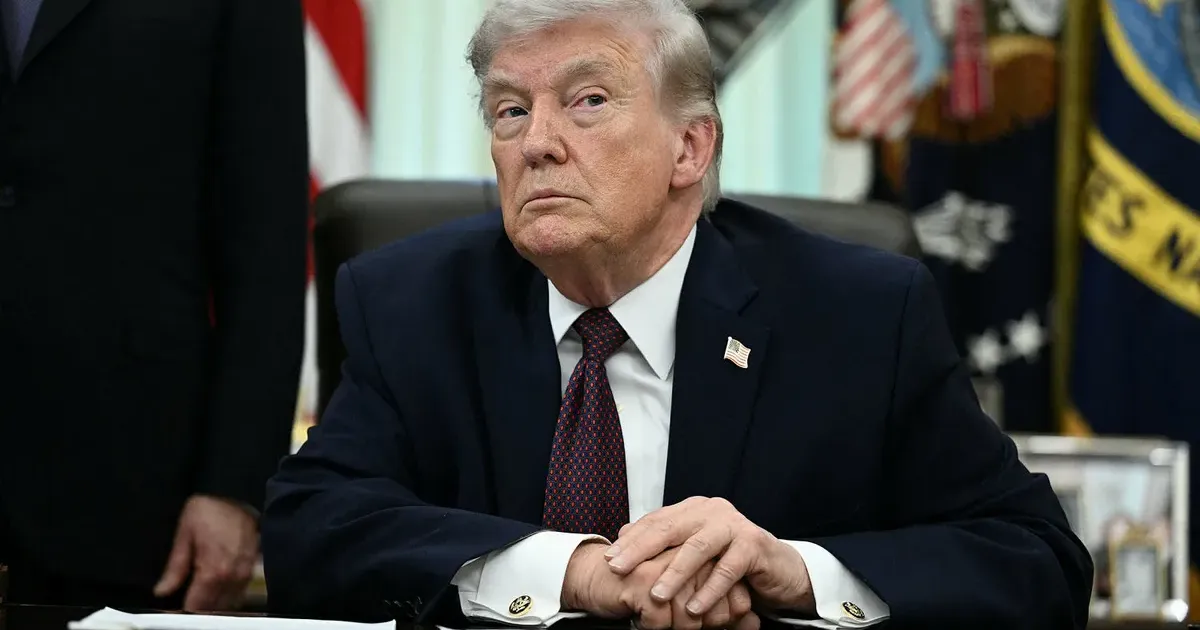
On April 4, 2026, President Donald Trump reviewed executive performance and targeted specific cabinet members for potential replacement within his inner circle. The review put personnel politics back inside the policy story and placed both cabinet members under renewed White House scrutiny. Cabinet stability became the immediate question. Howard Lutnick and Lori Chavez-DeRemer surfaced as the primary figures facing scrutiny during internal deliberations. Reports from the Washington Post indicate that the administration intends to refine its economic and labor leadership without triggering a general collapse of organizational continuity. Advisors have characterized the current environment as a targeted pruning rather than a wholesale liquidation of the executive branch.
Personnel within the White House confirm that the President seeks to balance his desire for loyalty with the need for operational efficiency as he enters a more aggressive stage of his second term. Howard Lutnick, the billionaire chief executive of Cantor Fitzgerald who led the transition team, faces questions regarding the speed of tariff implementation at the Department of Commerce. Friction between the 1600 Pennsylvania Avenue policy team and the Commerce leadership has stalled several trade enforcement initiatives. Donald Trump expressed dissatisfaction with the pace of administrative rulemaking during private meetings over the weekend.
"Commerce Secretary Howard Lutnick and Labor Secretary Lori Chavez-DeRemer are vulnerable," officials told the Washington Post.
Policy experts note that the Secretary of Commerce must act as the primary enforcer of the president's economic sovereignty doctrine. Howard Lutnick attempted to bridge the gap between corporate interests and MAGA directives, a task that often leads to internal conflict. Recent reports of delays in the semiconductor subsidy program have added to the pressure on his office. The administration requires a leader who can execute executive orders without the friction of traditional consensus-building.
Chavez-DeRemer Struggles with Labor Union Alliances
Lori Chavez-DeRemer occupies a similarly fragile position at the Department of Labor. Her appointment was intended to signal an outreach to blue-collar workers in the Rust Belt. Republican hardliners have expressed frustration with her refusal to dismantle certain worker protection regulations that they view as impediments to business growth. Donald Trump has voiced concern that the Labor Department is not sufficiently aggressive in reversing the policies of the previous administration. Union leaders who initially supported her have grown distant as the political climate shifts.
Chavez-DeRemer has attempted to navigate a path that maintains some level of bipartisan support in the Pacific Northwest. White House strategists see this moderation as a liability in a cabinet that demands total ideological adherence. Failure to secure major wins on deregulation has weakened her standing with the influential donor class. A change at Labor would signal a shift toward a more confrontational approach to federal workforce management.
Reports from NBC News indicate that Donald Trump is already vetting potential successors for the Labor role. These candidates reportedly include several former state-level officials known for their anti-union stances. Lori Chavez-DeRemer continues to defend her record of balancing job growth with labor stability. Her arguments have not suppressed the rumors of an impending exit. The President values a pugilistic style that some advisors believe she lacks.
Tulsi Gabbard Maintains Secure Intelligence Role
Tulsi Gabbard remains in a much stronger position compared to her colleagues in the economic cabinet. As the Director of National Intelligence, she has successfully consolidated power over the diverse agencies of the intelligence community. Donald Trump views her as a critical ally in his efforts to reform the deep state. Tulsi Gabbard has avoided the public missteps that have plagued the Commerce and Labor secretaries. Her alignment with the president on foreign non-interventionism has solidified her standing within the National Security Council.
Intelligence veterans had initially expressed skepticism regarding her ability to manage the vast bureaucracy of the DNI. Tulsi Gabbard answered this by placing loyalists in key deputy roles across the various agencies. She has focused her efforts on domestic threats and the surveillance of political actors deemed hostile to the executive branch. This focus aligns perfectly with the priorities of the White House. Her job security is evidence of the value the President places on ideological synchronicity in the national security apparatus.
Stabilizing the intelligence community was a primary goal for the administration during its first year back in power. Tulsi Gabbard achieved this by neutralizing internal dissent and refocusing the mission on the executive's specific security objectives. Unlike the economic secretaries, she has not been blamed for any high-profile policy failures. Her ability to stay out of the negative news cycle has preserved her influence. Donald Trump has praised her performance in multiple private settings.
Political Logistics of Administration Turnover
NBC News reporter Kristen Welker described the current situation as a new phase of the presidency focused on consolidation. The administration is moving away from its early reliance on veteran Republican fixers and toward a more loyalist-heavy configuration. Howard Lutnick and Lori Chavez-DeRemer are seen as remnants of the early attempt to placate different wings of the party. Donald Trump now feels confident enough in his political position to install more radical reformers. This transition is typical for an administration that feels it has secured its base of power.
Officials within the West Wing are cautious about the optics of a large shake-up. They prefer a staggered exit strategy for vulnerable cabinet members to avoid the appearance of chaos. Each vacancy provides an opportunity to reset the narrative on a specific policy area. The replacement of the Commerce Secretary would likely coincide with a new round of aggressive tariff announcements. A change at Labor would serve as the catalyst for a new push to limit federal bargaining rights. Personnel choices are always tethered to the broader legislative and executive agenda.
Executive turnover is a standard mechanism for maintaining momentum in a four-year term. Howard Lutnick faces the reality that his utility as a transition manager has expired. Lori Chavez-DeRemer finds that her moderate branding no longer fits the administration's aggressive posture. Donald Trump continues to evaluate his team based on their ability to dominate the daily headlines. Loyalty remains the only metric that guarantees survival in this cabinet. The coming months will determine if these two officials can adapt or if they will be replaced by more eager defenders of the president's vision.
Cabinet Review Tests Trump Personnel Patience
The review leaves both officials dependent on the president's tolerance for political friction. Personnel changes would not only reshape the cabinet but also signal how much public disagreement Trump is willing to absorb.