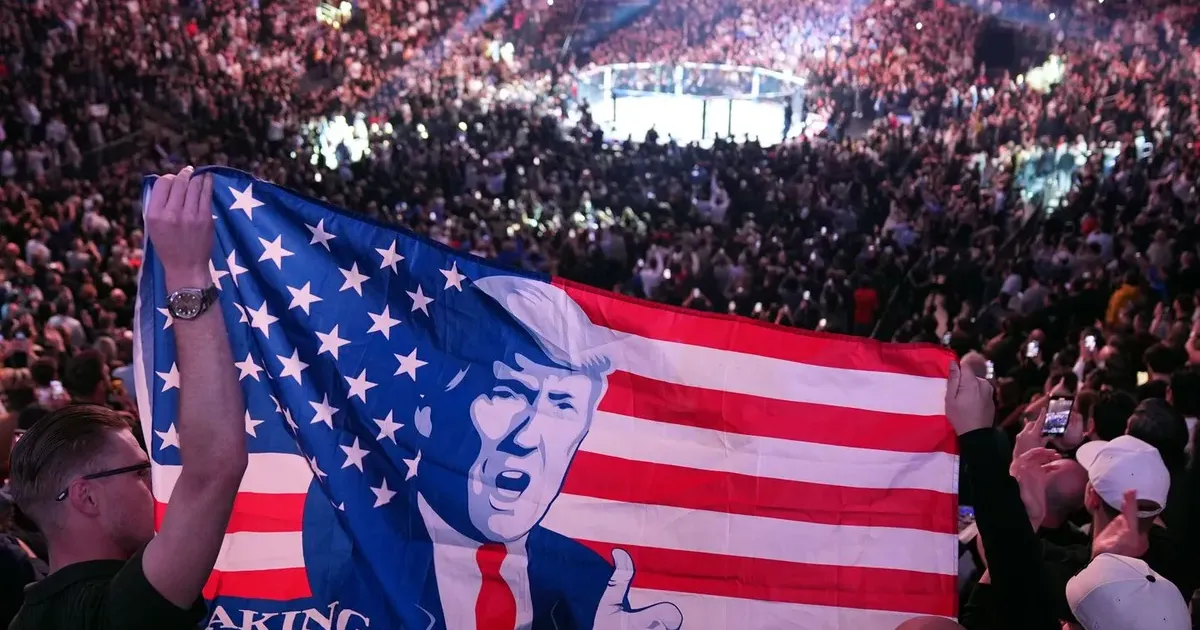
Donald Trump marked his 80th birthday by turning the White House South Lawn into the setting for a UFC event. The event would blur campaign spectacle, combat-sports culture and presidential staging. That mix gives the proposal political value beyond entertainment. It also makes security planning part of the story. On March 28, 2026, invited guests watched a temporary fight setup assembled on federal grounds, with security, athletic oversight and broadcast logistics all folded into a celebration that blurred politics and entertainment.
The event reflected Trump's long relationship with UFC chief Dana White and with combat-sports culture more broadly, a relationship that has repeatedly helped him speak to voters who see the sport as a symbol of defiance, discipline and anti-establishment identity rather than elite ceremony, while giving conservative media a visual language built for conflict. For supporters, it was a theatrical display of strength and loyalty. For critics, it was another sign that the presidency had become inseparable from spectacle. Either way, the image of a cage on the White House grounds was the point, giving allies a celebration and opponents a symbol they could not ignore.
South Lawn Becomes a Fight Venue
Temporary flooring, lighting, seating and production equipment were installed to protect the grounds and give the event the feel of a professional card. The South Lawn has hosted ceremonies, championship teams and public rituals for generations, but a sanctioned mixed-martial-arts showcase carried a different cultural message. It was not a passive reception. It was a staged collision between state power and combat entertainment. Security planning shaped every part of the night. The Secret Service had to screen guests, crews, fighters, equipment and media infrastructure. The District's athletic oversight added a second layer, ensuring the bouts met professional standards even though the venue was historically unusual. That combination made the event less improvised than it looked from a distance.
Guests reportedly included political allies, donors and celebrities. That audience mattered because the event was not only a birthday party; it was a loyalty tableau. In Trump's political world, UFC has often served as a cultural shorthand for toughness, grievance and showmanship.
Dana White and Trump Politics
Dana White's role was central. His relationship with Trump reaches back to the UFC's earlier years, when the sport was still fighting for mainstream legitimacy and venue access. Hosting a fight-related event at the White House closed a long circle: a once-marginal combat brand now placed inside the symbolic center of American power.
The optics were deliberate, and the guest list reinforced the point by mixing politics, celebrity culture and combat-sports loyalty in one controlled visual field. Presidents have used sports for image-building before, but usually through championship visits, golf outings or ceremonial first pitches. Those rituals celebrated achievement outside the presidency, while this event pulled the action directly onto the presidential stage and made the venue itself part of the political product. This event leaned into confrontation rather than celebration at a distance. It gave Trump a setting that matched his preferred political language: winners, losers, toughness and the crowd's roar. That symbolism also creates risk. The White House is not just a residence or campaign backdrop. It is a public institution that carries diplomatic, historical and civic meaning. Every transformation of its grounds says something about the office, even when the stated purpose is personal celebration.
The security layer also limits how spontaneous the night could truly be. A fight card on federal grounds means background checks, equipment searches, controlled access and contingency planning for medical or crowd incidents. The event may have been sold as raw spectacle, but it depended on the most formal machinery of the state.
That contrast is part of the political message. The cage represented anti-establishment aggression, while the location represented the highest establishment office in the country. Trump has long been effective at combining those images, presenting institutional power as if it were still insurgent performance. The event also worked as a media strategy, because the White House no longer competes only with formal institutions for attention but with streamers, fight promotions and personality-driven entertainment brands. A conventional birthday reception would have produced a few official photographs and a short news cycle. A UFC-style event created a visual object that could travel across sports feeds, political feeds and entertainment coverage at the same time. That cross-audience design is one reason the setting mattered as much as the fights, and why the event functioned as both celebration and campaign-style image production.
There is no real mystery about why the format appealed to Trump. Combat sports offer a simple narrative language: entrance, confrontation, victory, celebration. Those beats fit neatly into a presidency built around performance and personal dominance. The question is whether an office designed to outlast individual personality should be reshaped so aggressively around one man's preferred stagecraft.
Political Spectacle
The central question is not whether mixed martial arts is legitimate sport. It is. The question is what happens when the presidency uses combat sport as its chosen birthday metaphor. A cage on the South Lawn communicates power in a language that is visceral, commercial and polarizing. That may be politically useful, but it is not neutral. Trump's supporters will see the night as a confident break from stale ceremony. His opponents will see it as another step in the conversion of government into permanent entertainment. The more durable point is that both readings depend on the same image. The presidency now competes in an attention economy where symbolism is designed for clips, not archives. The South Lawn did not merely host a fight; it became content.