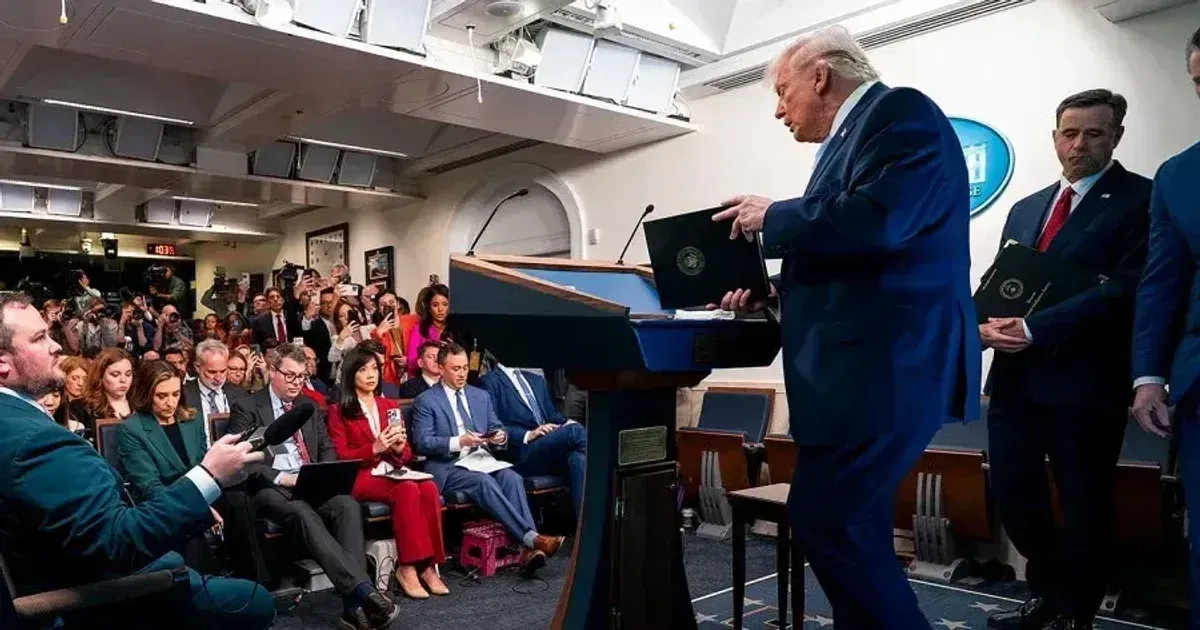
President Donald Trump sharpened his warning to Iran as Washington pushed Tehran for a better offer in talks shadowed by war, sanctions and nuclear limits. The latest message came after a weekend of public pressure from the White House and a direct phone call with Axios. Trump framed the moment as urgent, saying the Iranian side needed to move quickly if it wanted to avoid a deeper confrontation with the United States.
On May 17, 2026, Trump wrote on Truth Social that the clock was ticking for Iran and used language that immediately raised the temperature around the standoff. Axios also reported that he warned Iran would be hit much harder if the regime did not come forward with terms Washington considered acceptable. The remarks did not amount to a signed deadline or a detailed negotiating proposal, but they reinforced the administration's willingness to pair diplomacy with military threats.
"For Iran, the Clock is Ticking, and they better get moving, FAST, or there won't be anything left of them," Trump wrote.
The warning landed as American officials described talks as stuck over what Iran would accept in exchange for a broader pause in the conflict. Axios has reported that US officials see the military option as back on the table because Iran has resisted several American demands and has not offered concessions the White House views as meaningful. That framing keeps pressure on Tehran while leaving enough ambiguity for intermediaries to keep working.
Pressure Builds Around a Deal
Trump's public posture has shifted between claims that a deal is possible and threats that the United States could resume or intensify strikes. The latest comments fit that pattern: they are designed to make time feel scarce without spelling out every technical condition of an agreement. In practice, the administration appears to be demanding a stronger Iranian offer on the issues that have driven the conflict, including nuclear activity, regional security and guarantees that any pause would hold.
Iranian officials have argued through state-linked channels that Washington has not provided the concessions needed for a sustainable accord. Tehran has focused on sanctions relief, security guarantees and the durability of any ceasefire arrangement. Those demands make the talks difficult because each side wants the other to move first. The United States wants proof that Iran will accept limits before easing pressure, while Iran wants a credible sign that Washington will not use talks simply to buy time for further strikes.
The result is a diplomatic track that remains active but fragile. European and regional intermediaries can still carry messages, yet their leverage is limited if the central dispute remains a direct US-Iran test of will. Any proposal would need to give Trump a visible win while giving Iranian leaders enough political cover to sell restraint at home. That combination has been hard to find throughout the standoff.
Risk of Miscalculation
The danger is not only that talks fail. It is that a single incident in the Persian Gulf, a missile launch, a proxy attack or a disputed intelligence assessment could turn Trump's warning into a military decision before diplomats have room to narrow the gap. Security officials in the region are watching for signs that either side is preparing to treat rhetoric as operational guidance.
Energy markets are also exposed to the dispute because any wider confrontation could threaten shipping routes and regional production. Even without a full closure of a major waterway, insurers, traders and governments tend to price in risk when Washington and Tehran move closer to direct military action. That economic channel gives the crisis a reach far beyond the negotiating table.
For now, the White House is trying to convince Iran that delay will carry a higher cost than compromise. Tehran is trying to show that threats will not dictate its negotiating position. Those goals can coexist for only so long. If neither side adjusts, the next phase of the standoff may be shaped less by formal diplomacy than by how each capital interprets the other's willingness to absorb risk.
Trump’s Threats May Pressure Iran or Eliminate Room for Compromise
The strongest version of Trump's strategy is that severe language forces Iranian leaders to reconsider the price of defiance. The weakest version is that it narrows the space for compromise by making any Iranian concession look like capitulation. That is the central diplomatic tradeoff now facing Washington: pressure may create movement, but it can also harden the very position it is meant to change.
Allies that want a non-nuclear Iran are likely to support pressure in principle while worrying about escalation in practice. Many of them would be exposed to retaliation, energy shocks or domestic political fallout if the confrontation expands. That is why the next signal from Tehran matters, but so does the next signal from Washington. A deal remains possible only if both sides can find language that steps back from the edge without appearing to surrender.