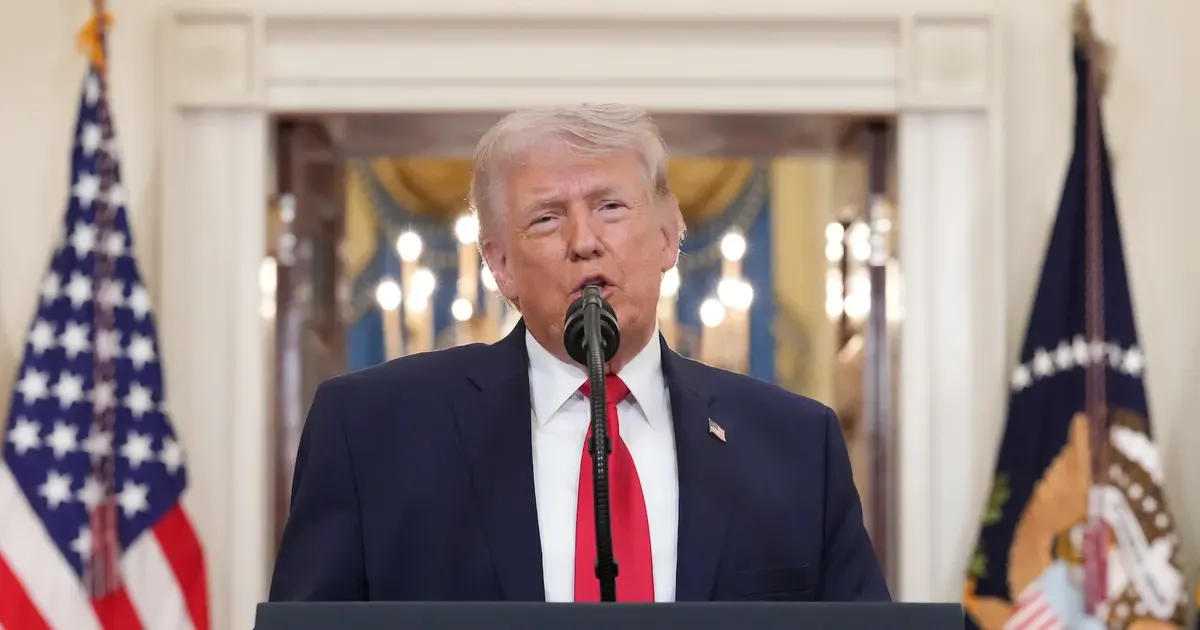
Donald Trump redefined the future of collegiate athletics on April 4, 2026, by signing an executive order aimed at stripping power from student-athletes and returning it to university administrators. His directive, issued during the height of the Final Four tournament in Indianapolis, attempts to dismantle the free-market environment that has defined the last five years of college sports. The order pushed a long-running college sports argument into federal enforcement territory. Sources close to the White House indicate the 10-page document focuses on three primary pillars: capping player eligibility, restricting the transfer portal, and eradicating booster-led collectives. This move places the federal government in direct opposition to recent court rulings that favored athlete autonomy.
Indianapolis is the backdrop for this confrontation, where the NCAA's marquee basketball event is currently underway. President Trump timed the announcement to maximize impact, signaling a desire to restore what he describes as order and stability to an institution he believes is crumbling. Athletes and coaches arriving for the semifinals found themselves suddenly questioning the validity of their future contracts and scholarship terms. Federal agencies must now evaluate whether universities violating these new guidelines are fit to receive lucrative government grants. This financial pressure is the primary enforcement mechanism for the administration's new policy.
Federal Funding Leverages University Compliance
Government agencies received instructions to use the Department of Education as a tool for enforcing these restrictive measures. Schools that fail to adopt the five-year participation window or the limited transfer rules by August 1 risk losing access to billions in federal research and infrastructure funding. White House officials argue that universities receiving taxpayer money have a responsibility to maintain traditional amateurism. Universities depend on these funds for everything from medical research to campus security, making the threat a potent weapon against institutional resistance. Many administrators view the choice as an impossible ultimatum between their athletic departments and their academic survival.
While Bloomberg suggests the economic impact on Power Four schools could be catastrophic, other observers note that the administration sees this as a necessary correction for a system out of control. Trump recently met with Charlie Baker and legendary coach Nick Saban to discuss the financial drain on successful institutions. He expressed astonishment at the amount of money being lost by schools during a short period. His administration contends that the current model is unsustainable and threatens the very existence of smaller athletic programs and non-revenue sports. Public universities in states like Alabama and Texas could face the steepest losses if they refuse to comply with the federal mandate.
"The amount of money being spent and lost by otherwise very successful schools is astounding just in a short period of time. It is only going to get worse. We have to save college sports, and, I believe, colleges," Trump said.
Direct intervention in college athletics at this scale is unprecedented in the modern era. The executive order specifically commands the NCAA to update its bylaws to reflect these changes or face immediate federal scrutiny. Critics argue the move ignores the legal precedents established by the Supreme Court, which previously limited the NCAA's ability to restrict athlete benefits. The administration, however, maintains that the executive branch has broad authority over how federal contracts are awarded. This legal gamble could tie up the collegiate sports world in litigation for years.
Five-year Eligibility Window Targets Graduate Athletes
Trump specifically targeted the phenomenon of the seven-year freshman during his announcement. The new executive order establishes a hard five-year participation window that begins the moment an athlete enrolls. Such a move effectively ends the era of the perpetual graduate student who moves from school to school while collecting NIL checks. The policy aims to refocus the collegiate experience on degree attainment rather than professionalized amateurism. Athletes who have taken advantage of medical redshirts or pandemic-era eligibility extensions will find their careers abruptly cut under these new guidelines. The crackdown on player movement mirrors recent legal challenges regarding college football eligibility and individual athlete rights.
Restoring the one-time transfer rule is a central component of the president's plan. Players will no longer have the freedom to switch schools multiple times without sitting out a season of competition. The restriction attempts to build team continuity and fan loyalty, which the administration believes have been eroded by the current portal system. Supporters of the move claim that frequent transfers disrupt academic progress and lower graduation rates among high-profile athletes. The order forces the NCAA to reinstate rules that were previously struck down by lower courts as antitrust violations.
Coaches have largely remained silent on the record, but private communications suggest a deep divide within the industry. Some veteran leaders welcome the stability that comes with limited player movement. Others fear the recruiting disadvantages they will face compared to schools that find loopholes in the federal language. The August 1 deadline leaves little room for schools to adjust their rosters for the upcoming football season. Immediate compliance is required for any university that intends to maintain its federal status for the 2026-2027 academic year.
NIL Collectives Face Fraudulent Scheme Designation
Perhaps the most aggressive portion of the order involves the total prohibition of booster-backed NIL collectives. Donald Trump labeled these organizations as fraudulent schemes designed to enable pay-for-play arrangements. The order directs the Department of Justice to investigate the tax-exempt status of many of these entities. By classifying collectives as a threat to the integrity of higher education, the administration hopes to choke off the primary source of player compensation. The strategy targets the financial infrastructure that has allowed college athletes to earn millions in recent years.
Official documents describe these collectives as a shadow industry that avoids traditional university oversight. The executive order suggests that these third-party organizations create an uneven playing field that favors the wealthiest institutions. Federal agencies are now tasked with ensuring that all NIL agreements are based on legitimate market value instead of disguised athletic performance bonuses. The shift would likely result in an extensive reduction in the total amount of money flowing to top-tier recruits. Athletes currently under contract with these collectives may find their agreements voided by university compliance departments.
Protecting women's sports and Olympic programs is also cited as a justification for the crackdown. The administration argues that the focus on high-cost NIL deals for football and basketball players has diverted resources away from Title IX compliance. By limiting the influence of collectives, the government claims it is preserving the diversity of collegiate athletic offerings. Opponents argue that this logic is a smokescreen for reducing the labor power of predominantly Black athletes in revenue-generating sports. The tension between market reality and federal regulation has reached a breaking point.
Legal analysts anticipate a wave of lawsuits from athlete advocacy groups and individual players. Charlie Baker and the NCAA find themselves in an unstable position, caught between federal mandates and the threat of further antitrust litigation. If the NCAA complies with the order, it could be held liable for billions in damages in civil court. If it refuses, its member institutions lose their federal lifelines. The catch-22 situation presents the greatest challenge to the organization since its founding. Courts will ultimately decide if an executive order can override existing labor protections.
Transfer Crackdown Reorders College Sports Power
The order puts college sports on a collision course with athletes, universities and courts. Even if the administration can force short-term compliance, transfer limits and NIL restrictions will be tested against years of antitrust pressure.