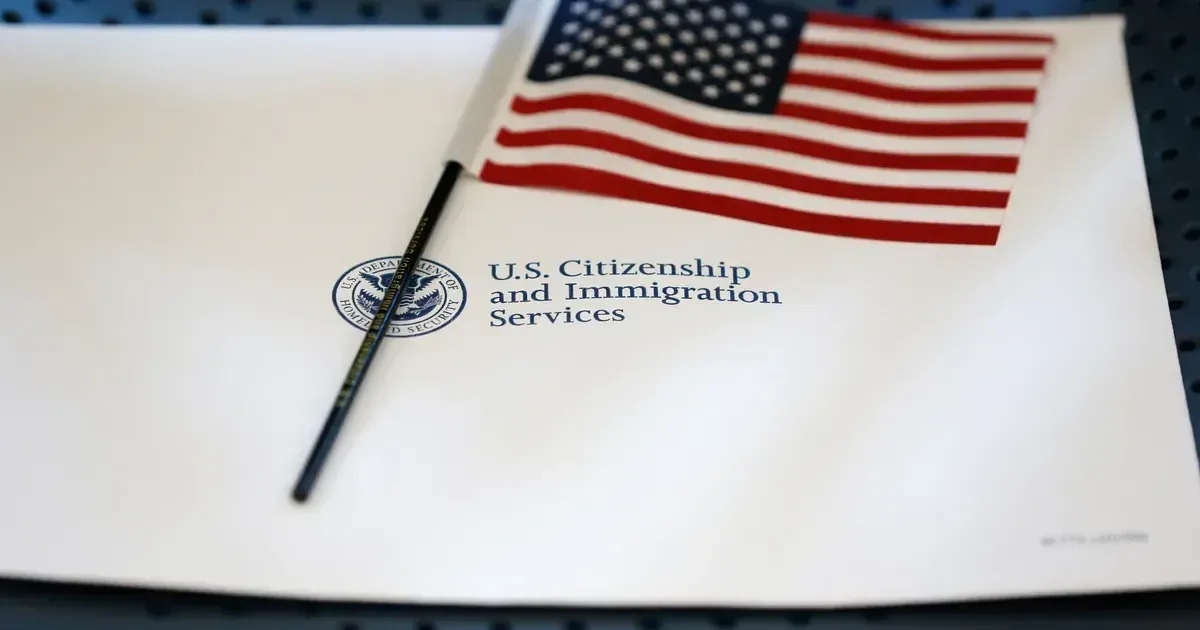
The Trump administration says most foreigners in the United States who want green cards will need to leave the country and apply through consulates abroad. The shift targets adjustment of status, the long-used process that has allowed eligible people already in the United States to complete permanent-residence applications without departing. It immediately changes the risk calculation for applicants who have jobs, families and pending cases inside the country.
The announcement came Friday, May 22, 2026, through U.S. Citizenship and Immigration Services and immediately alarmed immigration lawyers, aid groups and applicants. USCIS framed the change as a return to consular processing, with exceptions expected only in extraordinary circumstances. The announcement was described as a policy shift, but its effect could be far broader than a paperwork change because it moves the center of the process outside the United States.
The policy could affect people living legally in the United States on temporary visas, including workers, students, spouses of U.S. citizens, refugees and asylum seekers. Many of those applicants have families, jobs or pending cases that depend on remaining in the country while their green card applications move forward. Some have already waited years under backlogged employment or family categories.
For employers and families, the risk is practical as much as legal. Leaving the United States can expose applicants to consular delays, travel restrictions, documentary hurdles and the possibility that a denial abroad will be harder to challenge than a domestic adjustment decision. Applicants from countries facing visa pauses or entry restrictions may be especially exposed if they leave and cannot return quickly.
"USCIS is trying to upend decades of processing of adjustment of status."
Adjustment of Status Faces New Limits
Adjustment of status has been part of U.S. immigration practice for decades. It allows eligible applicants to move from temporary status to lawful permanent residence while remaining in the country. The Trump administration's new position treats that domestic route as limited relief rather than the normal pathway for many applicants.
The change is especially significant for high-skilled workers and families already embedded in local communities. Some workers spend years waiting for employment-based green cards, and spouses or children may have built their lives around a pending application. A forced departure could interrupt jobs, schooling and medical care even when the underlying application remains valid.
Consular processing also gives applicants fewer opportunities to challenge adverse decisions. Immigration lawyers have long warned that consular denials can be difficult to review in U.S. courts, making the location of the interview a major legal issue rather than a simple administrative detail. That difference is why lawyers reacted quickly to the announcement and why applicants may treat the new process as a legal risk, not only a travel requirement.
Family and Travel Risks
The policy is likely to hit applicants differently depending on nationality, visa history and consular access. People from countries facing travel bans or pauses in visa processing could face the sharpest risk if they leave the United States and cannot quickly return. Others may confront long interview waits at understaffed diplomatic posts.
Families may also have to decide whether one spouse leaves while others remain behind, or whether an entire household risks disruption while an application is processed abroad. That uncertainty is why immigrant-rights groups are expected to challenge the policy and seek clarity on who qualifies for exceptions. A narrow exception process would leave many applicants guessing until they are already under pressure to depart.
Business groups are likely to focus on retention. Employers that sponsor workers for green cards may have to plan for gaps if key staff are required to leave the country for interviews. That could affect technology, healthcare, research and other sectors that rely on long-term foreign workers. The policy may also make future recruitment harder if workers view the permanent-residence path as unstable.
Courts Will Decide Whether USCIS Can Narrow Adjustment Without Congress
The administration is presenting the policy as an exercise of immigration-processing authority, but opponents are likely to argue that it conflicts with the legal structure Congress created for adjustment of status. The fight may turn on whether USCIS can sharply narrow domestic processing without a formal rulemaking process or new legislation.
The legal stakes are high because the policy changes the risk calculation for people who are already inside the United States and, in many cases, already following lawful immigration channels. A green card application that once involved paperwork, interviews and waiting could now require international travel with no guarantee of a quick return.
That makes the announcement more than a procedural shift. It could reshape how immigrants, employers and families decide whether to begin the permanent-residence process at all, especially if court challenges do not quickly block or narrow the policy. Until agencies issue more detailed guidance, applicants will be left balancing legal advice, family stability and the possibility that a trip meant to complete a green card application could become a much longer separation.