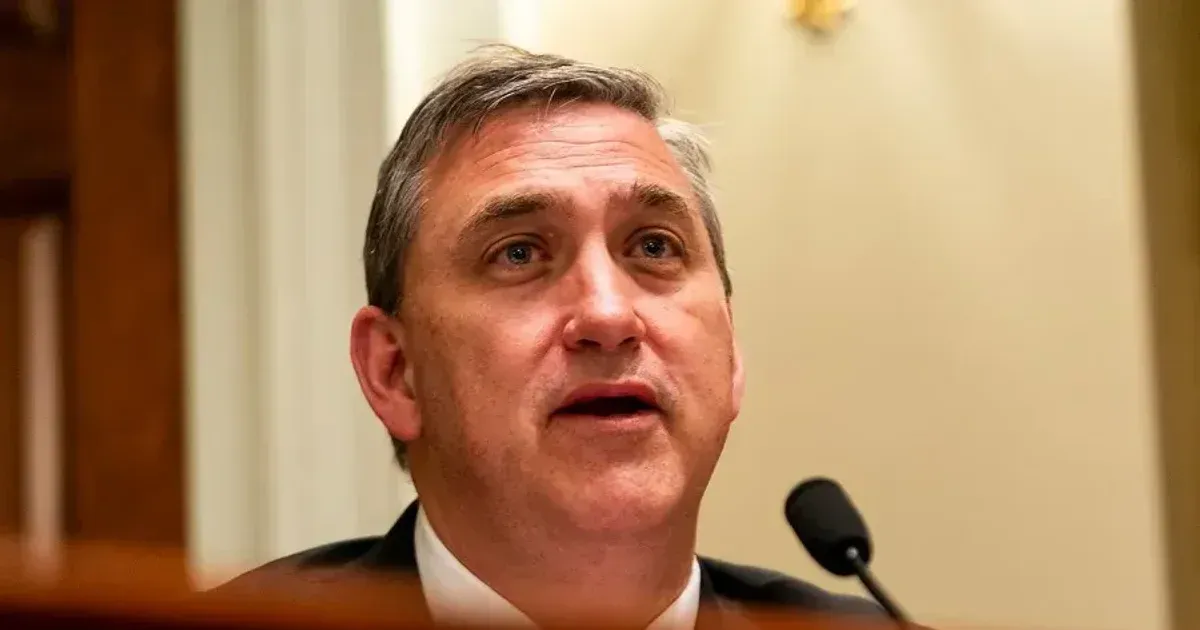
Donald Trump's threat toward Iran has triggered bipartisan concern because lawmakers heard more than ordinary coercive rhetoric. Republican voices such as Nathaniel Moran and Lisa Murkowski distanced themselves from the language while Nancy Pelosi pushed removal talk into the debate. The immediate political effect is a more visible split over Iran policy. The April 8, 2026, backlash reached into war powers, civilian protection and whether a president can credibly threaten sweeping destruction without narrowing his own room for diplomacy.
Moran Rejects Rhetoric of Total Destruction
Moran emphasized that the annihilation of a civilization contradicts American values and historical military protocols. He stated that such threats do not reflect the character of the nation. Military analysts have expressed concern that the language used by the president could be interpreted as a threat to commit war crimes under international law. Moran sought to distance himself and his constituents from any policy involving the deliberate killing of millions of non-combatants.
Specific details regarding the proposed peace deal remain scarce. The White House has not clarified which terms Iran must accept to avoid the promised strike. Historical precedents for such high-stakes deadlines are rare in modern diplomacy. Most observers noted that the timeframe leaves almost no room for the logistical realities of international negotiation.
Murkowski Demands End to Unmatched Saber-Rattling
Senator Lisa Murkowski called for an urgent de-escalation of what she described as record-setting saber-rattling. The Alaska Republican issued her statement shortly after the morning threats became public. Murkowski warned that the window for a peaceful resolution is closing rapidly. Her critique centers on the volatility of the current diplomatic environment.
Instability in global oil markets followed the president's remarks. Prices for Brent crude jumped sharply as traders assessed the likelihood of a major military conflict in the Persian Gulf. Murkowski, who chairs committees with substantial oversight of energy interests, noted that the rhetoric threatens global economic stability. Her office continues to receive inquiries from international allies seeking clarification on the official U.S. stance.
Pelosi Urges Cabinet to Invoke 25th Amendment
Constitutional experts noted that invoking the 25th Amendment requires the support of the vice president and a majority of the Cabinet. Such a move has never occurred in American history to remove a sitting president against his will. Pelosi argued that if the Cabinet refuses to act, Congress must find other legislative avenues to restrain executive military authority. Her rhetoric marks the sharpest escalation of domestic political tension since the current administration took office.
Legal scholars point out that the War Powers Resolution already limits the ability of a president to engage in prolonged conflict without congressional approval. However, the immediate threat of a strike before 8 p.m. bypasses traditional legislative timelines. Pelosi maintains that the current situation represents an emergency that requires extraordinary measures. Resistance to the president's words is not limited to the lower chamber. Within the Senate, influential voices are demanding an immediate cessation of the aggressive posturing.
Tehran has not yet issued a formal response to the 8 p.m. deadline. Previous Iranian statements have often met U.S. pressure with defiance. Security experts suggest that civilizational threats often harden the resolve of an adversary rather than forcing a surrender. Defensive systems across the region are now at their highest state of readiness. The Republican dissent provides a necessary opening for Democratic leadership to escalate their opposition. Democrats in the Senate have begun drafting a resolution to block any funding for a strike targeting Iranian cultural or civilian sites. This legislative tension persists as the clock moves closer to the evening deadline.
Internal polling suggests that even within the Republican base, the appetite for a total war involving civilizational destruction is low. Conservative voters often favor a strong military presence but remain skeptical of interventions that lack clear objectives or exit strategies. Moran and Murkowski represent different wings of the party, yet their shared alarm indicates a rare moment of internal friction. The White House has not yet responded to the specific criticisms leveled by these members of its own party.
Military leaders at the Pentagon have remained largely silent regarding the specific operational plans for the evening. Standard procedure dictates that the military remains subservient to civilian leadership, but commanders are also bound by the laws of armed conflict. Those laws strictly prohibit the targeting of civilian populations. Sources within the Department of Defense suggest that senior officers are reviewing the legality of any orders that might stem from the president's recent threats.
The deadline of 8 p.m. sits as a fixed point on the horizon for diplomats worldwide. Every major embassy in Washington has been in contact with the State Department over the last six hours. Foreign leaders from the United Kingdom to France have issued pleas for restraint. No official confirmation of an Iranian diplomatic team arriving for talks has surfaced. Evidence of a coordinated Republican pushback began to consolidate by mid-afternoon. Several more House members joined Moran in signing a letter requesting an immediate briefing. These lawmakers are seeking clarity on the intelligence that prompted the sudden ultimatum. The tension on the House floor was visible during the morning session.
The Backlash Narrows War Authority
The backlash matters because war authority is not only legal; it is political. A president can command the military, but sustained action becomes harder when members of his own party begin rejecting the stated premise. That is why the rhetoric now carries a domestic cost. It may have been intended to pressure Tehran, but it also gave Congress and allies a clearer reason to question the limits of the administration's strategy.