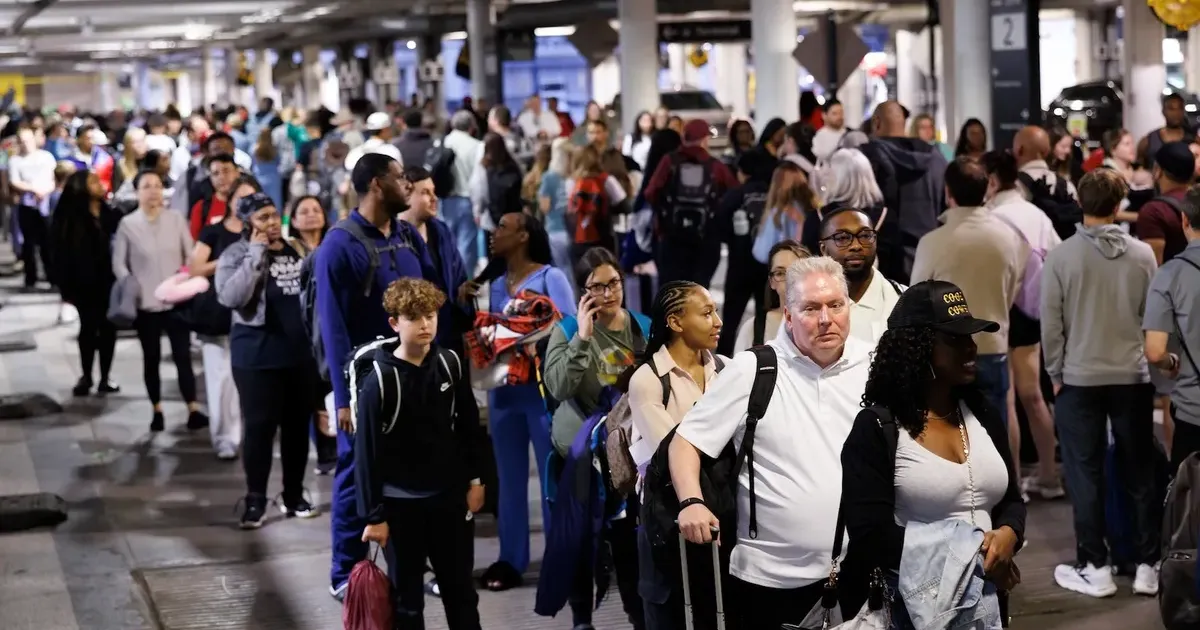
TSA warnings about possible airport closures show how a federal funding fight can move quickly from Washington procedure to the travel system. Security checkpoints depend on workers who can keep showing up, and that assumption weakens when paychecks stop. The agency's warning was especially serious for smaller airports, where there is less staffing depth and fewer ways to absorb absences. Large hubs could still sometimes shift personnel, adjust lanes or stretch overtime. Smaller airports have less room for improvisation.
If enough officers are unavailable, screening can become impossible to maintain safely. The shutdown had entered a phase where the issue was no longer only delayed compensation. It was operational resilience. Passengers experience the problem as longer lines, missed connections and uncertainty about whether flights will operate normally. TSA officers experience it as household strain while still carrying public-facing security duties.
Shutdown Pressure Reaches Airport Security
That disconnect can damage confidence. A government can describe a shutdown as a political dispute, but airports turn it into a visible test of whether essential services are actually protected. The TSA warning is a reminder that aviation security is labor infrastructure. Scanners, checkpoints and rules do not function without trained people in place. The strategic cost of a prolonged shutdown is therefore larger than inconvenience.
It teaches travelers and workers that core systems can be pushed close to failure by a budget impasse that should have been solved elsewhere. The danger is that the system can look functional until it suddenly does not. A few absences can be absorbed; a sustained wave of callouts can force lane closures, schedule changes and pressure on supervisors. Travelers may blame the airport or the airline, but the root problem is federal staffing capacity. The checkpoint becomes the place where a budget dispute finally becomes visible.
The shutdown warning should be treated as an operational alarm, not a negotiating tactic to be ignored until a closure happens. Aviation security works because it is predictable. When the workforce carrying that predictability is pushed into unpaid uncertainty, the whole travel network inherits the risk. Airlines also have limited control over this kind of disruption. They can adjust schedules and communicate delays, but they cannot replace the federal security workforce that makes passenger screening legal and functional.
Why Airport Closures Would Be a Federal Failure
That dependency is why prolonged shutdowns become a transportation problem even before flights are officially canceled. Airports can have planes, crews and passengers ready while still lacking the screening capacity to move people safely. If screening staff fall below required thresholds, some airports may have to reduce operations or suspend passenger screening. Delayed pay can increase absences, second-job pressure and morale problems among officers who are still expected to perform essential duties. The warning should push lawmakers toward urgency because the cost compounds.
Every additional week increases worker strain, operational uncertainty and the chance that a localized staffing problem becomes a national travel headline. It also makes routine family and business travel harder to plan, especially for smaller markets with fewer route alternatives. The workers are also carrying a public-safety burden that cannot be replicated quickly. Training, judgment and repetition matter at checkpoints, which means a stressed workforce is not easily replaced by emergency staffing or administrative optimism. That makes delayed pay a security issue as well as a labor issue.