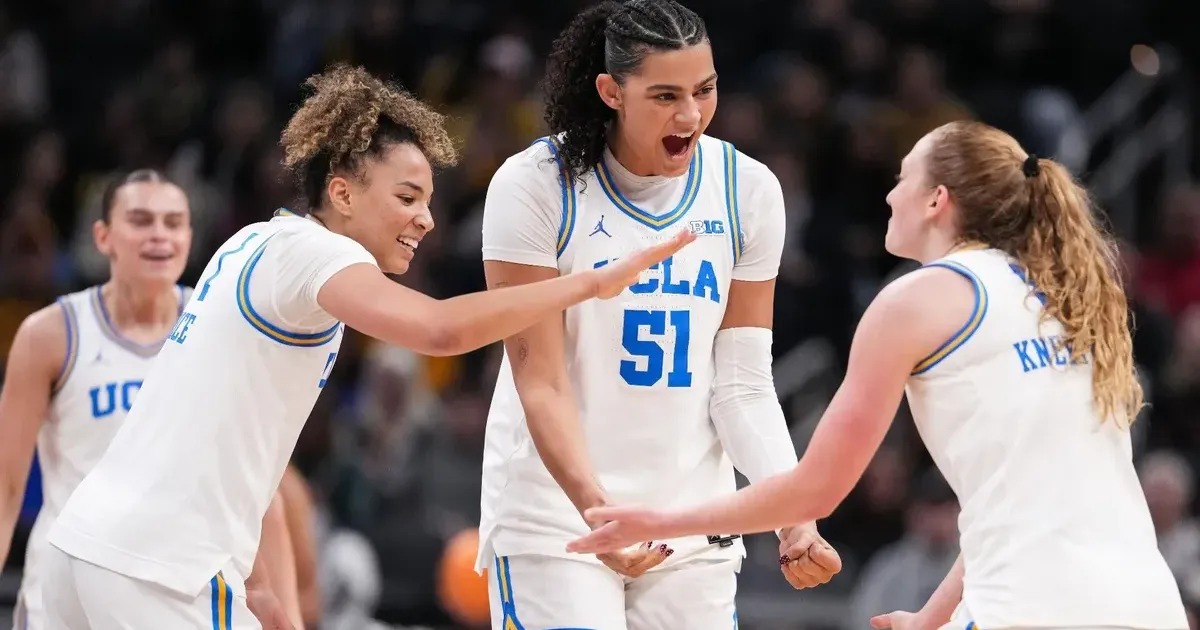
No. 1 UCLA enters the Mortgage Matchup Center in Phoenix looking to avenge its only loss of the season against No. 1 Texas. Pressure in the Arizona desert has reached a boiling point as two programs with contrasting identities prepare for a late-night semifinal on ESPN. The April 3, 2026, matchup gives UCLA a direct chance to answer its only regular-season defeat. UCLA spent the last four months dismantling opponents with a fluid offensive system that critics previously suggested would crumble against elite physical defenses. Texas provided the blueprint for that destruction in the regular season by using a high-pressure man-to-man scheme that disrupted the Bruins' rhythm. Phoenix now hosts the second act of this collegiate rivalry with a trip to the national championship game on the line.
Coaches around the country have scrutinized the previous meeting between these two giants to understand how the Longhorns forced 18 turnovers against a disciplined UCLA backcourt. Vic Schaefer has cultivated a culture in Austin that prioritizes defensive intensity over individual scoring accolades. Success for Texas depends on its ability to turn defensive rebounds into immediate transition points. Statistics from the regular season show that Texas leads the nation in points off turnovers when playing against top-ten opponents. The defensive identity results of years of recruiting specific physical archetypes that can switch screens without losing leverage.
Texas Longhorns Regular Season Performance
Winning in the Big 12 prepared the Longhorns for the physical toll of a deep tournament run. Players like Madison Booker have shouldered the offensive burden while maintaining elite defensive assignments. Texas finished the season with a 33-3 record, asserting dominance through a rebounding margin that consistently outpaced opponents by double digits. Analysts from the betting markets observe that Texas has covered the spread in 70% of its games against ranked teams this year. The consistency makes Texas a slight favorite in the eyes of professional handicappers who value defensive reliability over offensive volatility.
Experts such as Calvin Wetzel and Aaron Barzilai from SportsLine have spent the week dissecting the tactical variations likely to emerge in this semifinal. Wetzel notes that the Longhorns' interior defense is a primary deterrent for teams that rely on dribble-penetration. Texas allows the lowest field goal percentage in the restricted area among all Final Four participants. Because the Longhorns can protect the rim without committing excessive fouls, they force opponents into low-efficiency mid-range jumpers. Texas used the same strategy to secure their early-season victory over the Bruins.
Tactical adjustments will likely define the opening ten minutes of the contest.
UCLA head coach Cori Close has emphasized the concept of a season-long joyride while maintaining a rigorous focus on fundamental execution. Team chemistry appears at an all-time high as the Bruins look to secure the first national title in program history. Beyond the emotional narrative, the Bruins rely on a sophisticated spacing model that utilizes Lauren Betts as a gravity-shifting presence in the paint. When Betts establishes deep post position, she forces double teams that open perimeter shots for Kiki Rice and the rest of the UCLA guards. If the Bruins can find a way to neutralize the Texas press, their half-court efficiency remains the highest in the country.
UCLA Bruins Offensive Strategy
Lauren Betts has evolved into the most powerful interior threat in women's college basketball. Her ability to pass out of the post has transformed the Bruins from a transition-reliant team into a half-court force. Scouting reports highlight her 64% shooting percentage as a primary concern for any defensive coordinator. If Texas chooses to play her straight up, she possesses the footwork to score over either shoulder. Rebounding statistics show that UCLA secures 42% of its own missed shots when Betts is on the floor. Possession quantity often determines the outcome of high-level games in the Final Four.
Kiki Rice provides the perimeter counterpoint to the interior dominance of Betts. Rice has improved her three-point shooting sharply over the last twelve months, making it dangerous for defenders to go under screens. Her assist-to-turnover ratio is among the best in the nation, which will be tested by the relentless ball pressure from the Texas guards. While many observers focus on the scoring, her defensive rebounding from the guard position allows UCLA to spark their fast break instantly. UCLA wins when the game is played at a pace exceeding 75 possessions.
No one on the UCLA women's basketball team wants this season-long joyride to end.
Phoenix provides a neutral venue that may actually favor the West Coast following of the Bruins. Mortgage Matchup Center expects a capacity crowd of over 18,000 fans for the Friday night double-header. Travel logistics and ticket sales indicate a heavy presence from UCLA alumni residing in the Southwest. Although Texas fans are known for traveling well, the proximity of Phoenix to Los Angeles gives the Bruins a pseudo-home-court advantage. Noise levels in the arena will complicate communication for the young Longhorn bench players during critical fourth-quarter stretches.
UCLA Redemption Runs Through Texas
Commercial viability has finally caught up with the athletic prowess on display in Phoenix. While the media remains obsessed with the joyride narrative surrounding UCLA, the cold reality is that this tournament has become a playground for the wealthy. The presence of four No. 1 seeds in the Final Four is not a sign of competitive health, but rather a symptom of the widening gap between the elite few and the struggling many. Transfer portal dynamics and NIL collectives have allowed schools like UCLA and Texas to hoard talent, effectively ending the era of the tournament Cinderella.
The concentration of power ensures a high-quality product for ESPN, yet it strips the tournament of its inherent unpredictability. The evidence shows a corporate showdown disguised as a collegiate dream. If the Bruins win, it will be because their boosters outspent the competition to provide the resources necessary for a Lauren Betts to thrive. The outcome on the court is merely the final invoice of a season-long transaction. Expect a physical, ugly game that rewards the team with the most expensive defensive rotation. Texas wins if it turns the game into a brawl.