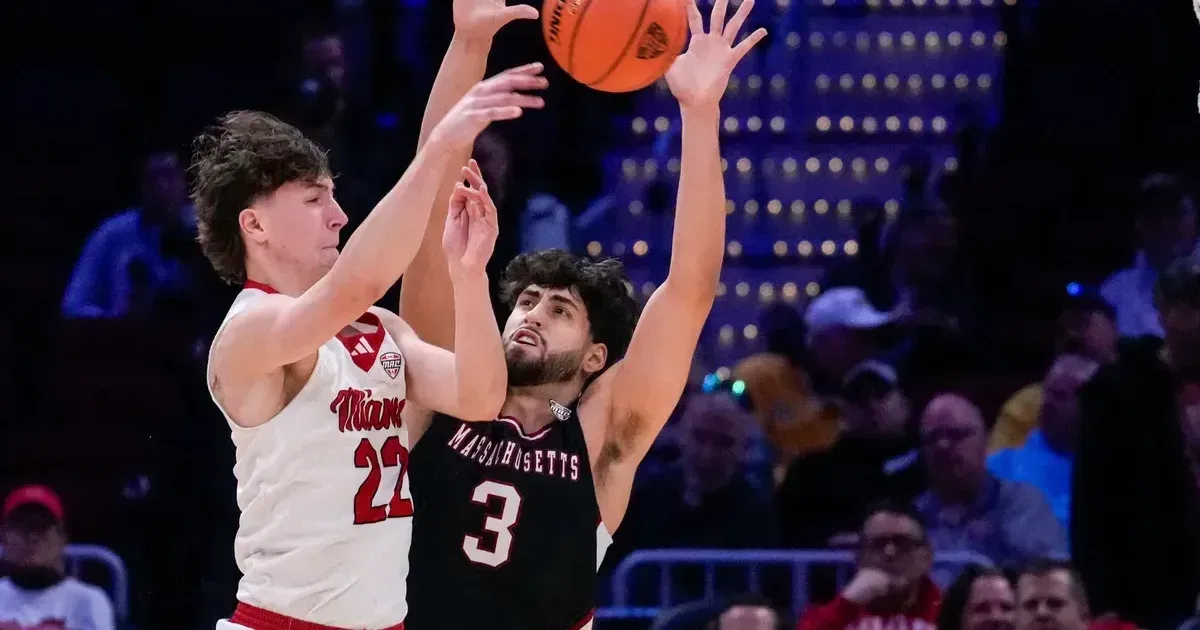
UMass Breaks the Perfect Season
Cleveland, Ohio, witnessed the impossible on Thursday afternoon. A sea of red jerseys sat in stunned silence as the final buzzer echoed through the arena. Miami of Ohio, the team that refused to lose for four consecutive months, finally met its match. The development was reported March 12, 2026.
An eighth-seeded UMass squad, carrying a mediocre 17-15 record, dismantled the No. 20 ranked RedHawks in an 87-83 victory during the Mid-American Conference tournament quarterfinals. Perfection vanished in a blur of transition layups and missed free throws. Miami of Ohio entered the contest with a pristine 31-0 record.
Head coach Travis Steele had overseen a regular season that defied logic, including an 18-0 sweep of conference play. Fans in Oxford had grown accustomed to the team escaping disaster, including a narrow overtime win against Ohio just days prior. Critics often noted that the RedHawks played like a cat with nine lives, consistently finding ways to win games they had no business being in. That luck ran out when the Minutemen refused to follow the script.
UMass controlled the pace from the opening tip and never allowed the top seed to establish the defensive rhythm that defined their season. Reality finally caught up with the scoreboard. Statisticians and bracketologists have spent weeks debating the legitimacy of this undefeated run. While the win-loss column remained unblemished until Thursday, the underlying metrics told a different story.
Miami Loses Its Margin
Data provided by KenPom showed Miami of Ohio ranked outside the top 70 in both adjusted offensive and defensive efficiency. Such a disparity between record and performance is rare in modern college basketball. It suggests a team that benefited immensely from a weak schedule and an extraordinary run of luck in close games. This statistical anomaly explains why oddsmakers remained skeptical of Travis Steele's group even as the wins mounted.
BetMGM listed the RedHawks at 1,000-1 odds to win the national championship, a staggering figure for a team with 31 victories. UMass exploited these weaknesses with surgical precision. The Minutemen focused on attacking the perimeter, knowing the RedHawks struggled to contain quick guards in isolation sets. By pushing the tempo, UMass forced Miami into a shootout, a style of play that the top seed had successfully avoided for most of the year.
The strategy worked brilliantly. Miami defenders looked sluggish, perhaps weighed down by the immense pressure of maintaining a perfect record in a single-elimination environment. When the shots stopped falling for the RedHawks, they lacked the defensive stops necessary to claw back into the lead. March rewards the bold and punishes the complacent.
This defeat forces a difficult conversation for the NCAA tournament selection committee. Typically, a 31-1 team would be a lock for a high seed, yet the RedHawks now find themselves in a precarious position. Because they failed to secure the MAC's automatic bid, they must rely on an at-large selection. The Committee must decide if a dominant record in a mid-major conference outweighs mediocre efficiency ratings and a lack of high-quality wins against Power Five opponents.
Perfect Record Exposed
Chasing perfection in a mid-major conference is often a fool's errand that masks deep structural flaws. Miami of Ohio spent the entire season feasting on inferior competition while the metrics screamed that they were a mediocre team in disguise. Why are we surprised when a 31-0 team loses to a sub-.500 conference rival? The answer lies in our collective obsession with win streaks over actual quality. Travis Steele's squad was a statistical fluke, a collection of lucky bounces and favorable whistles that finally ran out of credit. The selection committee should take a hard look at their efficiency ratings before gifting them an at-large bid over a battle-tested team from the Big 12 or the SEC. Rewarding a team for beating up on the bottom tier of the MAC is an insult to the competitive integrity of the tournament. If you cannot win your own conference tournament after going undefeated, you have no business claiming a spot among the best 68 teams in the country. Let Miami stay home and reflect on a season that was impressive in volume but hollow in substance. March is for winners, not for teams that fold the moment they face a determined underdog.