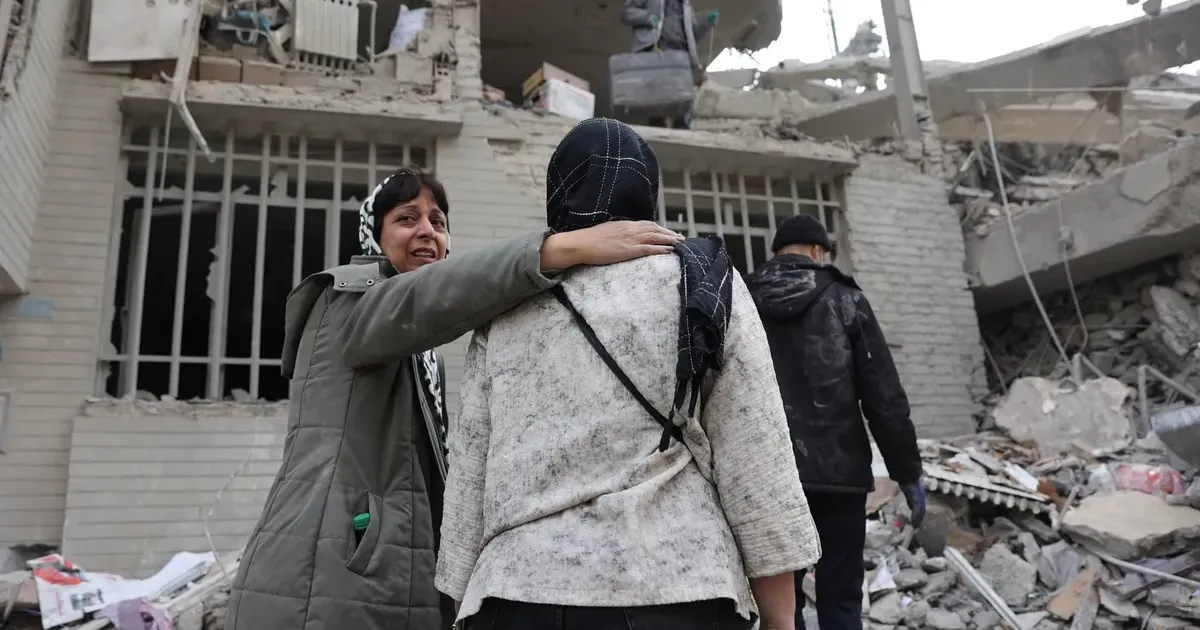
The war with Israel and the United States has displaced three million Iranians, turning military escalation into a vast humanitarian emergency. The displacement had been mounting before it became the center of the debate. Aid planners were already warning that temporary shelters would not be enough. It became a central concern on March 12, 2026, as families moved away from threatened areas and local services struggled to absorb the pressure. Displacement on this scale changes the politics of war. It forces governments and outside powers to confront civilian survival, not only military objectives.
Displacement Becomes the Crisis
The phrase three million displaced Iranians describes more than movement on a map. It means families losing homes, students leaving schools, patients losing access to care and cities suddenly carrying populations they were not prepared to support. The immediate needs are practical: shelter, medicine, transport, food, water and reliable information about which areas are safe. When those systems fail, displacement becomes a secondary disaster. People who survived strikes can still face illness, exposure, hunger or exploitation.
Pressure on Local Services
Host communities may be sympathetic and overwhelmed at the same time. Hospitals, pharmacies, schools and housing markets can strain quickly when large numbers arrive within days or weeks. Local officials need coordination and resources. Without them, aid distribution becomes uneven and rumors can spread faster than verified instructions. The problem is especially severe for older people, children, disabled residents and families without savings. War does not displace everyone equally.
Diplomatic Consequences
Civilian displacement changes how allies and adversaries talk about the conflict. Military claims of precision are harder to sustain when millions are uprooted. Diplomats will focus on corridors, pauses, aid access and guarantees that displaced people can move without becoming targets. Those arrangements are often fragile, but they can reduce immediate harm. The humanitarian crisis may also increase pressure for negotiations. Even governments committed to military goals have to manage the political cost of mass civilian suffering.
Displacement Burden
The next phase depends on whether safe routes, medical supply chains and temporary shelter can be scaled quickly. Delays will deepen the crisis even if front-line conditions stabilize. International agencies will need access, funding and security guarantees. Without those, displacement figures become a warning rather than a response plan. The displacement figure also changes the burden on neighboring regions inside Iran. Cities that were not prepared to become shelters may suddenly need to provide housing, clinics, schools and food distribution. The psychological toll is harder to measure. Families who flee violence often carry uncertainty about relatives, property, jobs and whether returning home will ever be safe. Aid groups will need accurate information about where people are moving. Without reliable data, supplies can arrive in the wrong places while informal shelters fill beyond capacity. The conflict also creates risks for internal social tension. Host communities may face higher rents, crowded services and competition for jobs, even while sympathizing with displaced families. A serious response must therefore support both displaced people and the places receiving them. Otherwise relief can create new resentment. The diplomacy around the war will increasingly be judged through this humanitarian lens. Military leaders may speak about targets, but the world will see families on roads, schools turned into shelters and hospitals under pressure. That visibility can change negotiations. Mass displacement makes delay harder to defend and turns humanitarian access into a central measure of any proposed pause or settlement. Displacement at this scale can also alter the internal politics of the conflict. A government may maintain military messaging, but public attention shifts when families are sleeping in temporary shelters, medicine runs short and schools lose students. Information becomes a form of aid. Displaced families need to know which roads are open, where clinics operate, whether fuel is available and how to reconnect with relatives. Without trusted communication, panic and rumor can make dangerous routes even more dangerous. The crisis will also have a long tail. Even if fighting slows, many families may return to damaged homes, lost jobs and disrupted schooling. Humanitarian response must therefore plan for recovery, not only emergency movement. Outside powers will be judged by whether they treat the displaced as a central issue or as a secondary consequence of military strategy. In a conflict drawing Israel and the United States into direct confrontation, civilian protection is not a side question. It is part of the political legitimacy of every next step. The number also creates planning problems for any future ceasefire. Returning people home is not as simple as announcing that fighting has stopped. Roads may be damaged, neighborhoods may be unsafe, utilities may be down and unexploded ordnance may make familiar places dangerous.
Children face particular risk. Interrupted schooling, separation from relatives and repeated moves can create long-term harm that is not visible in daily casualty reports. Families may prioritize survival now, but education and psychological support will become urgent as displacement continues.
Medical continuity is another pressure point. People with chronic illness, pregnant women, injured civilians and disabled residents need records, medicine, transport and specialist care. A broken health chain can turn displacement into a slow-moving mortality crisis.
The war's international politics will not be separable from those conditions. Governments backing military operations may face rising demands to explain how civilian protection is being measured, funded and enforced.
The displacement of three million people is therefore not a background statistic. It is a central fact that will shape diplomacy, domestic legitimacy and the moral assessment of the war long after the battlefield map changes.
Reconstruction planning will have to begin before the fighting is fully resolved. Waiting until the end may leave displaced families in temporary arrangements for months, deepening poverty and making return politically harder for communities already under strain, especially where services were fragile before the war and local budgets were already thin.
The war's strategic outcome remains uncertain. Its humanitarian consequence is already clear: millions of Iranians are now living the conflict as loss of home, routine and safety.