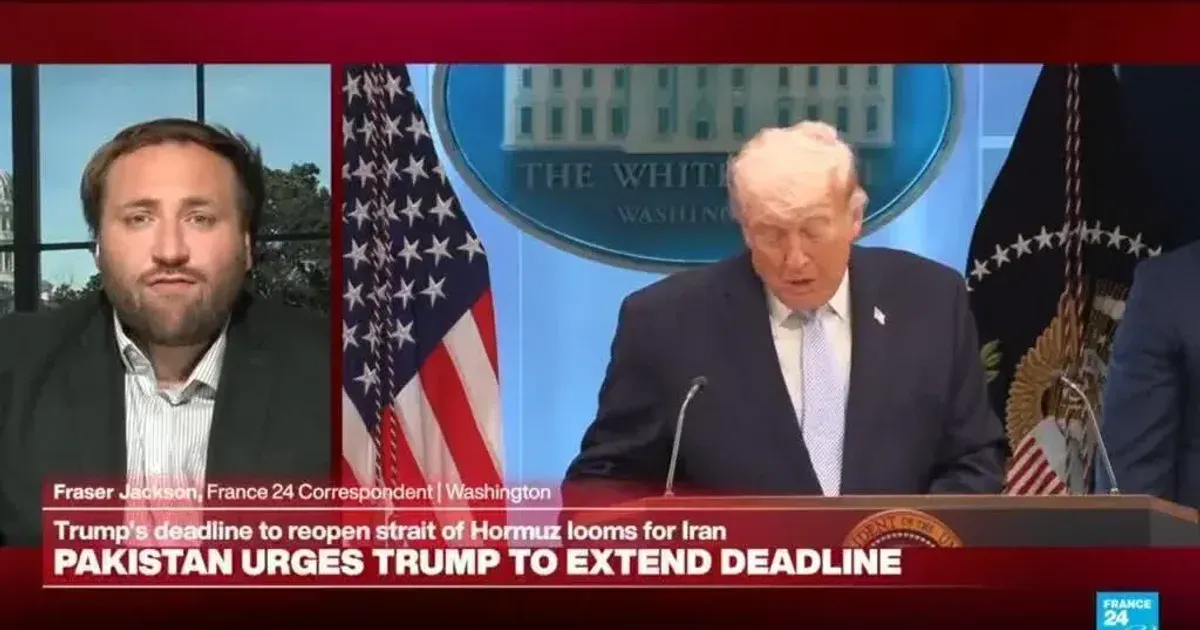
Pakistan's request for a 14-day extension gives Washington and Tehran a narrow chance to slow the escalation around Iran. The proposal is meant to create space for indirect talks after a cycle of threats that alarmed regional governments. The diplomatic push comes as world leaders condemn language about eliminating Iranian civilization and as U.S. domestic critics question the president's judgment. The White House was still evaluating the request on April 7, 2026, while military assets remained positioned in the Gulf. A pause will work only if both sides can describe it as something other than surrender. That is why the language around the extension may matter almost as much as the number of days.
Pakistan Proposes Two-Week Ceasefire Window
Regional stability depends on the decision of the American executive branch. Diplomatic sources in France suggest that Iranian officials are reviewing the Pakistani request with a positive outlook. They seek an exit ramp from the current cycle of escalating threats. Iran maintains that it will not negotiate under the shadow of a total destruction ultimatum. Previous attempts at mediation failed because of rigid timelines imposed by Washington.
Iranian leadership historically uses these pauses to assess the unity of Western coalitions. Tension reached a peak after the president suggested that Iranian civilization could be eliminated in a conflict. Critics worldwide immediately labeled the language as genocidal. Such rhetoric has rarely appeared in modern statecraft. Officials in Tehran have signaled that any attack on cultural heritage would meet a symmetrical response. Markets across Asia have braced for a disruption in energy supplies.
Indian Leaders Denounce Nuclear Rhetoric
“Any language or action that contemplates the end of civilisation is unacceptable in the modern world, and the use of nuclear weapons can never be justified,” an Indian opposition leader said. New Delhi traditionally maintains a balanced relationship with both Washington and Tehran. These comments from a high-profile opposition leader indicate a shift in the regional mood. Fear of fallout from a potential conflict dominates the conversation in the subcontinent. The Indian government has previously avoided direct criticism of American foreign policy. However, the mention of ending a civilization triggered a departure from that neutrality.
White House Considers Pakistan Extension Request
Karoline Leavitt told reporters that the president is engaged with the ongoing diplomatic efforts. She did not provide a specific timeline for the American response to Islamabad. Many observers believe the next 48 hours will determine the path toward war. White House staff members are reportedly divided on the merits of a two-week pause. Some advisers believe the deadline must be enforced to maintain credibility. European allies view the civilization-ending threats as a breach of international norms. London and Paris have privately urged the administration to accept the Pakistani extension. They believe a two-week pause provides the only realistic chance for a non-military resolution. A coalition of Western diplomats warned that a strike without further negotiation would isolate Washington. Security pacts in the region are already showing signs of strain.
Saeid Reza Mosayeb Motlagh emphasized that Iran does not fear the current ultimatum during a press conference in India. He stated that the remains of ancient cultures prove that ideas and heritage survive physical destruction. He specifically referenced the Mayan civilization to illustrate the persistence of national identity. Saeid Reza Mosayeb Motlagh noted that Persian culture has survived numerous invasions over three millennia. Defiance matches the tone coming from the highest levels of the Iranian government.
Military planners in the Pentagon are preparing for various scenarios. If the deadline expires without an extension, the risk of a kinetic strike increases sharply. Logistics for a prolonged engagement are already in place in the Persian Gulf. Defense officials confirmed that two carrier strike groups moved into position on Tuesday morning. Satellite imagery shows increased activity at several Iranian airbases.
Opposition to the current policy has emerged from unexpected corners of the American political landscape. Alex Jones, a longtime supporter of the president, joined calls for his removal from office. He cited the threats against Iranian civilization as evidence of a dangerous shift in temperament. This public break highlights the growing isolation of the administration on the issue of total war. Alex Jones specifically questioned the fitness of the commander in chief during a broadcast on Tuesday.
Several members of Congress have begun discussing the legal mechanisms for a transition of power. They argue that the threat to eliminate a civilization violates the fundamental principles of the Republic. This domestic instability complicates the American negotiating position on the global stage. House leaders have not yet signaled an intention to bring a formal resolution to the floor. Discussion of the 25th Amendment is usually reserved for moments of physical or mental incapacity.
Legal experts point out that the 25th Amendment requires the vice president and a majority of the cabinet to act. No signs of such a move have appeared within the inner circle of the administration. The public debate, nonetheless, highlights a deep fracture in the political coalition. Critics argue that the threat of nuclear annihilation serves no strategic purpose. Saeid Reza Mosayeb Motlagh told Indian media that such internal divisions prove the weakness of the American ultimatum.
While Bloomberg reports suggest that the Treasury is preparing new sanctions, reporting by Reuters indicates that the focus has shifted to the military deadline. The ambiguity of the administration's position creates a vacuum in global markets. Stability in the Persian Gulf depends on whether Washington views the extension as a genuine opportunity. Tehran has signaled a willingness to talk if the threat of total destruction is withdrawn. The window for a peaceful settlement is closing rapidly.
A Pause Needs Language Both Sides Can Use
A deadline can create leverage, but it can also trap the leader who set it. If every delay looks like weakness, diplomacy has no room to operate. That is why Pakistan's proposal needs a face-saving frame. A short pause will matter only if Washington can call it pressure working and Tehran can call it negotiation without humiliation.