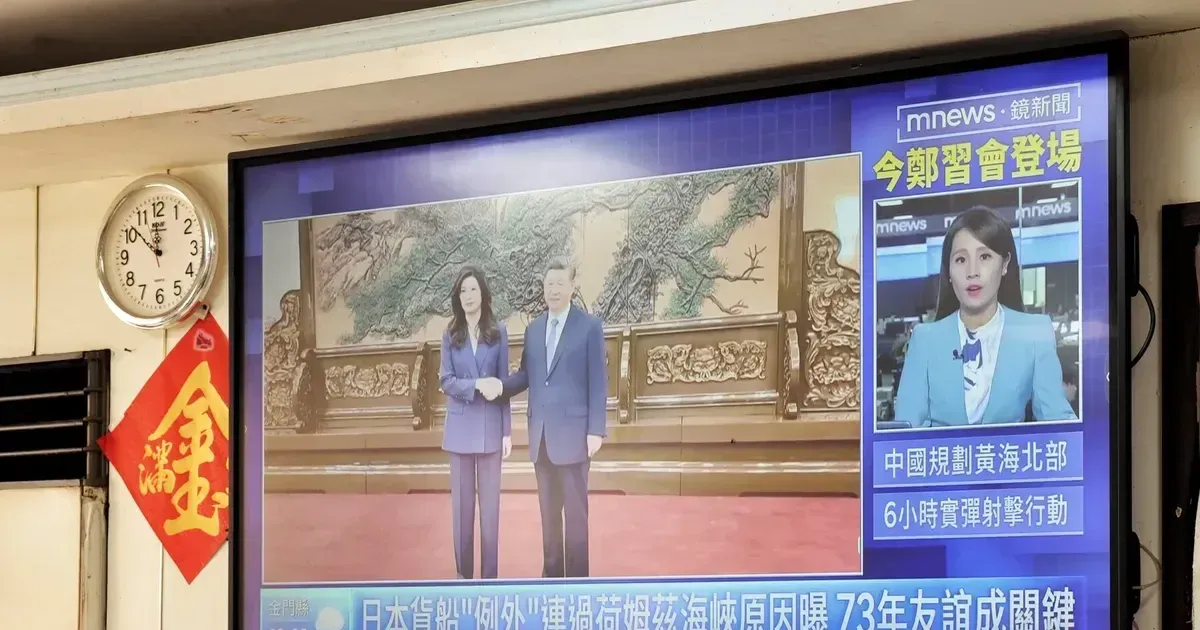
Xi Jinping used a high-profile Taiwan-related meeting in Beijing to present China as a stabilizing force while keeping pressure on Taipei. The message was carefully calibrated: Beijing wants to look patient and diplomatic, but it also wants Taiwan's voters and Washington to see that cross-strait politics still run through the mainland's power structure. The meeting on April 10, 2026, gave Beijing another stage for that dual message.
The timing matters because Donald Trump's foreign policy style has pushed Chinese officials to prepare for a more transactional relationship with Washington. If Beijing can present itself as the calmer actor, it may try to frame American support for Taiwan as the source of instability rather than a response to Chinese pressure. That narrative is difficult for Taiwan's elected leadership to accept. Taipei argues that engagement with opposition figures or sympathetic intermediaries can bypass democratic institutions and create the appearance of consensus where none exists.
Beijing Uses Outreach to Shape Taiwan Debate
China has long used party-to-party and unofficial channels to speak around Taiwan's governing administration. These meetings allow Beijing to claim that it is communicating with the Taiwanese public while refusing to treat the island's government as a sovereign counterpart. The tactic is diplomatic, but it is also political. For Taiwan, the risk is that such outreach creates pressure on domestic debate. Opposition figures may present dialogue as pragmatic, while the governing party warns that Beijing is using the format to divide the island's politics. Voters are then asked to judge the policy and the terms of engagement itself. Beijing benefits from that ambiguity. A meeting can be described as peaceful exchange abroad and as evidence of mainland authority at home.
Trump Factor Adds Leverage to the Message
Trump's return to power has increased uncertainty across the Pacific. Beijing is likely to test whether Washington's Taiwan policy can be shaped through trade negotiations, defense costs or wider bargaining. Public peace messaging helps China enter that conversation with a claim of restraint. The strategy does not mean military pressure has ended. Air and naval activity, cyber pressure and economic coercion remain part of the broader environment. Diplomatic language can lower the temperature in public while operational pressure continues in the background.
That dual track creates a challenge for Washington. If the United States responds only to military pressure, Beijing can accuse it of ignoring dialogue. If Washington responds only to diplomatic language, Taiwan may feel exposed to coercion below the threshold of open conflict.
Taiwan Stability Depends on More Than Rhetoric
Cross-strait stability depends on whether all parties respect limits. Beijing wants influence without accepting Taiwan's democratic autonomy. Taipei wants international space without provoking a crisis. Washington wants deterrence without being pulled into an avoidable war. Those goals overlap only partially. The economic relationship raises the stakes. Trade, semiconductors, shipping routes and investment flows all make open conflict extremely costly. That interdependence restrains leaders, but it also gives each side tools for pressure.
Xi's outreach should therefore be read as strategic signaling, not a simple peace gesture. It gives Beijing a softer public face while preserving leverage over Taiwan and a bargaining position with Trump. The question is whether that signal creates room for lower tension or merely changes the language around the same pressure campaign.
Taiwan's domestic response will be just as important as the messaging from Beijing. If voters see the outreach as a practical channel for reducing tension, Beijing gains political space. If they see it as interference, the effort could strengthen resistance to mainland pressure. That uncertainty is why cross-strait symbolism is never purely ceremonial. Regional allies will also watch the language closely. Japan, the Philippines, South Korea and Australia all have security or economic exposure to a Taiwan crisis. A softer Chinese message may reduce immediate anxiety, but it will not erase concerns about military modernization, maritime pressure or coercive trade measures.
The test is whether diplomacy changes behavior. If outreach is paired with fewer military incursions, more predictable communication and less economic punishment, it could support stability. If it is paired with continued pressure, the meeting becomes a messaging tool rather than a genuine de-escalation step. For Trump, that distinction creates a negotiating problem. Beijing may offer the language of peace while asking Washington to reduce support for Taiwan. Taipei will expect the United States to judge actions, not atmospherics.
The semiconductor supply chain adds another layer to the Taiwan calculation. Any disruption around the island would affect manufacturers, defense planners and consumer technology firms far beyond East Asia. That is why even symbolic political outreach receives close attention from investors and governments. They are reading the meeting and whether it lowers or raises the probability of coercive pressure around a critical industrial hub. For Taiwan, that means every diplomatic gesture must be measured against the pressure that continues after the cameras leave. That comparison will decide how much trust the outreach receives.