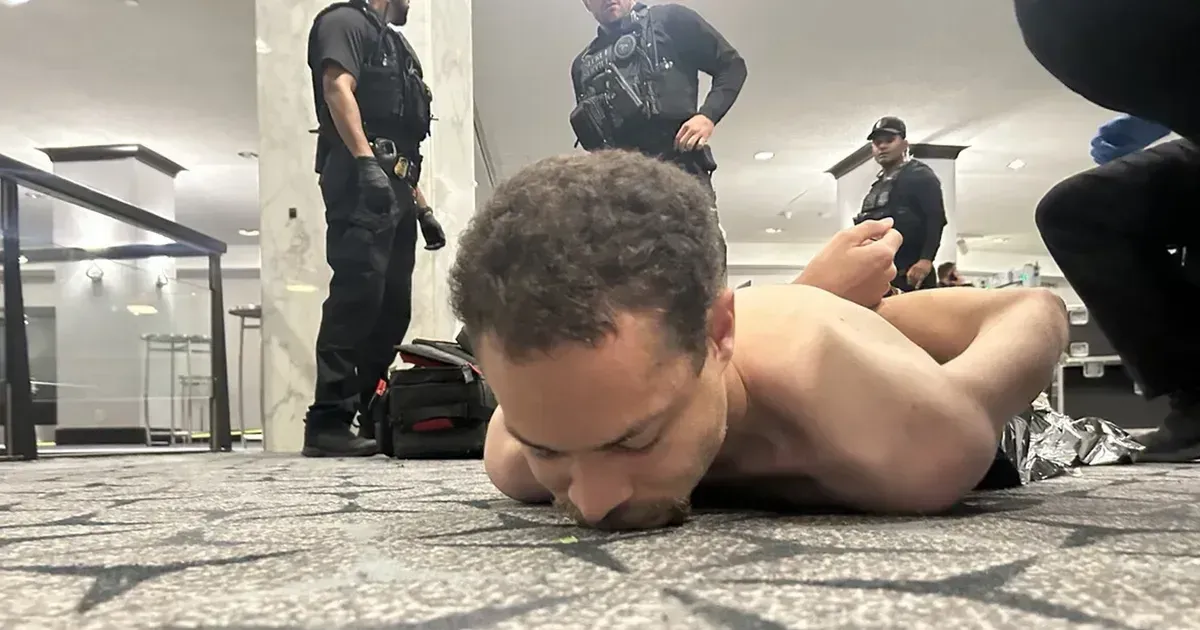
Cole Allen moved from an initially identified shooting suspect to the central defendant in a federal case tied to the White House Correspondents' Dinner attack. The case quickly moved from emergency response to federal prosecution. Authorities first identified him on April 26, 2026, after gunfire and a security lockdown near the Washington Hilton placed the annual media dinner under emergency protection.
Initial public information focused on Allen's identity, his California background and the immediate police response. Later federal filings sharpened that account by describing travel, weapons evidence, hotel movements and prosecutors' argument that the attack was planned before Allen reached the venue. The timeline is the core of the case.
Cole Allen Charges and Federal Case
Federal prosecutors later charged Allen in connection with the Trump dinner attack, shifting the story from a local perimeter shooting to an alleged attempt on the President. The federal charges against the California man provide a legal frame that was not available in the first hours after the incident. The allegations still require proof in court. Prosecutors can cite filings, surveillance records and witness accounts, but the final judgment depends on the evidence presented before a judge or jury. That distinction is important because early breaking-news language often hardens before the legal record is complete.
FBI Timeline and Detention Memo
Later filings moved the case beyond fast-moving identification details and broad security language. They set out the prosecution timeline, the limits of what has been proved and the reason the Washington Hilton remains central to the case. The most important later development was the federal detention memo. It described weeks of alleged preparation before the attack and gave investigators a clearer narrative of how Allen reached Washington. The memo describes the alleged three-week plot before the WHCD attack.
That memo changed how the case could be assessed. Instead of treating the case as a single burst of violence outside a hotel, prosecutors framed it as a sequence of choices that began before the dinner. The defense is likely to challenge how much those choices prove about intent, but the filing gave the case a documented chronology. For readers, that chronology is the bridge between the first police narrative and the later attempted-assassination charge. It also explains why the case moved from an emergency response to a federal prosecution.
Allen's California residence and employment are relevant identifiers, but they do not by themselves explain the attack. Those biographical facts must remain separate from the later legal record. Early suspect details cannot support sweeping conclusions about intent. The documented picture is narrower: a suspect profile, a federal charging path, a detention memo timeline and a security question tied to a specific Washington venue.
Washington Hilton Security Questions
The Washington Hilton remains a central part of the story because the venue is not an ordinary hotel in presidential security history. It is tied to the Reagan shooting and has long been understood as a difficult protection environment. Allen's alleged route and proximity to the event revived questions about how the outer perimeter was designed and monitored.
The Washington Hilton attack produced an immediate security shock. The later record points to a more specific issue: whether agencies recognized enough warning signs before the suspect reached a politically saturated venue. That question is narrower than the original public alarm, but it is more useful. It keeps the focus on route, access, timing and agency coordination instead of turning the suspect profile into a substitute for evidence.
The federal charges explain the legal theory, the detention memo describes the alleged preparation and the Washington Hilton attack establishes the physical setting. Prosecutors still carry the burden of proof. Allen's background, employment and travel history may help explain investigative interest, but they cannot replace evidence of intent. Any assessment of the case has to keep that boundary clear.
Legal Consequences
Allen's case sits at the intersection of criminal law and presidential security. If prosecutors prove the attempted-assassination theory, the case will become one of the most serious modern tests of how federal law treats attacks near protected political events. If they fall short, the prosecution may still turn on firearms, threat and assault counts tied to the Washington scene. For the public, the larger issue is institutional. A security plan failed to stop a suspect from turning a ceremonial dinner into a crisis, and later filings suggest the danger may not have appeared out of nowhere. That does not settle Allen's guilt, but it does explain why the case now carries more weight than its initial public outline suggested.