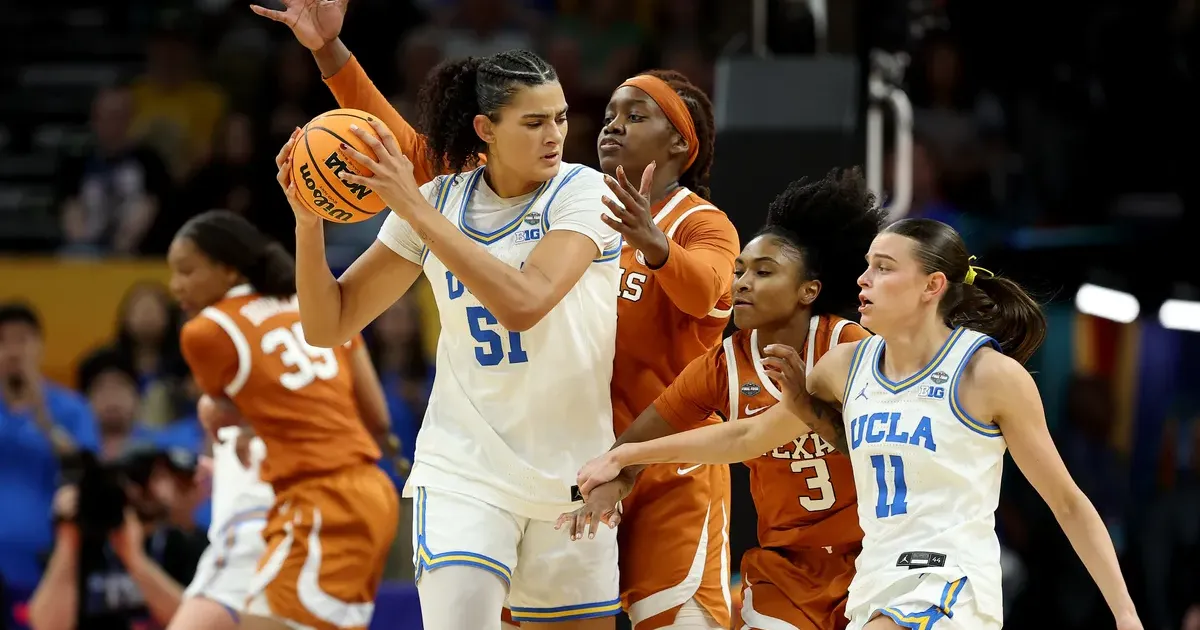
UCLA women's basketball players celebrated on the court on April 4, 2026, after grinding out a defensive victory against Texas to reach the NCAA title game for the first time in program history. Phoenix hosted the semifinal clash where scoring remained difficult for both top-seeded rosters throughout the evening. The semifinal gave UCLA its first place in the national title game. Lauren Betts anchored the interior for the Bruins, covering her mouth in visible disbelief as the clock expired at the Mortgage Matchup Center. This win marks the end of a long pursuit for the Westwood program under coach Cori Close. Success followed a grueling forty minutes of physical play that left both offenses struggling to find a consistent rhythm. Only one team could survive the war of attrition in the desert.
Statistics from the game reflect a performance defined more by grit than by grace. UCLA committed 23 turnovers during the contest, a figure that typically results in a loss at this stage of the tournament. Texas failed to capitalize on these extra possessions, shooting poorly from the perimeter and failing to find an answer for the length of the Bruin frontcourt. Defensive intensity dictated the pace from the opening tip. Points came at a premium as both sides traded missed shots and aggressive rebounds. Every possession felt heavy with the pressure of a Final Four stage.
Phoenix Arena Hosts Gritty Defensive Battle
Lively celebrations erupted among the UCLA faithful as the Bruins fended off a desperate late surge from the Longhorns. Texas attempted to mount a comeback in the closing minutes, but the UCLA defense forced difficult looks and secured critical rebounds. The final score was 51-44 of a game that lacked the high-scoring flair of previous rounds. While UCLA struggled with ball security, their defensive rotations remained crisp and disciplined. Coaches often emphasize that defense travels, and the Bruins proved that mantra in the Phoenix heat. They outmaneuvered a Texas team that had looked dominant in earlier regional rounds.
Victory in the Final Four rarely requires aesthetic perfection.
Shooting percentages dipped early and stayed low as the two top seeds collided. UCLA shrugged off its own cold shooting to focus on interior dominance and transition defense. The Longhorns found no space in the paint, frequently meeting a wall of Bruin defenders led by Betts and Angela Dugalic. Offensive rebounds provided the few second-chance opportunities that UCLA managed to convert into points. These small windows of efficiency provided the narrow margin needed for victory. Texas left the floor wondering how a game with so many Bruin mistakes slipped through their fingers.
Lauren Betts Anchors Bruin Interior Defense
Lauren Betts stood as a powerful barrier against every Texas drive. Her presence altered countless shots and forced the Longhorns into an uncomfortable perimeter game. Analysts noted that the game turned on several key blocks and altered shots in the fourth quarter. Disbelief on the faces of the Texas players grew as the Bruin lead held steady despite the turnovers. UCLA maintained a poise that suggested a deep familiarity with high-stakes pressure. Even when the offense stalled, the defensive unit functioned as a cohesive machine. It was an exercise in staying focused when the primary game plan falters.
"I couldn't believe we were actually going to the final when the horn sounded; it felt like everything we worked for finally clicked," Betts said.
Individual efforts like those from Betts allowed UCLA to survive their own offensive lapses. The Bruins executed what some observers called a Texas-sidestep, avoiding the traps set by the Longhorn defense. By moving the ball inside out, UCLA eventually found the lanes necessary to maintain a slim lead. Texas tried to initiate a full-court press to exploit the UCLA turnover trend. Bruins guards handled the pressure just enough to burn the clock and reach the charity stripe. Free throws in the final minute sealed the result.
Historical Breakthrough for Westwood Basketball Program
Westwood has waited decades for a moment of this magnitude in women's basketball. UCLA had never reached the national championship game before this run in 2026. Previous generations of Bruin legends watched as this roster broke through the glass ceiling of the Final Four. Breaking this drought required a specific mental toughness that Coach Cori Close has cultivated over her tenure. Elite status in the sport is earned through these ugly, hard-fought wins against fellow 1-seeds. This achievement changes the perception of the program on a national scale.
Historical context adds weight to the victory in Phoenix. UCLA has long been a powerhouse in other sports, but the women's basketball title has remained elusive. Reaching the final game validates years of recruiting efforts and system development. The program now stands one win away from the ultimate prize in collegiate athletics. Fans in Los Angeles are preparing for a Sunday showdown that could define the legacy of this current senior class. Momentum is a powerful force in March and April.
Sunday brings a different level of challenge as UCLA prepares to face South Carolina. The Gamecocks represent the gold standard of the current era under coach Dawn Staley. South Carolina enters the final as the heavy favorite after its own dominant run through the bracket. UCLA must find a way to reduce their turnovers if they hope to compete with the Gamecock transition game. ABC will broadcast the final at 3:30 p.m. ET on April 5. National attention is fixed on this collision between the two remaining 1-seeds. Prediction models favor the experience of the South Carolina roster.
UCLA Turns Texas Win Into Title Shot
UCLA's first title-game berth came with flaws, but the defensive floor held. The Bruins now have to reduce turnovers quickly because South Carolina is unlikely to let the same mistakes pass without punishment.