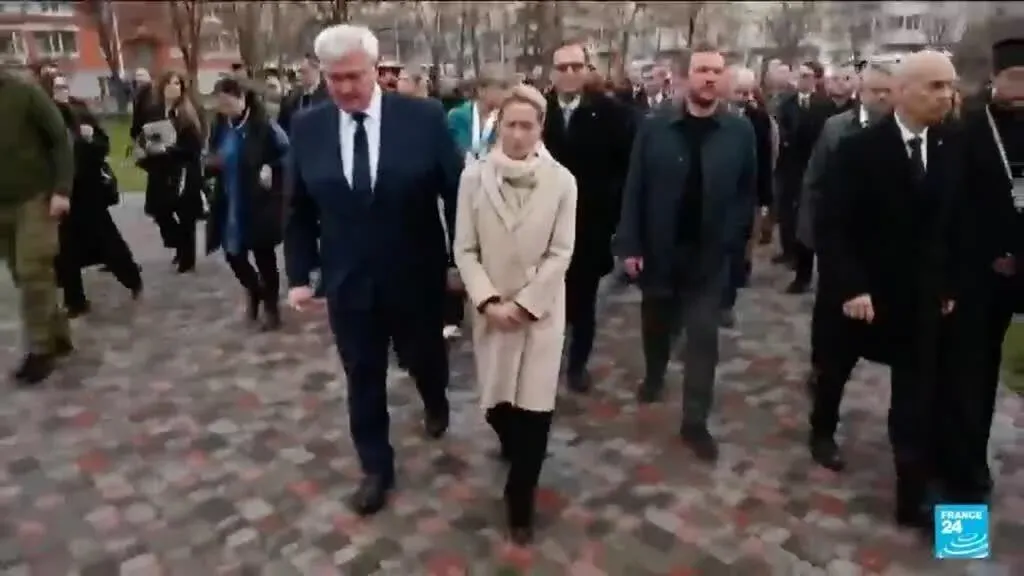
Residents of Bucha gathered to honor the memory of civilians killed during the initial Russian occupation four years ago. Silence fell over the town as families laid flowers at memorials dedicated to the victims of one of the most documented atrocities of the 21st century. Foreign ministers from the European Union traveled to the region to participate in the ceremonies and reaffirm their commitment to the defense of Ukraine. This anniversary arrives during a period of sustained military pressure from Moscow, which continues to target infrastructure and civilian centers across the country. By March 31, 2026, Bucha remembrance and Russia’s truce rejection were moving through the same diplomatic argument.
Bucha Remembrance and European Union Diplomacy
Diplomats from the Brussels-based bloc arrived in Kyiv early in the morning to meet with Ukrainian officials before heading to the memorial sites. Their presence intended to signal that Western interest in the conflict has not waned despite the passage of time. Four years have elapsed since the world first saw the images of bodies lining the streets of this suburb, yet the trauma remains a defining element of the local identity. Local authorities reported that the psychological scars of the 2022 occupation continue to affect the thousands of survivors who returned to rebuild their homes.
Evidence recovered in 2022 detailed a systematic campaign of violence against non-combatants during the Russian retreat. Investigators at the time found hundreds of bodies, including women, children, and elderly people, scattered across residential areas and shallow graves. Many victims showed signs of execution, with their hands bound behind their backs. The scale of the discovery prompted immediate international calls for war crimes trials and a permanent shift in how the West viewed the Kremlin's military objectives. European leaders today reviewed the progress of these ongoing legal efforts during their visit to the capital.
Ukraine is commemorating the fourth anniversary of the Bucha massacre, named after a town who many of its residents are thought to have been massacred by Russian invading troops, stated Philip Turle during a dispatch for France 24.
Security for the delegation was tight as the ministers moved through the town to inspect the reconstruction of Yablunska Street. Rebuilding efforts have replaced many of the destroyed structures, but the memory of the scorched Russian armored vehicles and the smell of decay persists in the minds of residents. EU representatives emphasized that financial aid packages will continue to prioritize the restoration of communities like Bucha alongside military support. This visit also served to coordinate future logistics for the transfer of defense systems needed to protect the region from ongoing aerial strikes. While European officials visit Kyiv, political figures like Viktor Orban continue to obstruct essential funding packages for the nation.
Russian Military Rejection of Easter Truce Proposals
Moscow responded to the solemnity of the day by dismissing a proposal for an Easter truce that would have paused fighting for the upcoming religious holiday. Russian officials stated that a ceasefire would only allow Ukrainian forces to regroup and fortify their positions. Military operations continued without interruption on the eastern front, where heavy shelling remains a daily reality for soldiers and civilians alike. This refusal to halt hostilities highlights the rigid stance held by the Russian high command regarding any diplomatic pauses.
Philip Turle reported that the conflict has not slowed down, with Russia maintaining its strategy of pounding the country through varied tactical approaches. Intelligence reports indicate that Russian artillery units have increased their frequency of fire in the Donbas region over the last forty-eight hours. Ukrainian commanders noted that the absence of a holiday truce means their units must stay on high alert during a time traditionally reserved for reflection and family gatherings. Logistics hubs in central Ukraine also faced drone incursions overnight, resulting in minor damage to transport lines.
International observers had hoped that the shared cultural significance of Easter might provide a window for humanitarian corridors or prisoner exchanges. Kremlin spokespersons, however, signaled that no such concessions were under consideration at this time. Their statements focused on the necessity of achieving strategic objectives that they claim are essential for national security. Analysts at the Hague have suggested that this intransigence is a calculated move to keep the Ukrainian defense under maximum stress. The frontline has moved little in recent weeks, but the human cost continues to climb on both sides of the trenches.
Human Toll and International Legal Accountability
Records maintained by the Ukrainian Prosecutor General indicate that over 450 bodies were recovered in the Bucha district alone following the 2022 liberation. Identification efforts for dozens of those victims took years due to the lack of DNA evidence or surviving relatives. Forensic teams from across Europe assisted in these efforts, providing the technical expertise required to build a case for the International Criminal Court. These investigations have produced thousands of pages of testimony from witnesses who observed the conduct of Russian troops during the month-long occupation.
Human rights organizations highlight that the lack of a ceasefire prevents further exhumations in areas currently under Russian control. Estimates suggest that thousands of civilians may be buried in unmarked graves in cities like Mariupol and Bakhmut, where the fighting was most intense. Bucha stays the primary case study for these organizations because it was the first location where the full extent of the violence was revealed to the global press. Accountability for the commanders involved in the operation is still a central demand of the Ukrainian government. The legal process in international courts often moves slowly, but prosecutors insist that the evidence remains secure.
Communities across northern Ukraine held smaller, localized vigils to coincide with the main event in Bucha. Priests offered prayers for the dead while neighbors shared stories of the difficult weeks spent in basements during the 2022 siege. These gatherings highlight the collective grief that binds the nation together as the war enters its fifth year. Outside the churches, the sound of air siren tests was a reminder that the threat from the sky has not disappeared. Total civilian casualties since the start of the full-scale invasion exceed 10,000 according to verified United Nations data.
Memory and Truce Diplomacy
Ukraine’s Bucha commemorations give the truce debate a sharper moral context. Calls for a pause in fighting are judged not only by battlefield needs, but by whether Russia acknowledges civilian harm.
Moscow’s rejection therefore reinforces Ukrainian arguments for continued pressure. Without accountability or credible restraint, remembrance becomes part of the case for sustained military and diplomatic support.