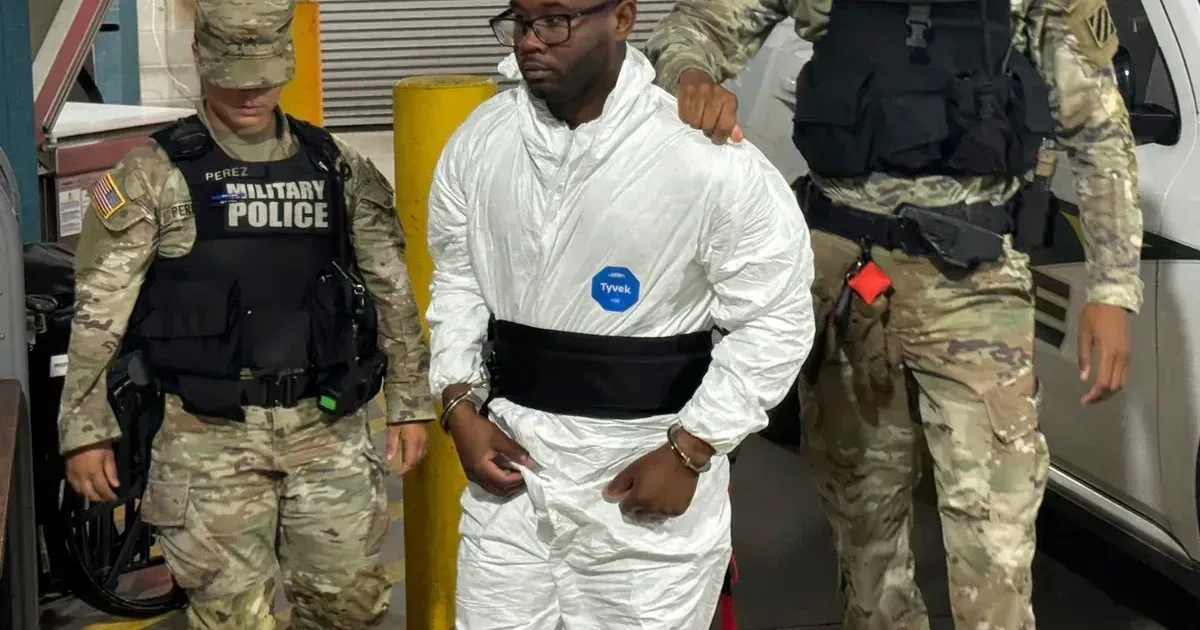
Sergeant Seeks Guilty Plea
Southeast Georgia military officials confirmed Thursday that an Army sergeant accused of wounding five of his colleagues in a targeted shooting spree last summer intends to plead guilty. The announcement came during a pre-trial hearing where defense attorneys signaled a desire to bypass a lengthy court-martial in favor of admitting to five counts of attempted murder.
Military prosecutors disclosed the move as part of a broader negotiation to resolve one of the most violent internal incidents at the installation in recent memory. On March 13, 2026, the plea request shifted the case from fact-finding toward sentencing and victim impact. If the presiding judge accepts the plea, the case will skip a high-profile trial that many expected would expose deeper issues within the unit's command structure and internal morale. Justice in the military system often moves with a deliberate, sometimes grinding pace, yet this decision could bring a swift conclusion to a tragedy that shook the regional defense community.
Five soldiers sustained injuries when their fellow service member opened fire within their shared workspace during what should have been a routine summer afternoon. Investigators have spent months piecing together the timeline of the attack, looking for triggers that might explain why a non-commissioned officer with an otherwise unremarkable record would turn his service weapon on those he was sworn to protect.
The plea request indicates that the defense may be seeking to avoid a maximum sentence of life without parole, though specific terms of any potential deal remain under seal. Military courts operate under the Uniform Code , a system separate from civilian law that places a heavy emphasis on good order and discipline.
Victims and the Base Still Recover
Within this framework, an attempted murder charge carries severe penalties, and a guilty plea does not automatically guarantee a lighter sentence. The judge must still conduct an inquiry to ensure the defendant is entering the plea voluntarily and understands the gravity of the admission. Prosecutors noted that the victims have been consulted regarding this development, though their individual reactions to the news have not been made public due to ongoing privacy concerns and the sensitivity of their recoveries.
Witnesses at the scene last summer described a terrifying sequence of events that unfolded in a matter of minutes. The sergeant, whose identity has been central to the military investigation, allegedly moved through the facility with methodical intent, targeting specific individuals before he was eventually subdued.
Medics rushed to the scene to stabilize the five wounded soldiers, some of whom faced life-threatening injuries in the immediate aftermath of the barrage. Local hospitals in Savannah and the surrounding coastal area were placed on high alert as the base entered a total lockdown protocol that lasted for several hours.
This strategy of immediate isolation likely prevented further casualties, but it left a lasting mark on the psyche of the personnel stationed there. One victim underwent multiple surgeries and spent weeks in intensive care before beginning a grueling rehabilitation process. Families of the injured have largely remained silent, choosing to focus on the long road to physical and emotional health rather than engaging with the media cycle.
How Military Justice Handles the Case
The Army has provided specialized counseling services to the unit, yet the shadow of the shooting lingers in the hallways where the violence occurred. Security measures at base entrances and office buildings saw a sharp increase following the incident, reflecting a broader concern about insider threats within the Department of Defense.
Such threats remain the most difficult to predict, as they come from individuals who have already been vetted and granted access to secure environments. of Military Justice Defense teams in cases involving multiple victims often weigh the benefits of a plea against the risk of a full trial where graphic evidence and victim testimony could sway a jury of high-ranking officers toward the harshest possible punishment.
By seeking a guilty plea now, the sergeant may be attempting to demonstrate a level of remorse that could be considered during the sentencing phase. Military law allows for a process known as a pretrial agreement, which functions similarly to a plea bargain in civilian courts but requires the approval of the convening authority, usually a high-ranking general. This offer is a calculated risk for the defense, as it forfeits the right to challenge evidence in exchange for a degree of certainty regarding the legal outcome.
Army prosecutors must balance the desire for a quick resolution with the necessity of ensuring that justice is served for the victims. They have maintained a tight grip on information throughout the discovery phase, citing the need to protect the integrity of the proceedings. The Article 32 hearing, which serves as the military version of a grand jury, previously established that there was sufficient evidence to move forward with the attempted murder charges. Evidence gathered at the scene included ballistic reports, digital communications, and eyewitness accounts from those who were in the line of fire. These elements formed a compelling case that would have been difficult for the defense to dismantle during a contested trial. No single explanation fully accounts for the violence. Beyond the legal technicalities, the case highlights the ongoing struggle to identify and treat mental health issues within the active-duty population. While the motive has not been explicitly stated in court documents, previous incidents of this nature often point to a combination of professional stress, personal grievances, and untreated trauma. The sergeant had served several years and held a position of trust, making the betrayal of the military brotherhood particularly stinging for his peers. Command teams are now under pressure to implement better peer-to-peer monitoring programs to catch red flags before they manifest as violent outbursts. This environment of heightened scrutiny can be a double-edged sword, as it may discourage some from seeking help for fear of being flagged as a potential threat. Georgia has a long history of supporting massive military installations, and the local community often feels the impact of base events as if they were their own. Businesses in Hinesville and the surrounding towns are heavily populated by veterans and active-duty families who understand the unique pressures of military life. News of the plea deal has been the primary topic of conversation in local veterans' halls, where many express a mixture of anger and relief.