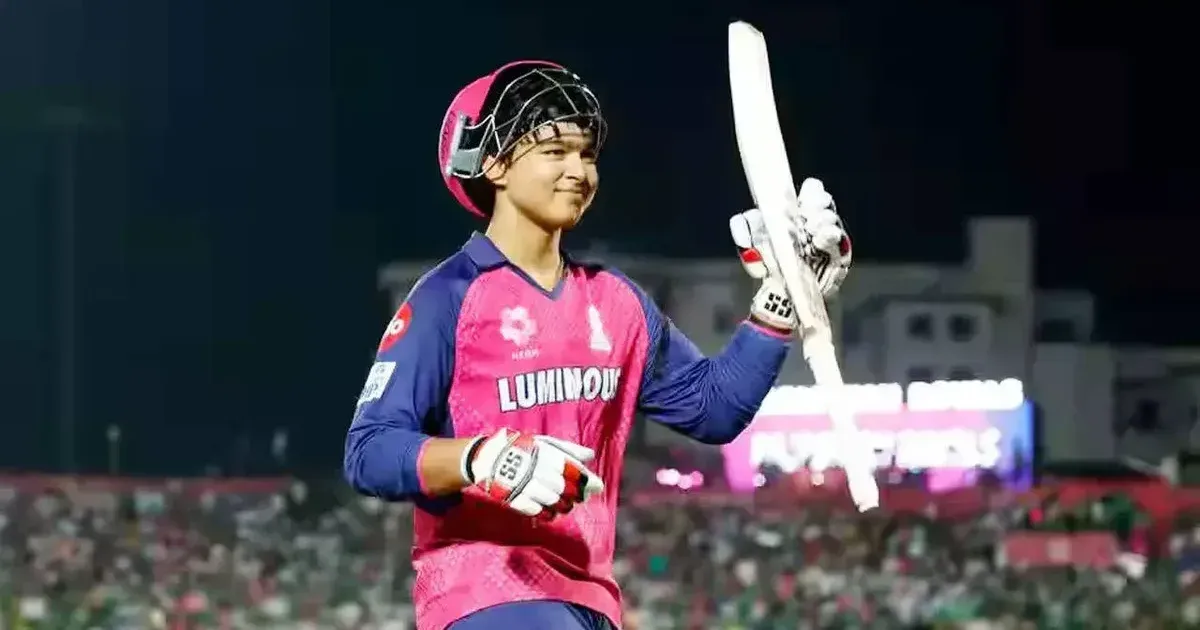
Vaibhav Sooryavanshi has become one of Indian cricket's most closely watched young batters. The attention around him is not only about highlight clips or auction value. It is about how quickly the sport is now identifying teenagers, investing in them, and asking them to grow under public pressure.
He turned 15 on March 27, 2026, with Rajasthan Royals' investment already reflecting that shift. IPL franchises are no longer waiting for players to become established first-class names before making long-term bets. They scout earlier, test players harder, and build commercial narratives around potential as much as production. For a young left-handed batter, that can create opportunity and risk at the same time.
The reports around his power have made him a standout figure in youth cricket circles. Coaches have praised his early pickup of length, quick hands, and willingness to attack pace. Those traits can separate a prospect, but they do not remove the need for patient development. At 15, strength, decision-making, and emotional resilience are still forming.
Rajasthan Royals Bet on Long-Term Upside
The Royals' move is best understood as a long-term development play rather than a simple search for instant returns. A teenage player can help a franchise's brand, but the cricketing value depends on whether coaches can build a stable pathway. That means monitored practice loads, limited media exposure, and clear protection from overuse. Sooryavanshi's appeal is easy to understand. Left-handed power is valuable in T20 cricket, especially when paired with the ability to score against pace and spin. If his timing translates consistently against senior bowling, he gives the Royals a flexible option for future batting roles. The harder part is expectation management. Young players can be praised into impossible standards before they have had time to fail privately.
Rajasthan must give him room to adjust, lose form, rebuild, and learn match situations without turning every innings into a referendum on his future. There is also a basic physical question. Teenage athletes can change quickly as strength, mobility, and recovery capacity develop. A training plan that works for a senior professional may be too heavy for a player still growing. The smartest franchises treat that difference as performance protection, not as caution for its own sake. The same restraint should apply to public comparison. Linking any young Indian batter to past greats creates attention, but it can also flatten the player's own development. Sooryavanshi needs a pathway, not a mythology built before his senior career has fully begun.
Power Hitting Needs Careful Development
Much of the early discussion has focused on bat speed and the force of his straight hitting. Those are real assets, but modern bowlers adapt quickly. If Sooryavanshi is going to move from prospect to professional, he will need answers to short bowling, changes of pace, and field settings designed to cut off his strongest scoring zones. That development requires more than net sessions. Video review, strength work, recovery planning, and match simulation all matter.
Coaches will also need to decide which formats suit him in the near term. A teenager who can hit cleanly in T20 cricket should not automatically be pushed into every available competition. The safest pathway is measured exposure. Facing better bowlers in controlled environments can accelerate growth, but excessive matches can increase injury risk and mental fatigue. Indian cricket has enough history with early prodigies to know that talent alone does not guarantee longevity.
Selectors Face a Patience Test
National selectors will likely monitor Sooryavanshi closely, but that does not mean a senior leap should be rushed. Under-19 cricket, academy camps, and domestic opportunities can provide better developmental steps than immediate international pressure. The question is not whether he is gifted. The question is how to keep that gift intact. His family and support staff will be central to that process. A player this young needs structure away from cricket as much as specialized coaching within it. Education, privacy, and recovery are not side issues; they are part of the performance environment. Sooryavanshi's 15th birthday therefore arrives as both a milestone and a warning about modern cricket's pace. The sport has found him early.
Now it must prove it can develop him carefully, without letting commercial excitement outrun the needs of the player. That makes the story less about a birthday milestone than about how a franchise system manages a teenager with rare tools in a culture that rewards immediacy, visibility, and aggressive projection. A responsible pathway would measure progress in seasons, not viral innings. If he is handled well, Sooryavanshi can build a fuller game before the national conversation becomes too heavy. If he is handled poorly, the same attention that created opportunity can become the pressure that limits his growth.